US President Donald Trump’s upcoming Asia visit will focus on trade discussions and historic nuclear talks, occurring against a backdrop of political scrutiny following midterm election setbacks.
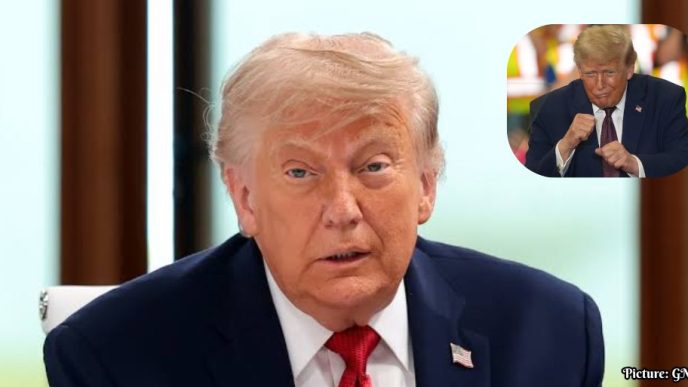
US President Donald Trump is scheduled to embark on a crucial diplomatic trip to Asia on Monday, which will include meetings with regional leaders, discussions on trade agreements, and an unprecedented trilateral conversation on nuclear weapons involving Chinese President Xi Jinping and Russian President Vladimir Putin. This trip is of particular significance as it coincides with heightened scrutiny of Trump’s administration due to recent political setbacks, including the Republican Party’s losses in the midterm elections.
Itinerary Highlights and Key Meetings
The Asia trip will commence in Manila, Philippines, where Trump is expected to engage with Southeast Asian leaders who are increasingly looking to the United States for support against China’s growing assertiveness in the region. A potential meeting with Indian Prime Minister Narendra Modi is also a focal point of the visit, along with discussions regarding a Quadrilateral Security Dialogue (Quad) summit, which involves India, the US, Japan, and Australia. While US Secretary of State Marco Rubio hinted at a Quad summit planned in Manila, the Indian Ministry of External Affairs (MEA) has indicated that no confirmed information regarding the summit or a Trump-Modi meeting has been released.
In Manila, Trump is anticipated to sign a trade agreement with Thailand, further underscoring his administration’s commitment to strengthening ties with Southeast Asian nations. This trade deal is seen as part of a broader strategy to enhance economic cooperation in a region where China has been expanding its influence.
Historic Trilateral Nuclear Discussions
The most significant diplomatic event of Trump’s trip is expected to occur toward its conclusion, with the first-ever trilateral talks involving Trump, Xi, and Putin. US officials have indicated that these discussions will focus primarily on the nuclear arsenals of the three nations. Notably, these talks are not expected to address the ongoing conflict in Ukraine, which has entered its fifth year, as officials have stated that the discussions will center on nuclear stockpile management and potential arms control measures.
China’s Foreign Ministry spokesperson, Mao Ning, has characterized the proposed trilateral talks as having “groundbreaking significance,” emphasizing the shared responsibility of these nations in addressing global challenges. She stated that the discussions would aim to promote world peace and stability through collaboration on critical issues.
Nvidia Controversy: Implications for US-China Relations
Adding complexity to Trump’s visit is an ongoing controversy surrounding Nvidia, a leading semiconductor company. The scrutiny surrounding Nvidia has intensified questions regarding the Trump administration’s handling of export controls and its broader China policy. The controversy escalated when Nvidia CEO Jensen Huang resigned amid allegations of an affair with a woman believed to have connections to the Chinese government. Although Beijing has denied involvement in Huang’s situation, US officials are attempting to downplay the issue, asserting that Trump does not plan to raise the Nvidia matter during his meetings with Xi.
Despite these reassurances, the scrutiny surrounding Nvidia raises significant concerns about the administration’s regulatory approach to technology exports. Critics have pointed to the delay in imposing restrictions on chip exports to a company linked with the alleged Chinese agent as indicative of broader challenges in the administration’s tech policy.
Domestic Political Landscape and Challenges
Trump’s trip to Asia comes amid significant domestic political challenges, particularly following the recent midterm elections, which resulted in substantial losses for the Republican Party and a shift in congressional power to the Democrats. This political environment has created a challenging backdrop for Trump, who has largely remained out of the public eye in the days preceding his departure.
In addition to the political fallout from the elections, Trump faces scrutiny over the administration’s handling of a recent nationwide ground stop that disrupted air travel, raising questions about crisis management. As Trump engages in international diplomacy, his administration is likely to face increased scrutiny from incoming Democratic lawmakers, particularly regarding the role of high-profile figures such as Elon Musk, the CEO of Tesla and SpaceX, who is accompanying the president on this trip. Lawmakers are expected to investigate Musk’s influence within the administration and the intersection of his business interests with government policies.
Conclusion: Balancing International Engagement with Domestic Pressures
In conclusion, Trump’s Asia trip represents a critical opportunity for diplomatic engagement and trade discussions, but it is overshadowed by substantial domestic political pressures and controversies that may significantly influence the administration’s approach to international relations. As Trump navigates complex geopolitical landscapes, the outcomes of this trip could have lasting implications for US foreign policy, particularly in relation to China and regional stability in Asia.