
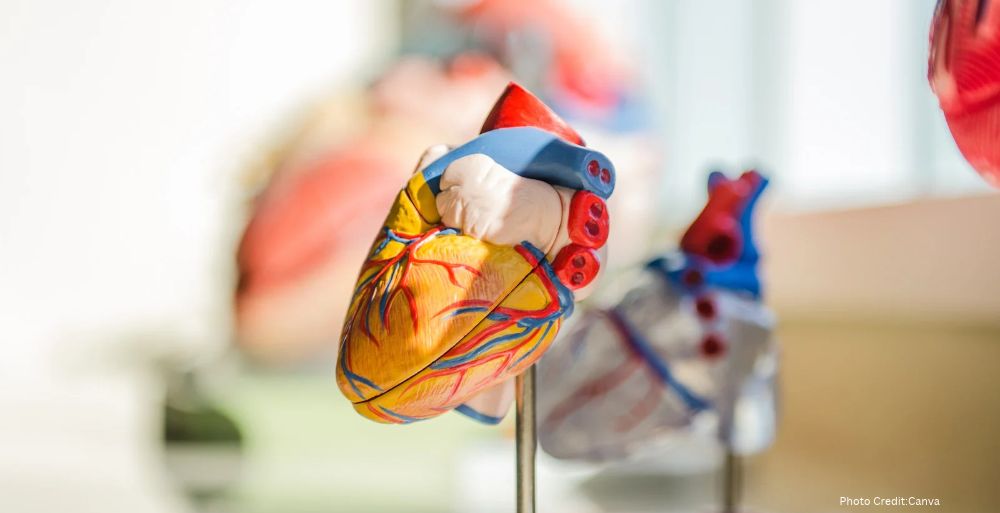
This experimental treatment could transform recovery methods for heart attack survivors by promoting heart muscle regeneration.
In a groundbreaking study published in the journal Nature Cardiovascular Research, researchers have unveiled an innovative experimental treatment that holds the potential to significantly alter the landscape of recovery for individuals who have suffered heart attacks. Each year, heart attacks affect millions worldwide, and while survival rates have improved due to advancements in emergency medical care, the long-term consequences of these events can lead to lasting damage to the heart muscle, raising the risk of heart failure, breathlessness, and diminished quality of life.
Understanding Heart Attacks
A heart attack, scientifically referred to as a myocardial infarction, occurs when blood flow through a coronary artery is either severely reduced or completely obstructed. This interruption in blood supply deprives heart muscle cells, known as cardiomyocytes, of the oxygen necessary for their survival, resulting in cell death. Cardiomyocytes play a critical role in maintaining the heart’s vital function of pumping blood throughout the body. Unlike tissues such as skin or liver, which have a remarkable ability to regenerate, the adult human heart exhibits a limited capacity to replace damaged cells. Consequently, dead muscle tissue is replaced predominantly by fibrous scar tissue, which, while maintaining structural integrity, lacks the ability to contract effectively. This process can lead to progressively weakened heart function and, in some cases, heart failure.
Current Treatments and Their Limitations
Modern interventions, including procedures to reopen blocked arteries, medications, and supervised rehabilitation programs, have greatly enhanced survival rates following heart attacks. However, these treatments fall short of restoring the lost heart muscle. During embryonic development, cardiomyocytes possess the ability to divide, allowing the heart to grow and repair itself. This regenerative capacity diminishes shortly after birth, leading researchers to explore methods to reactivate this process in adult hearts.
The current study investigates the potential of two proteins, Myc and cyclin T1, which are pivotal in regulating cell growth and division. Myc is known to activate genes associated with cell proliferation, while cyclin T1 facilitates the activation of the cellular machinery necessary for cell division. By employing modified messenger RNA (mRNA) to instruct heart muscle cells to produce these proteins, the researchers aim to stimulate the division of mature cardiomyocytes, a technology that mirrors the approach used in COVID-19 vaccines.
The Experimental Approach
To evaluate the efficacy of this treatment, the research team conducted experiments on mice that had been subjected to induced heart attacks. They administered modified mRNA directly into the damaged regions of the mice’s hearts. The results were promising: the treatment successfully activated genes involved in cell division, prompting heart muscle cells to begin multiplying. Notably, the treated mice exhibited significant improvements in heart function, retaining a greater degree of pumping ability compared to their untreated counterparts. After a 28-day period, the treated mice demonstrated an increase in heart muscle tissue, and these enhancements were still evident during a follow-up at 12 weeks.
Safety and Efficacy Concerns
While the findings indicate that temporarily stimulating the heart’s regenerative machinery may help restore some lost functionality post-injury, the treatment did not consistently reduce scar tissue formation. This suggests that the improved pumping ability observed in the treated mice did not equate to a complete replacement of the damaged muscle tissue. A crucial safety concern arose regarding the Myc protein, a potent regulator of cell growth that is linked with cancer when its activation becomes uncontrolled. In initial trials, several mice experienced severe adverse reactions and some died when Myc was activated broadly throughout the heart. However, by confining the activation to a localized region surrounding the injury, the researchers achieved a more favorable outcome, with no tumors reported during follow-up assessments.
Despite these encouraging results, significant hurdles remain before this treatment can be translated into routine clinical practice for human patients. Researchers need to establish safe delivery methods, determine optimal dosages, and monitor for potential complications, such as irregular heart rhythms or uncontrolled cell growth. Nevertheless, this research represents a pivotal advancement in regenerative cardiovascular medicine.
Future Implications
Historically, the focus of care following a heart attack has been on preventing further damage and optimizing the function of the surviving heart muscle. However, the findings from this research suggest a paradigm shift towards actively promoting the heart’s self-repair mechanisms. If subsequent studies confirm the treatment’s safety and effectiveness in humans, it could fundamentally transform the management of heart attacks, offering new hope for recovery and markedly improved quality of life for millions of individuals affected by this condition.
As researchers continue to explore the applications of modified mRNA technology in regenerative medicine, this novel approach may pave the way for future therapies that not only restore blood flow but also empower the heart to heal itself, marking a significant milestone in cardiology.