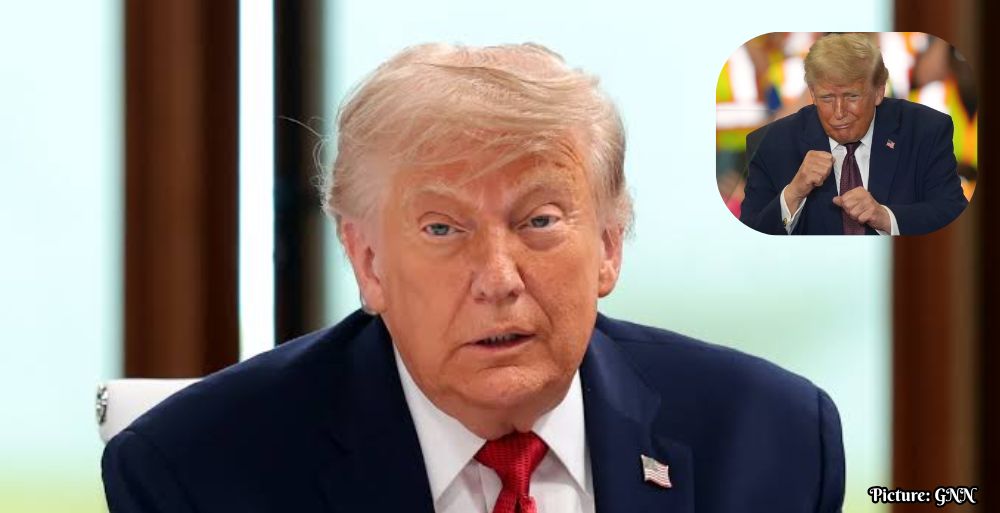
The signing of a trade agreement between the United States and Thailand coincided with protests against President Trump’s visit to Manila, reflecting a blend of diplomatic engagement and public dissent.
Manila, Philippines – In a significant diplomatic event during his visit to the Philippines, U.S. President Donald Trump signed a trade agreement with Thailand’s Prime Minister Anutin Charnvirakul on Tuesday. This agreement aims to eliminate tariffs on U.S. exports to Thailand and address various non-tariff barriers. Trump characterized the deal as “historic,” emphasizing its potential to enhance bilateral trade relations.
During the announcement, Trump noted that Thailand would commit to purchasing an additional $2.6 billion in U.S. agricultural products as part of the agreement. “Today’s deal lays the foundation for a much stronger trading relationship that will bring the United States and Thailand closer than ever before,” he stated. Trump expressed eagerness to finalize the details of the formal agreement in the upcoming weeks. However, Thailand’s foreign ministry described the signing in more cautious terms, referring to it as a “joint statement marking progress in negotiations,” suggesting that discussions are ongoing rather than concluding.
The United States remains Thailand’s largest export market, accounting for approximately 24% of the Southeast Asian nation’s total exports as of October. This context underscores the significance of the trade deal as both nations have engaged in negotiations over the past year to bolster their economic ties amidst a complex geopolitical landscape.
Public Protests and Sentiment
While the trade agreement was being finalized, protests erupted in Manila against Trump’s presence, reflecting a significant public outcry. Demonstrators voiced their discontent over various issues, including U.S. foreign policy, human rights, and environmental concerns. Many activists criticized the perceived prioritization of trade agreements over these critical issues, illustrating the tension between diplomatic engagements and public sentiment in the host country.
The situation outside the signing event starkly contrasted with the celebratory atmosphere inside, where Trump and Charnvirakul engaged in diplomatic discussions. Barbed wire and barricades were erected to manage the protests, which featured slogans and imagery targeting Trump’s administration. This juxtaposition highlighted the complexities of modern diplomacy, where formal agreements occur alongside significant public dissent.
Quadrilateral Security Dialogue Developments
In conjunction with the trade discussions, Trump participated in a meeting with leaders from the Quad—comprising Australia, India, and Japan—also held in Manila. This gathering aimed to enhance cooperation on issues such as artificial intelligence, critical minerals, and maritime security. The Quad leaders issued a joint statement emphasizing their commitment to free economic trade and regional stability, implicitly addressing the growing influence of China in the Indo-Pacific region.
During this meeting, Trump reiterated the necessity for a united front among Quad nations against destabilizing actions. The leaders announced plans for joint military exercises to bolster security cooperation in response to perceived threats in the region. The discussions also included the development of an “AI Accelerator,” aimed at coordinating efforts to support trusted AI access and deployment across the Indo-Pacific.
Global Economic Context and Implications
The U.S.-Thailand trade agreement aligns with ongoing U.S. efforts to reshape its trade relationships in Asia. As economic tensions continue to rise, particularly regarding China, the U.S. seeks to reinforce its influence in the region through strategic partnerships. This agreement with Thailand may serve as a template for future negotiations with other Southeast Asian nations.
Trade relations between the U.S. and Thailand are particularly crucial given Thailand’s geographic and economic position in Southeast Asia. The U.S. has been actively pursuing trade agreements to counterbalance China’s growing economic footprint in the region, with the goal of establishing a more resilient supply chain. The Thai market’s significance is underscored by its strategic location and economic dynamics, making it a vital partner for U.S. trade interests.
Future Implications
The recent developments in Manila highlight the dual nature of modern diplomacy, where formal agreements occur alongside public dissent. While the U.S.-Thailand trade deal is significant, it must navigate the complexities of domestic and international perceptions, particularly in the context of Trump’s administration, which has faced criticism for various foreign policy decisions.
Looking ahead, Trump’s engagements with other world leaders, including China’s Xi Jinping and Russia’s Vladimir Putin, will be shaped by the implications of this trade deal. The unfolding dynamics in Manila serve as a reminder of the intricate balance between diplomacy, public opinion, and international relations in a rapidly changing global landscape.
As the Asia-Pacific Economic Cooperation (APEC) summit approaches in Shenzhen, the outcomes of Trump’s meetings in Manila will likely reverberate through broader discussions on trade, security, and international cooperation. The contrasting scenes of diplomatic engagement and public protest underscore the challenges and responsibilities faced by leaders in a globalized world.