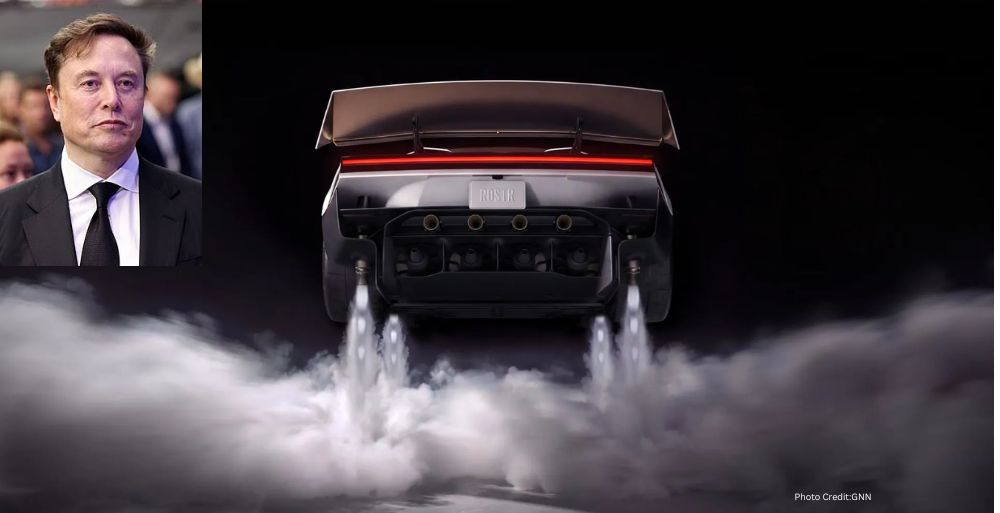
Tesla recently showcased its long-awaited redesigned Roadster performing aerial maneuvers at a SpaceX facility in Texas, reigniting discussions about the future of flying cars and the challenges that lie ahead.
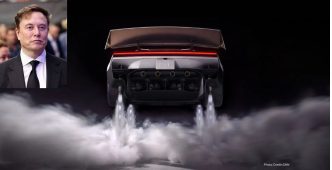
Tesla, the electric vehicle manufacturer led by CEO Elon Musk, conducted a significant demonstration of its redesigned Roadster on October 15, 2023, at a SpaceX facility located in McGregor, Texas. This event featured the vehicle executing an upside-down drive and brief airborne maneuvers, utilizing innovative cold-gas thruster technology developed in collaboration with SpaceX, Musk’s aerospace company.
Details of the Demonstration
The demonstration involved the Roadster ascending a specially designed curved ramp, successfully executing an upside-down drive before momentarily lifting off the ground and landing safely. Footage of the event has been widely circulated on social media platforms, including X (formerly Twitter), where Musk indicated that such technological advancements might reflect the future of transportation, potentially integrating flying cars into everyday life. Tesla’s official account also shared videos of the event, which have generated considerable excitement and interest from the public.
Technological Innovations Behind the Roadster
The redesigned Roadster is equipped with cold-gas thrusters, which operate by utilizing pressurized gas to generate thrust. This innovation enables the vehicle to perform maneuvers that traditional road cars cannot achieve, showcasing the potential of combining automotive design with aerospace technology. However, it is essential to clarify that the demonstration was conducted under strictly controlled conditions and does not imply that the vehicle can fly during regular use.
Regulatory and Practical Considerations
Despite the impressive display of technology, several critical questions remain unanswered regarding safety, regulatory approval, and the overall practicality of flying cars for everyday transportation. The demonstration has sparked renewed discussions about the feasibility of integrating such advanced vehicles into public roadways. Experts and observers are left to ponder the implications of this technology on existing transportation regulations and the infrastructure needed to support it. Regulatory bodies will need to address numerous concerns, including air traffic management, vehicle safety standards, and public acceptance of aerial vehicles within urban environments.
Production Timeline and Market Availability
The next-generation Roadster was initially unveiled in November 2017, with expectations for a much earlier production timeline. However, the project has encountered multiple delays, resulting in nearly nine years of waiting for eager customers. Following the recent demonstration, reports indicate that Tesla plans to begin production in 2028, indicating that customers may face an extended wait before the redesigned Roadster becomes commercially available. This timeline raises further questions about Tesla’s ability to meet consumer expectations and the competitive landscape of electric vehicle technology.
The Future of Flying Cars
The latest demonstration has reignited interest in the long-discussed concept of flying cars, a topic that has fascinated both the public and industry experts for decades. While the idea of integrating flying vehicles into everyday life has been a staple of science fiction, the technical, regulatory, and societal challenges involved in making flying cars a reality are substantial. Many experts remain skeptical about the practicality of flying cars, citing concerns over safety, noise pollution, and the potential for increased traffic congestion in the skies.
As it stands, Tesla has illustrated the potential capabilities of the Roadster in a controlled setting. However, the vehicle’s commercial future and the practical applications of its airborne features remain speculative. The company’s demonstration is indicative of a broader trend within the automotive and aerospace industries, where innovations are increasingly converging. The future of transportation may see a blend of electric vehicles and advanced aerospace technologies, but significant hurdles must be overcome before such visions become reality.
Industry Implications
Industry analysts note that Tesla’s recent demonstration could have far-reaching implications for both the automotive and aerospace sectors. The successful integration of aerospace technology into consumer vehicles may prompt other manufacturers to explore similar innovations, potentially accelerating advancements in electric vehicle technology. Furthermore, as urban areas become increasingly congested, solutions such as flying cars could theoretically alleviate some pressure on existing transportation infrastructure.
Nevertheless, the transition to flying cars will require a paradigm shift in how society views transportation. Public acceptance of such vehicles, alongside the development of a robust regulatory framework, will be crucial for their success. Additionally, the environmental impact of flying vehicles, including noise and emissions, will need to be addressed to ensure that this technology aligns with sustainability goals.
In conclusion, Tesla’s demonstration of its redesigned Roadster has provided a glimpse into a potential future where flying cars may become a reality. However, the journey from demonstration to commercialization is fraught with challenges, and it remains to be seen whether this vision can be fully realized. As the landscape of transportation continues to evolve, the convergence of automotive and aerospace technologies will undoubtedly shape the future of mobility.