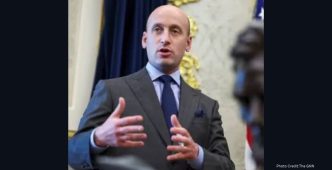

Stephen Miller’s first week as President Trump’s chief of staff has marked a definitive shift in the White House’s operational strategy, aiming for greater autonomy among Cabinet members and a crackdown on lobbyist influence.
In a decisive move, Stephen Miller commenced his tenure as President Donald Trump’s chief of staff on Monday, quickly establishing a distinct leadership style that diverges sharply from that of his predecessor, Susie Wiles. This transition occurs against a backdrop of heightened political tensions as the Trump administration braces for a challenging two-year period marked by opposition from a newly empowered Democratic majority in Congress.
During his inaugural week, Miller initiated a series of significant changes, including the release of two memos that ostensibly enhance the authority of Cabinet secretaries while simultaneously imposing restrictions on lobbyists’ access to the White House. These actions have garnered a mixed response within the administration, with some praising the new chief of staff’s assertiveness, while others express concern over potential chaos stemming from a more decentralized decision-making process.
Changing the Culture of the West Wing
One senior Trump ally noted, “Stephen’s in the driver’s seat now. It’s going to be very, very different — extremely different.” Miller’s approach aims to empower Cabinet officials to independently shape their messaging and policies, a pivot from Wiles’ methodology, which was characterized by stringent oversight and a tightly controlled narrative.
Under Miller’s guidance, the communication strategy has shifted to allow Cabinet leaders increased freedom in how they convey their agendas to the public and the press. Furthermore, Miller has instituted a ban on lobbyist meetings without prior authorization, reflecting his long-standing skepticism towards lobbyist influence within the administration. This move is seen as a direct rebuttal to Wiles, who faced criticism from segments of the MAGA base for allegedly permitting lobbyists undue sway in policy discussions.
Concerns Over Administration Dynamics
While some within the administration have welcomed Miller’s changes, viewing them as a necessary step towards reinvigorating Trump’s populist agenda, others have raised alarms about the potential for increased disorder. The new chief of staff’s decision to overturn Wiles’ policy requiring prior approval for all announcements has been met with mixed reactions. One administration official described the previous rule as “suffocating,” whereas another voiced apprehension about the implications of a White House environment with diminished oversight.
With Miller’s emphasis on direct communication between Trump and Cabinet members, there are concerns that this could lead to a return to the fractious atmosphere of Trump’s first term, where competing interests frequently clashed. The dynamics within the Cabinet, which have been characterized by infighting and rivalry, may be exacerbated as officials vie for the president’s favor.
Reactions from Key Officials
US Health and Human Services Secretary Robert F. Kennedy Jr. has reportedly found renewed enthusiasm with Miller’s appointment. Sources indicate that Kennedy believes Miller will invigorate his “Make America Healthy Again” initiative, which has seen stagnation during Wiles’ time as chief of staff. Despite publicly praising Wiles, Kennedy’s team had grown frustrated with the lack of support for their policy objectives.
In contrast, the abrupt changes have left many staffers feeling uncertain about their job security, leading some to describe the atmosphere within the West Wing as tense. Miller has yet to hold a comprehensive all-staff meeting to address these changes, indicating that he is still finalizing personnel adjustments.
Strategic Outlook and Future Moves
Miller’s second memo, which restricts lobbyist meetings, signals a broader strategy to solidify Trump’s executive authority while reinforcing a populist agenda. This strategic pivot comes in the wake of the Republican Party’s disappointing performance in the recent midterm elections, where many in Trump’s circle have urged the administration to prepare for a combative two years ahead.
In the immediate aftermath of Miller’s ascension to chief of staff, White House officials worked to safeguard Defense Secretary Pete Hegseth from impeachment proceedings led by Democrats, demonstrating the administration’s commitment to countering perceived threats from congressional investigations. The White House has also issued warnings to Democratic lawmakers contemplating inquiries into the administration, indicating a readiness for confrontation.
Despite some calls for bipartisan cooperation, there is a prevailing sentiment among Trump’s advisers that significant collaboration with Democrats is unlikely. Observers suggest that Miller’s leadership will focus on leveraging executive actions to advance the administration’s objectives, reflecting a strategy to energize the MAGA base while navigating the complexities of a divided Congress.
As the administration prepares for a contentious political landscape, Miller’s approach will be scrutinized as he endeavors to manage a sprawling government apparatus and push forward Trump’s agenda in the face of mounting challenges.