Tariffs, fractured alliances, pressure on democratic partners, and an affinity for strongmen have transformed the meaning of American leadership
For much of the post-World War II era, American power rested on something larger than military superiority or economic might. It rested on alliances, credibility, democratic values and the conviction among the nations across the globe that, despite its imperfections, the United States represented a political and international order worth supporting.
President Donald Trump’s “America First” foreign policy has challenged that conception of leadership.
Trump has sought to replace multilateral leadership with transactional diplomacy: tariffs as leverage, alliances judged by financial contributions, foreign assistance measured against immediate national interests, and personal diplomacy extended even to some of the world’s most authoritarian rulers.
His supporters call this overdue realism. They argue that Trump has forced allies to contribute more for their own defense, confronted unfair trading relationships, and put American taxpayers and workers ahead of international institutions.
His critics see a more troubling legacy: an America that remains extraordinarily powerful but is increasingly regarded as less predictable, less dependable, and less committed to the democratic principles that once gave its global leadership legitimacy.
Tariffs: When Allies Become Adversaries
Trump has made tariffs central not only to economic policy but also to diplomacy, famously declaring that “the most beautiful word in the dictionary is ‘tariffs.’”
“Whatever they tariff us, other countries, we will tariff them,” he told Congress, portraying tariffs as an instrument for restoring American prosperity and economic sovereignty.
But tariffs imposed against allies as well as competitors carry a geopolitical cost.
Canada and Mexico faced significant economic pressure, while Washington’s trade confrontations spread across the Atlantic. Canadian Prime Minister Mark Carney described the transformation in relations with Washington starkly as “a rupture.”
French President Emmanuel Macron, arguing for greater European strategic independence, declared: “To be free, you have to be feared. We have not been feared enough.”
Therein lies the paradox of Trump’s transactional diplomacy. Economic pressure can extract concessions. But repeatedly applying that pressure to partners may also persuade them to become less dependent on America.
Washington may win individual negotiations while gradually weakening the relationships that have enhanced American power for generations.
NATO and the Erosion of Certainty
Nowhere is that risk more consequential than in NATO.
Trump has repeatedly questioned whether the United States should defend members that fail to meet military-spending expectations.
“If they don’t pay, I’m not going to defend them,” he said. “It’s common sense.”
At Davos, Trump argued that the United States had been treated “very unfairly by NATO,” questioning what America received in return other than “death, destruction, and massive amounts of cash going to people who don’t appreciate what we do.”
There is a legitimate argument behind the rhetoric. European governments have been under pressure for years to assume a greater share of defense spending, and Trump’s supporters point to rising commitments as evidence that his confrontational tactics produce results.
But alliances ultimately depend upon something no defense budget can purchase: confidence.
The power of NATO’s collective-defense system rests substantially on an adversary believing that an attack against one member will bring a response from the others. When that commitment appears negotiable, uncertainty itself becomes strategically significant.
India and the Limits of Transactional Friendship
The collision between Trump’s transactional instincts and long-term American strategy has also been evident in relations with India.
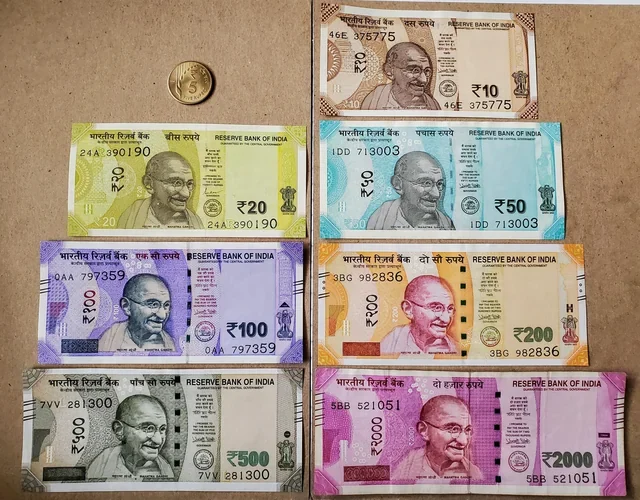
Despite warm personal rhetoric between Trump and Prime Minister Narendra Modi, disputes involving trade barriers and India’s purchases of Russian oil produced a major confrontation.
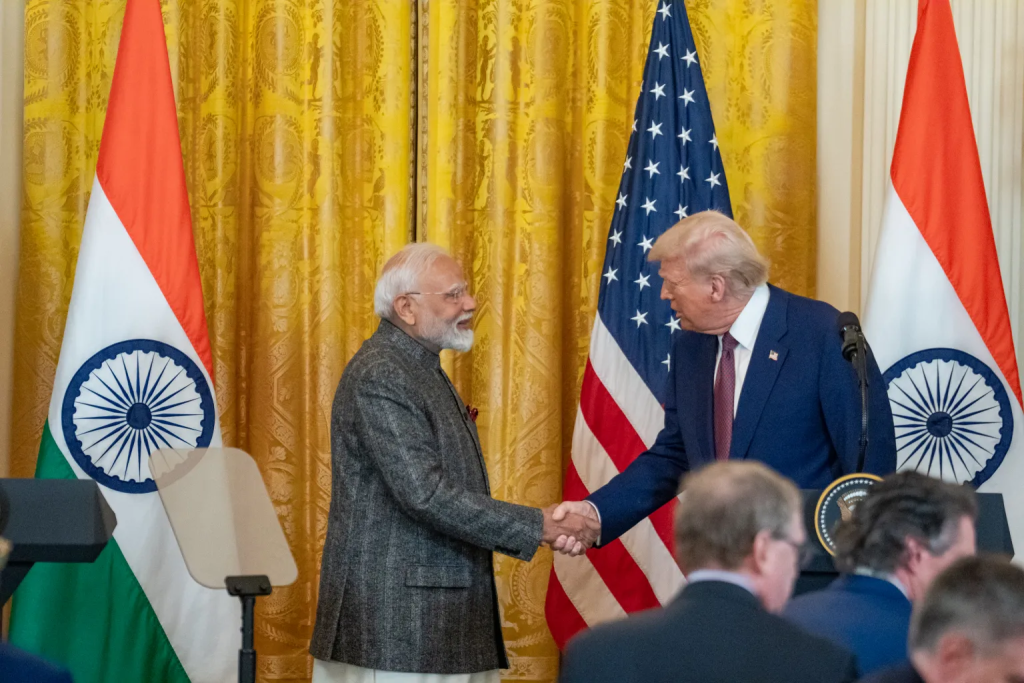
Trump imposed punitive tariffs while simultaneously describing India as a friend. Treasury Secretary Scott Bessent went further, accusing India of “profiteering” from Russian petroleum and characterizing the practice as “Indian arbitrage.”
The Indian government responded by describing the American measures as “unfair, unjustified, and unreasonable.”
The confrontation illustrates the danger of allowing immediate economic disputes to overwhelm larger strategic interests. Washington has spent years cultivating New Delhi as an important Indo-Pacific partner. A relationship important to the long-term balance of power in Asia cannot easily be measured by the outcome of a single tariff negotiation. Such arbitrary and abrupt changes in tone, rhetoric, and relationship, pushed India away from the US, and towards Russia.
Trade arrangements can be renegotiated. Strategic trust is harder to reconstruct.
Ukraine and the Reliability of American Support
The most dramatic example of Trump’s new approach to allies unfolded during his Oval Office confrontation with Ukrainian President Volodymyr Zelenskyy.
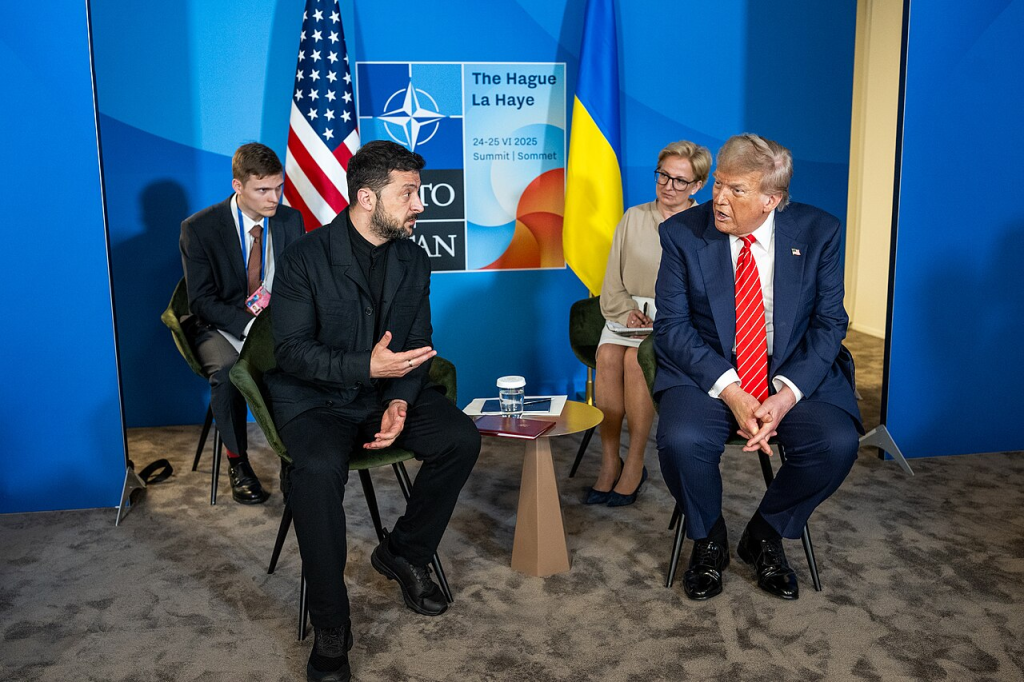
“You don’t have the cards right now,” Trump told him. “You’re gambling with lives of millions of people, you’re gambling with World War Three.”
Vice President JD Vance demanded that Zelenskyy “offer some words of appreciation for the United States of America.”
The encounter and subsequent US policy towards Ukraine resonated far beyond Kyiv. A democratic nation resisting an aggressive Russian invasion was publicly chastised in the White House even as Washington continued diplomatic engagement with Moscow.
Trump rejects the suggestion that his approach demonstrates softness toward Russia. “There’s been nobody that’s been tougher on Russia than me,” he has insisted.
Nevertheless, another question remains: What conclusions do vulnerable countries draw when American support becomes explicitly transactional?
Moldovan President Maia Sandu summarized the European argument plainly: “Russia invaded Ukraine. Russia is the aggressor.”
A Preference for Strongmen Over Democratic Idealism
Perhaps no element of Trump’s worldview has altered America’s international image more profoundly than his repeated expressions of admiration for authoritarian leaders.
Negotiating with dictators is neither unusual nor inherently objectionable. Every president must sometimes deal with governments whose values differ dramatically from those of the United States.
But diplomacy with authoritarian rulers is different from publicly admiring their style of leadership.
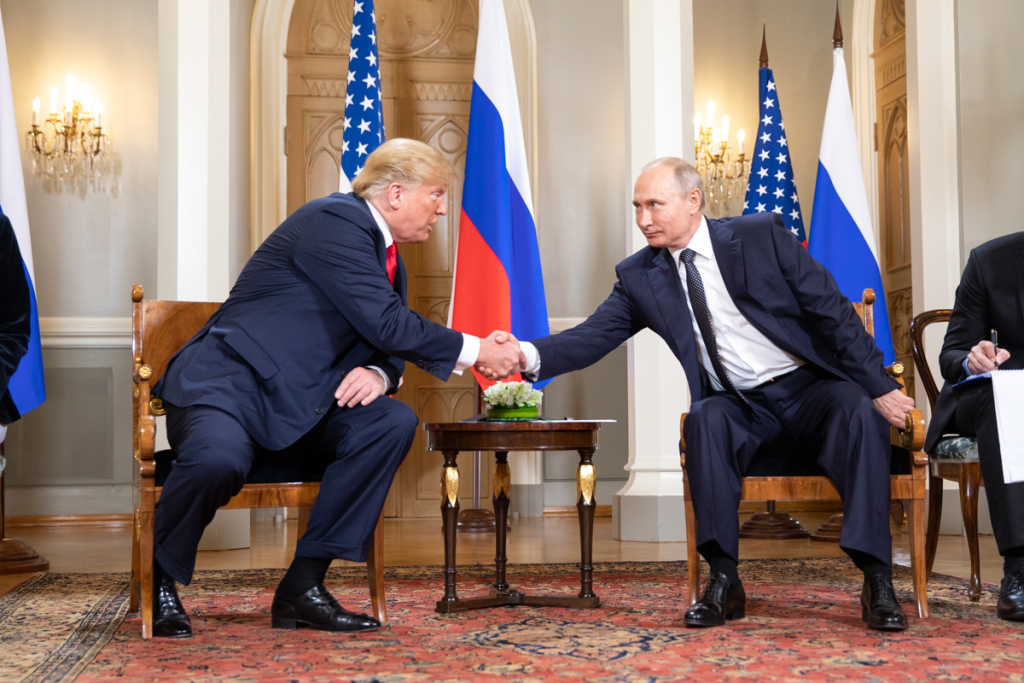
Trump has emphasized his ability to get along with Russian President Vladimir Putin. He has spoken warmly about North Korean leader Kim Jong Un, saying, “I like him, and he likes me.” He has repeatedly praised Chinese President Xi Jinping and described Hungarian Prime Minister Orbán as “one of the most respected men,” applauding his toughness.
The difference matters.
For generations, American presidents negotiated with dictators while simultaneously proclaiming that the United States stood on the side of political liberty and democratic values. Dissidents, independent journalists, and democratic activists living under authoritarian governments could therefore regard Washington, however imperfectly, as an advocate for their aspirations.
Trump has blurred that moral distinction. He has even approvingly invoked Putin’s criticism of American democracy. During a campaign speech, Trump quoted the Russian leader’s assertion that political prosecutions demonstrated “the rottenness of the American political system.”
When an American president amplifies an authoritarian ruler’s attack on America’s own democratic institutions, something significant changes.
The issue is not merely rhetoric. American influence has always possessed a moral and ideological dimension. The United States could challenge political repression abroad partly because it presents democratic government and individual liberty as alternatives to authoritarianism.
When its president appears more fascinated by the totalitarianism of strongmen than by the difficult compromises inherent in democratic governments around the world, America’s ability to make that argument is weakened.
Foreign Aid and the Retreat of American Soft Power
The dramatic retrenchment of American foreign assistance has reinforced the transformation.
Foreign aid has never been purely charitable. Humanitarian assistance, public-health initiatives, support for civil society, and independent journalism have also been instruments of American influence.
A Kenyan health policy researcher, Julia Kosgei, captured the consequences of Washington’s decisions: “What appears to be a political decision thousands of miles away is, here in Kenya, a matter of life and death.”
When America retreats from these spaces, it does not necessarily leave an empty landscape. Other powers have opportunities to expand their own influence.
The Argument for ‘America First’
Trump’s supporters emphatically reject the argument that America has been diminished.
They believe previous administrations permitted allies to free-ride on American defense commitments, tolerated unfair trade practices, and spent taxpayers’ money on international programs whose connection to American interests was sometimes difficult to demonstrate.
House Speaker Mike Johnson described the change as “the Trump effect.”
“No more free rides for the rest of the world,” he declared. “No more using the American taxpayer as their own personal piggy banks.”
Defense Secretary Pete Hegseth distilled the philosophy even more succinctly: “Americans want partners—not dependencies.”
Those arguments need to be examined. A sustainable foreign policy requires domestic legitimacy. Allies should carry reasonable burdens, trade relationships should not systematically disadvantage American workers, and international programs should be accountable.
But demanding greater contributions from allies is different from making them question whether America can be relied upon at all.
A More Feared America, But a Less Trusted One
That distinction may ultimately define Trump’s impact on America’s standing in the world.
For decades, the remarkable achievement of American foreign policy was not simply that other countries recognized American power. It was that so many wanted to stand beside America.
They joined American-led alliances, tied their security to Washington, traded within a largely American-designed economic order, sent generations of students to American universities, and looked to the American democratic experiment as proof that political liberty and national strength could coexist.
That reservoir of trust took generations to accumulate. It can be depleted much faster.
A transactional superpower can remain extraordinarily powerful. It can impose tariffs, threaten sanctions, compel allies to increase defense spending and force governments to calculate the cost of defying Washington.
But coercion is not leadership
Leadership exists when nations follow even when they cannot be forced. It exists when American promises are considered reliable beyond a single president or election. It exists when those living under authoritarian rule believe the United States represents something fundamentally different from the regimes governing them.
That is why Trump’s attraction to strongmen is not peripheral to the debate about American decline. It goes directly to the meaning of American leadership.
China and Russia do not require a militarily weak America to benefit from this transformation. They benefit from an America whose alliances are less certain, whose democratic message is less compelling and whose partners increasingly contemplate a future in which Washington may not always be dependable.
Trump promised that “America First” would restore American strength.
History may record a more complicated paradox: America remained immensely powerful, but the idea of American leadership became smaller.
Tariffs can be reversed. Trade agreements can be renegotiated. Foreign assistance can be restored. Diplomatic disputes can eventually be repaired.
Trust is different
Once allies begin preparing for an America they cannot confidently rely upon, once democratic partners conclude that Washington views alliances primarily as financial transactions, and once authoritarian rulers discover that an American president may admire their exercise of power more readily than challenge their repression, the international system begins adjusting accordingly.
The greatest danger of the Trump era, therefore, is not that America ceased to be powerful. It is that American power has become less persuasive.
A nation can possess the world’s most formidable instruments of influence and still surrender something that tariffs, sanctions and military might cannot easily recover: the confidence of allies, the admiration of emerging democracies and the moral authority to persuade others that its leadership serves something greater than itself.
America can still command the world’s attention. The far more consequential question after Trump is whether it can still command the world’s trust.