The meeting between Secretary of State Marco Rubio and Pope Leo XIV highlights escalating tensions between the Vatican and the Trump administration, particularly regarding U.S. policy in the Middle East.
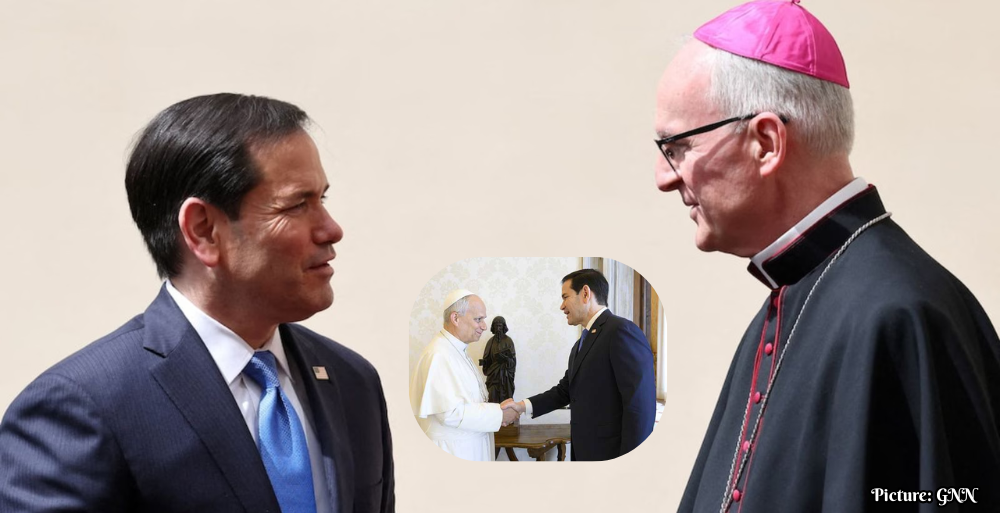
VATICAN CITY — On May 7, 2026, Secretary of State Marco Rubio met privately with Pope Leo XIV at the Vatican, amid rising tensions between the pontiff and President Donald Trump. This meeting, held in the pope’s private library, addressed significant topics, including the situation in the Middle East and mutual interests in the Western Hemisphere, according to a statement from State Department spokesperson Tommy Pigott.
The dialogue comes in the wake of President Trump’s recent public condemnation of Pope Leo XIV, who has consistently criticized U.S. and Israeli military actions in Iran. As the first American pope, Leo XIV has positioned himself as a moral counterbalance to Trump’s administration, advocating for immigration reform and denouncing military intervention as a means of resolving international conflicts.
Backdrop of Tension
President Trump voiced his concerns about Pope Leo XIV’s stance during a conservative talk show interview earlier in the week. He accused the pope of “endangering a lot of Catholics” by seemingly endorsing Iran’s nuclear ambitions. This accusation reflects a broader perception within the Trump administration that the pope’s calls for nuclear disarmament and his criticisms of military engagement are at odds with U.S. national security interests.
In response to Trump’s remarks, Pope Leo XIV emphasized the Catholic Church’s longstanding opposition to nuclear weapons. Speaking to reporters, he remarked, “If someone wants to criticize me for proclaiming the Gospel, let him do so truthfully. The church for years has spoken against all nuclear weapons, so there’s no doubt there.” This statement underscores the pope’s commitment to peace and his role as a moral leader on the global stage.
Official Reactions and Ongoing Dialogue
At a press briefing, Rubio reiterated the administration’s concerns regarding Iran, stating, “The president doesn’t understand why anybody, leave aside the Pope, would think that it’s a good idea for Iran to ever have a nuclear weapon.” Rubio’s comments were intended to clarify that the pope has never suggested that Iran should possess nuclear weapons, yet they highlight the friction between the Vatican’s moral stance and the administration’s security policies.
During his visit, Rubio was accompanied by his wife, Jeanette Dousdebes Rubio. The meeting with Pope Leo XIV was presented as part of a broader effort to strengthen diplomatic relations with the Holy See. Pigott’s statement emphasized that the meeting reaffirmed the strong ties between the U.S. and the Vatican, with both parties committed to promoting peace and human dignity.
Implications for U.S.-Vatican Relations
The encounter between Rubio and Pope Leo XIV raises critical questions about the future of U.S.-Vatican relations amid ongoing global challenges. The Vatican’s role as a moral authority is significant, particularly during times of international conflict, such as the current tensions surrounding Iran. The pope’s vocal critiques of military action suggest an ideological divide that could complicate future diplomatic efforts.
Rubio’s visit to Rome is set to extend through Friday, when he is scheduled to meet with Italian leaders, including Prime Minister Giorgia Meloni and Foreign Minister Antonio Tajani. These discussions will likely encompass broader European security issues and the transatlantic relationship with the United States, emphasizing the interconnected nature of global diplomacy.
As the Trump administration navigates its foreign policy landscape, the Vatican’s influence in international dialogues regarding peace and humanitarian issues remains pivotal. The meeting between Rubio and Pope Leo XIV may underscore the necessity for continued dialogue in addressing complex global challenges, particularly as diplomatic relations evolve.
This interaction is part of a broader strategy by the U.S. to maintain robust ties with the Vatican while balancing domestic and international criticisms of its policies. The ongoing dialogue between these entities reflects the intricacies of current international relations and the importance of moral leadership in confronting global crises.
Historical Context and Future Considerations
Historically, the Vatican has played an essential role in global diplomacy, often acting as a mediator in conflicts and advocating for peace. The relationship between the U.S. and the Vatican has seen fluctuations based on the prevailing political climates in both nations. The Trump administration’s hardline policies on immigration and military intervention have often clashed with the Vatican’s emphasis on compassion and dialogue.
Looking ahead, the implications of this meeting may resonate beyond immediate diplomatic discussions. The Vatican’s position on issues such as disarmament, migration, and global poverty aligns with broader international humanitarian principles, which may challenge the Trump administration’s approach to foreign policy. As geopolitical dynamics shift, the role of moral authority in international relations could become increasingly significant, and the Vatican’s voice may continue to be a critical factor in shaping global responses to conflict.
In conclusion, the meeting between Secretary of State Marco Rubio and Pope Leo XIV not only highlights the current tensions between the Trump administration and the Vatican but also raises important questions about the future of their relationship. As both parties navigate their respective challenges, the potential for collaboration on shared values remains a crucial aspect of their diplomatic engagement.