China leads the world in mathematics education according to the PISA 2025 study, with significant implications for global education systems and competitive future workforce skills.
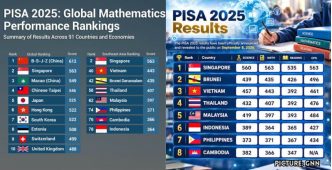
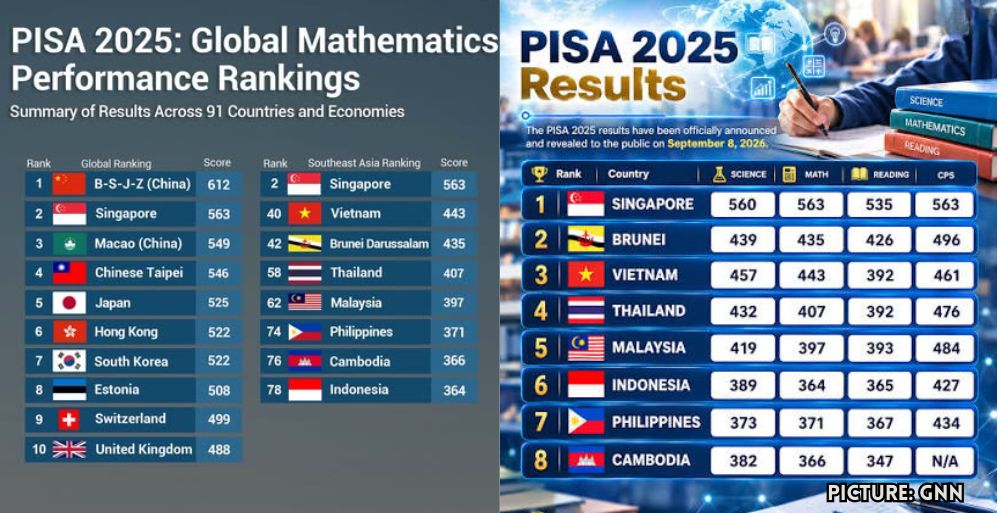
The results of the 2025 Programme for International Student Assessment (PISA), released in September 2026, indicate that China excels in mathematics, achieving an average score of 612. This score is nearly 150 points above the Organisation for Economic Co-operation and Development (OECD) average of 463, highlighting a substantial lead in mathematical proficiency among 15-year-old students. The PISA assessment, which evaluates students in mathematics, reading, and science, aims to measure not only the recall of mathematical formulas but also the ability to apply mathematical reasoning to real-world problems.
PISA 2025 saw participation from over 760,000 students across 91 countries and economies, collectively representing approximately 33 million 15-year-olds globally. Notably, the score attributed to China reflects the aggregated results from four provinces: Beijing, Shanghai, Jiangsu, and Zhejiang. Uzbekistan was excluded from the results due to the absence of comparable data, highlighting the competitive nature of this international assessment.
Top Performers and Global Rankings
In the latest ranking, Singapore follows China with an average score of 563, while Macao and Taiwan are positioned third and fourth, respectively, with scores of 549 and 546. Japan ranks fifth with a score of 525, and both South Korea and Hong Kong scored 522, tying for sixth place. Estonia stands out among European nations, securing eighth place with a score of 508. This dominance of East Asian countries in the top ranks of mathematics education underscores a regional trend of educational excellence, driven by rigorous curricula and a cultural emphasis on academic achievement.
In contrast, Canada ranks 11th globally, achieving an average score of 485, which is 22 points above the OECD average. The United Kingdom follows with a score of 488, while Australia comes in at 17th with a score of 478. The United States, however, ranks 27th with an average score of 463, precisely matching the OECD average. This positioning raises concerns about the state of mathematics education in the U.S. compared to its global counterparts.
Declining Trends in Mathematics Scores
The PISA results also reveal a concerning trend across OECD countries, where average mathematics scores have declined by 22 points from 2015 to 2025, equating to just over one year of educational learning. This decline is mirrored among non-OECD participants as well, signaling a potential crisis in mathematics education. Countries that previously had strong performances are now facing challenges that could affect their future workforce capabilities.
The study found a correlation between heavy digital leisure activities and student performance in mathematics. Students who engaged in more than four hours of digital leisure outside of school reported lower mathematics scores and a diminished sense of belonging within their educational environments. Conversely, moderate use of digital technology was associated with improved outcomes in both mathematics proficiency and student well-being. This suggests that while technology can enhance learning, excessive use may hinder academic performance.
Implications for Global Education Systems
These findings raise critical questions about the effectiveness of current educational approaches and the long-term implications for global competitiveness. As China and other East Asian countries continue to lead in mathematics education, educators and policymakers worldwide may need to reassess their strategies in preparing students for an increasingly complex and technology-driven future. The ability to understand and apply mathematical concepts is essential not only for academic success but also for innovation and problem-solving in the workforce.
Furthermore, as education systems analyze these results, the challenge remains to implement effective educational reforms that can address the declining trends observed in mathematics proficiency. This may involve revising curricula to place greater emphasis on critical thinking and real-world application of mathematical concepts, alongside enhancing teacher training and resources.
In light of these results, countries with declining scores, particularly the United States, may need to focus on targeted interventions that address the specific needs of students struggling in mathematics. Engaging parents and communities in educational initiatives can also foster a supportive environment for students. As nations analyze these results, the challenge remains to implement effective educational reforms that can address the declining trends observed in mathematics proficiency.
Conclusion
The PISA study serves as a crucial indicator of educational trends and outcomes, providing valuable insights into areas where countries can improve their educational systems. As nations strive to enhance their competitiveness in a global economy increasingly reliant on technology and innovation, the emphasis on mathematics education will be more critical than ever. Future assessments will likely continue to shed light on the effectiveness of these reforms and the adaptability of education systems to the challenges posed by a rapidly changing world.