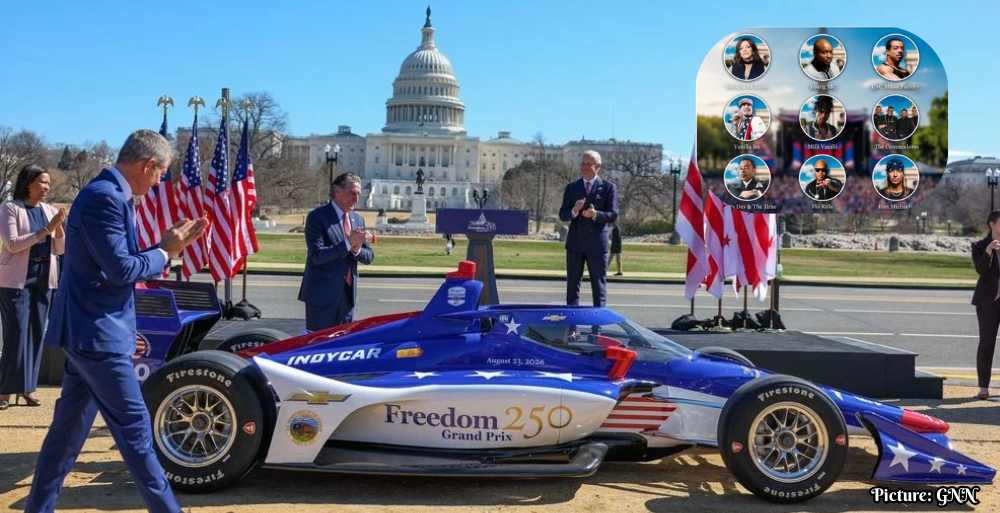
Several artists have announced their withdrawal from the America 250 celebration, expressing concerns over its political affiliations despite organizers’ claims of nonpartisanship.
Several prominent entertainers have publicly declined to participate in the America 250 celebration, an event scheduled for June 25 on the National Mall in Washington, D.C., intended to commemorate the 250th anniversary of the United States. The announcement of their withdrawals has sparked discussion regarding the event’s political implications, as multiple artists have raised concerns about their perceived association with the event’s political affiliations.
Country singer Martina McBride was among the first to announce her decision to withdraw, taking to social media on Thursday to clarify her stance. In an Instagram post, McBride stated, “I was presented with an opportunity to perform at a nonpartisan event but that turned out to be misleading.” She emphasized that she had been assured by organizers that the event would celebrate all 50 states without political bias, expressing disappointment at the situation.
Artists Voice Concerns
On the same day, several other artists, including Young MC, Morris Day and the Time, C+C Music Factory, and The Commodores, confirmed their withdrawal from the celebration through statements shared online. Young MC articulated his disappointment in a Facebook post, noting, “The artists were never told about any political involvement with the event.” He pointed out that while the event was marketed as nonpartisan, outlets such as SPIN magazine have described it as “Trump-backed,” leading to his decision to step back.
Freedom Williams, the vocalist for C+C Music Factory, conveyed his frustrations in a candid video post, where he stated, “I told my agent, yeah, no, I ain’t good to do that. … I don’t f— with Trump. I don’t give a f— about Trump.” Williams highlighted his concern regarding the lack of transparency around the event’s political affiliations, suggesting that the organizers had not disclosed all pertinent information regarding the nature of the event.
Morris Day also made a public statement regarding his decision, asserting, “Contrary to rumor, Morris Day & The Time will not be performing at the ‘Great American State Fair.’ It’s a No For Me,” which he shared in a graphic on Facebook. This coordinated withdrawal from multiple artists illustrates a growing apprehension among entertainers about their associations with events perceived as politically charged, particularly in the current polarized political climate.
Remaining Performers and Organizer’s Response
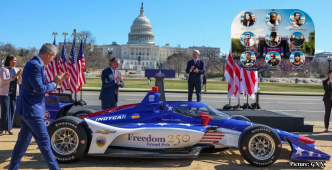
Despite the withdrawals from several high-profile acts, some performers, including rappers Flo Rida and Vanilla Ice, are still expected to participate in the event. The organizing body, known as Freedom 250, has maintained that the event is intended to celebrate the nation’s history and unite Americans, asserting that it is not affiliated with the White House.
Rachel Reisner, a spokesperson for Freedom 250, explained in a statement to The Hill, “Freedom 250 is a nonpartisan 501(c)(3) dedicated to uniting Americans around the nation’s 250th anniversary.” Reisner emphasized that the organization aims to honor the country’s history while welcoming all who wish to commemorate this significant milestone. The insistence on nonpartisanship by the organizers attempts to counteract the criticisms raised by the withdrawing artists.
Keith Krach, CEO of Freedom 250, initially announced the event lineup with the intention of “bringing together people from all 56 states and territories to celebrate the traditions, innovation, music, military heritage, freedom, and entrepreneurial spirit that define our nation.” However, the recent backlash from artists raises critical questions about the credibility of these claims and the event’s nonpartisan status.
Broader Implications of the Withdrawals
The withdrawals of these entertainers from the America 250 celebration not only reflect their individual concerns regarding political affiliations, but they also highlight a broader issue regarding the intersection of entertainment and politics in contemporary America. As the nation approaches its 250th anniversary, the challenge of maintaining nonpartisan celebrations in an increasingly politically charged environment remains a significant concern.
This incident serves as a focal point for discussions about the responsibilities of artists in choosing how they engage with politically affiliated events. Many artists are increasingly aware of the potential backlash associated with performing at events perceived to have partisan ties, especially in a climate where public sentiment is deeply divided.
The ongoing debate surrounding the America 250 event will likely influence future discussions about political involvement in public celebrations. As the nation strives to commemorate its history, the challenge of navigating political affiliations may become more pronounced, affecting not only how events are planned but also how artists perceive their role in public life.
As more details emerge regarding the event and its potential changes in lineup or format, the implications of these withdrawals will continue to reverberate throughout the entertainment industry and beyond. The America 250 celebration, meant to be a unifying event, now faces scrutiny over its ability to fulfill that promise amidst rising political tensions.
This story will be updated as more information becomes available.