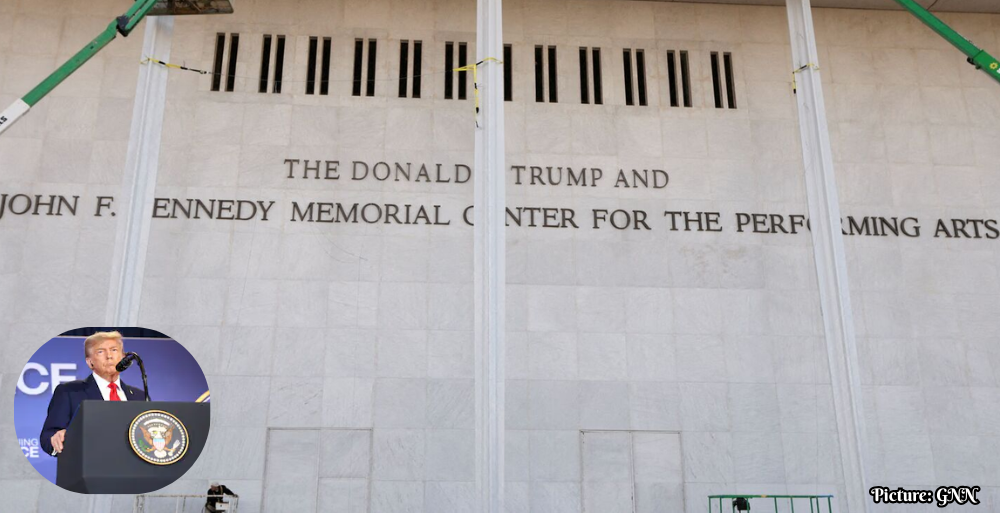
President Trump condemned a federal judge’s ruling that halted renovations at the Kennedy Center, arguing that public safety concerns were dismissed and emphasizing the need for name changes.
Washington, D.C. – On Friday, President Donald Trump publicly criticized U.S. District Judge Christopher Cooper following the judge’s decision to block plans for significant renovations at the John F. Kennedy Center for the Performing Arts. The ruling, which also prevented the Trump administration from renaming the iconic venue, has sparked controversy and drawn a sharp response from the President.
Judge Cooper, appointed by former President Barack Obama, sided with a legal challenge brought forth by Democratic Representative Joyce Beatty of Ohio, who argued that the board members of the Kennedy Center had improperly voted to close the building for renovations scheduled to begin on July 5, 2023. In his ruling, Cooper pointed to Congress’s authority over any potential name changes for the facility, emphasizing that the center’s foundational statute unequivocally states that it must remain named after President John F. Kennedy.
In his statement on the social media platform Truth Social, Trump expressed his disapproval, stating, “Judge Cooper should be ashamed of himself! I cannot be involved with a situation where danger to the Public is allowed to flourish in plain and open sight.” He further claimed that the judge disregarded a presentation from leading building and construction experts that outlined the structural dangers of the facility, including “rotting beams, parking areas that are subject to collapse, and various other Life and Safety problems.”
Legal Context and Implications
The ruling on the Kennedy Center renovation project raises significant legal and constitutional questions regarding the authority of federal judges in overseeing the management of national landmarks. The Kennedy Center’s organic statute, as referenced by Cooper, explicitly protects the venue’s name and calls for its preservation as a memorial to President Kennedy. This legal framework is designed to safeguard the legacy of historical figures within public institutions and reflects a broader commitment to maintaining the integrity of cultural heritage sites across the nation.
Trump’s administration has expressed intentions to modernize several prominent landmarks in Washington, D.C., through initiatives like the D.C. Safe and Beautiful Task Force. However, the proposed renovations at the Kennedy Center have faced scrutiny from both legal and public safety perspectives. Trump’s assertion that the building requires urgent attention to address safety concerns has been a central theme in his response to the ruling. The President indicated that he would direct the Commerce Department to make arrangements for Congress to take over the center’s management, a move that could provoke further political discourse surrounding federal oversight of cultural institutions.
Political Dynamics and Ongoing Controversies
This incident is emblematic of the ongoing tensions between the Trump administration and various branches of government, particularly the judiciary. Conflicts over the management and renovation of federal properties are not new; however, they have become increasingly pronounced under the Trump presidency, which has pursued ambitious infrastructural changes to iconic sites in the nation’s capital.
In addition to the Kennedy Center, Trump’s proposed demolition of the East Wing of the White House to construct a ballroom has also faced legal challenges. Similarly, renovations at the Lincoln Memorial Reflecting Pool have attracted scrutiny from advocacy groups concerned with preserving the historical integrity of such sites. The convergence of legal hurdles and political opposition reflects a broader skepticism toward Trump’s renovation plans, particularly from Democratic lawmakers and cultural preservation advocates.
Responses from Advocacy Groups and Lawmakers
Rep. Joyce Beatty’s legal challenge to the Kennedy Center renovations has resonated with various advocacy groups that prioritize the preservation of cultural heritage and public safety. Critics of the Trump administration’s approach argue that prioritizing aesthetic renovations over fundamental safety and historical preservation could lead to adverse outcomes for the nation’s cultural landmarks.
In light of the ongoing legal proceedings and public discourse surrounding the Kennedy Center, the implications of Judge Cooper’s ruling extend beyond the immediate renovation plans. They underscore the complexities involved in managing public spaces that hold significant cultural and historical value. As the debate continues, both supporters and opponents of the renovation plans are likely to engage in a more profound dialogue regarding the future of federally managed properties and the extent of political influence on cultural institutions.
Conclusion
The clash between the Trump administration and U.S. District Judge Christopher Cooper over the Kennedy Center renovations exemplifies the multifaceted nature of governance, public safety, and cultural preservation. As discussions unfold regarding the implications of the ruling, stakeholders from various sectors will be watching closely to assess the potential impacts on the Kennedy Center and other federal properties. The outcomes of these deliberations could set important precedents for how similar cases are handled in the future, particularly in the context of preserving the legacy of historical figures within public institutions.