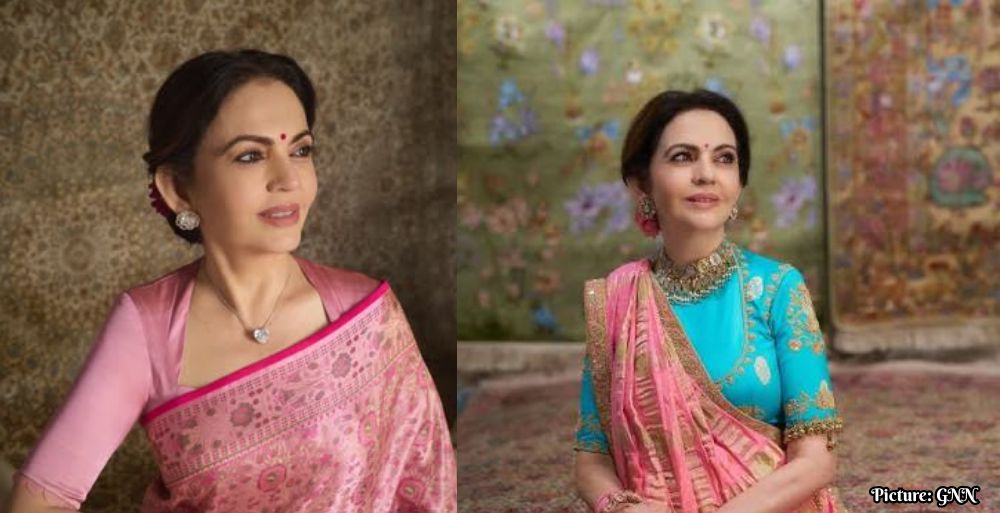
Nita Ambani, Chairperson of Reliance Industries, received recognition as the top-ranked individual on Fortune’s Most Powerful Women list, symbolizing her leadership through an exquisite Tanchoi Banarasi sari, a testament to India’s rich textile heritage.
Nita Ambani, the Chairperson of Reliance Industries and a prominent figure in Indian business, was honored as the most powerful woman in the world according to Fortune magazine’s latest rankings. The accolade, presented at a prestigious event, underscores her influential role in corporate leadership and social impact, particularly through the Reliance Foundation, which has reportedly reached over 100 million lives across India, including 29 million children. This recognition not only celebrates Ambani’s professional achievements but also highlights her enduring commitment to inclusive development and institution-building.
A Symbol of Cultural Heritage
For the occasion, Ambani adorned a stunning blush pink Tanchoi Banarasi silk sari, expertly crafted by Swadesh. The sari’s design was inspired by the Gulab Holi festival in Varanasi, a city known for its rich cultural and spiritual significance. The floral jaal pattern, intricately woven with soft ivory and antique gold accents, exemplifies the traditional Tanchoi weaving technique, renowned for its near-reversibility and luxurious finish. This choice of attire not only reflects Ambani’s personal style but also serves as a tribute to India’s textile heritage and craftsmanship.
The sari was handwoven over a two-month period by master artisans Arushi Lohia and Krishna Lohia, showcasing the skill and dedication that has defined Banarasi weaving for centuries. The craftsmanship involved in creating such a piece is a testament to the labor-intensive processes that have been passed down through generations, sustaining the cultural legacy of the region.
The Historical Significance of Banarasi Weaving
Roli Mehra, founder of Roliana – Home of Benarasi Sarees, elaborated on Varanasi’s pivotal role in the textile industry, emphasizing its historic significance on the Silk Route. This strategic location facilitated the exchange of goods, artistry, and techniques, enriching the local weaving practices with influences from Chinese and Persian designs. Techniques such as Jamdani, known for its intricate detailing, and Kinkhab, characterized by its luxurious gold and silver threads, have contributed to the esteemed status of Banarasi textiles.
The creation of a Banarasi sari begins with the meticulous selection and dyeing of silk yarns. These dyed threads are loaded onto handlooms, where skilled artisans employ various weaving techniques, including Kadiyal, Meenakari, Tanchoi, and Kadhwa. Each method contributes to the intricate patterns and textures that define Banarasi saris, making them coveted pieces of art.
Tanchoi silk saris are particularly valued for their soft texture and excellent drape, which result from the satin weave. A distinctive feature of Tanchoi silk is the absence of loose, long floats on the fabric’s reverse side, as all the yarns are interlocked within the weave. This meticulous craftsmanship not only enhances durability but also adds to the overall visual appeal of the sari.
Fashion as a Statement of Identity
Nita Ambani’s sartorial choice for the Fortune event extends beyond personal style; it serves as a powerful statement on cultural representation in contemporary fashion. Accompanying her Tanchoi Banarasi sari was a matching blouse with a sweetheart neckline, complemented by exquisite jewelry that included a diamond pendant, solitaire studs, and a tennis bracelet. Her hairstyle—a neatly pulled-back bun adorned with roses—along with a bright red bindi, underscored the traditional elements of Indian attire while presenting a modern elegance.
This blend of tradition and contemporary fashion highlights the importance of cultural heritage in today’s globalized world. Ambani’s recognition as a leading businesswoman aligns with her ability to honor India’s rich textile traditions, reinforcing the notion that cultural identity can coexist with modern achievements in various fields.
Impact and Implications
The acknowledgment of Nita Ambani as one of the most powerful women by Fortune not only reflects her individual accomplishments but also shines a spotlight on the broader contributions of women in leadership roles across various sectors. As Ambani continues to navigate her dual role in business and philanthropy, her influence extends beyond economic metrics; she serves as an inspiration for women aiming to balance professional success with cultural pride.
In receiving this honor, Ambani emphasizes the significance of women in leadership, particularly in regions where traditional roles are often reinforced. Her commitment to social initiatives, particularly through the Reliance Foundation, which focuses on education, healthcare, and rural development, exemplifies how corporate leaders can drive meaningful change in society.
As India continues to evolve in the global economic landscape, figures like Nita Ambani play a crucial role in shaping perceptions of women in business. Her fusion of traditional attire with contemporary leadership underscores the potential for cultural heritage to inform and enrich modern identities. This recognition from Fortune serves not only as a personal achievement for Ambani but also as a broader celebration of the capabilities and contributions of women in positions of power.