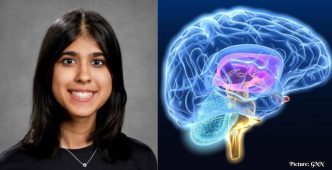
A 16-year-old high school student from Bellevue, Washington, has created NeuroSpeak, an innovative application designed to help users identify early signs of Parkinson’s disease, Alzheimer’s, and ALS through voice analysis.
Bellevue, Washington – In a remarkable blend of technology and healthcare, 16-year-old Ilina Rao, a junior at Interlake High School, has developed NeuroSpeak, a free application leveraging artificial intelligence to analyze voice patterns for early indications of neurodegenerative diseases. Rao’s initiative is part of her participation in Technovation Girls, a global competition aimed at empowering young women to create technological solutions for pressing real-world issues.
Launched in June, Ilina was recognized as a semifinalist among approximately 33,000 competitors from 160 countries. Although she did not advance to the finals announced last week, she expressed gratitude for the opportunity to showcase her work on a significant health challenge. “This competition has given me a platform to share my innovation and contribute to a pressing healthcare issue,” she remarked.
Understanding NeuroSpeak
NeuroSpeak operates as a screening tool, a crucial distinction that Rao emphasizes. “It’s a screening tool, not a diagnostic tool,” she clarified, highlighting the app’s intent to aid in preliminary assessments rather than replace professional medical evaluations. The application allows users to record 30-second speech samples daily, which the AI analyzes to identify patterns that may indicate early signs of Parkinson’s disease, Alzheimer’s disease, or amyotrophic lateral sclerosis (ALS).
Rao’s motivation for creating NeuroSpeak stemmed from her observation that many existing AI tools in healthcare are designed primarily for hospitals or medical specialists, leaving a gap for families and individuals who may not have immediate access to medical care. “I wanted to build something that put that kind of early detection technology directly into someone’s hands for free,” she said. This approach is particularly significant for underserved populations, including those in rural areas or individuals lacking health insurance.
Development and Functionality
The app’s functionality includes an in-app symptom journal, enabling users to document their health experiences alongside the voice analysis results. Rao chose to focus on neurodegenerative diseases characterized by speech impairments, noting, “Humans, including medical professionals, have difficulty telling which speech patterns correlate with which neurodegenerative conditions.” By employing AI, NeuroSpeak aims to improve the efficiency of identifying and distinguishing these conditions based on speech analysis.
Rao began her work on NeuroSpeak last summer, dedicating significant time and effort to develop a tool that could provide meaningful assistance to users. Her independent work ethic is commendable, as most participants in Technovation Girls typically collaborate in teams. Rao, however, chose to tackle the challenge alone, dedicating herself almost daily to refine her app and prepare for competition presentations.
Impact and Future Aspirations
The experience of participating in Technovation Girls has been transformative for Rao. She noted, “It’s given me a lot of confidence, being chosen to be a semifinalist, that I can make an impact and that my efforts mean something.” While NeuroSpeak is not yet publicly available, Rao continues to work on enhancing its functionalities, ensuring that it meets the needs of potential users.
The Technovation Girls competition not only offers educational stipends but also provides a platform for participants to present their projects at a prestigious World Summit, scheduled for this fall in Bengaluru, India. Rao’s journey illustrates the potential of youth innovation in addressing critical health issues, positioning her as a notable emerging voice in the intersection of technology and healthcare.
As NeuroSpeak progresses toward public availability, its implications could extend beyond individual users. It has the potential to influence healthcare practices by contributing to a greater understanding of how AI technologies can facilitate early detection and monitoring of neurodegenerative diseases. The proactive approach embodied by NeuroSpeak exemplifies a shift toward more accessible healthcare solutions, empowering individuals to take charge of their health through innovative technology.
In a broader context, the development of applications like NeuroSpeak highlights a growing trend in the healthcare sector where technology is increasingly democratizing access to essential health tools. As AI continues to evolve, the possibilities for applications that enhance early detection and intervention in various medical fields are expanding, potentially leading to improved outcomes for countless individuals.
Rao’s commitment to creating a free, accessible tool that addresses a significant health issue signifies not only her passion but also the capabilities of young innovators to effect change in the world. Her project stands as a testament to the transformative power of technology in healthcare, inviting further exploration into how emerging technologies can bridge gaps in medical access and improve diagnostic capabilities.