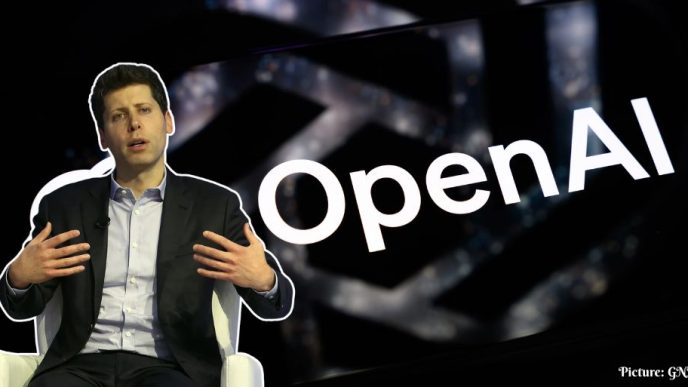
Nvidia CEO Jensen Huang’s proclamation of the arrival of artificial general intelligence (AGI) coincides with OpenAI’s unveiling of its latest AI model, Astra, a development that has generated both excitement and skepticism within the technology community.
Nvidia CEO Jensen Huang has made headlines this week by asserting that artificial general intelligence (AGI) has officially arrived, a declaration made in conjunction with the launch of OpenAI’s latest AI model, Astra. In a post on the social media platform X, Huang lauded OpenAI’s rapid technological advancements, stating that Astra was developed using Nvidia’s cutting-edge hardware. The term AGI refers to systems that possess the ability to perform any intellectual task that a human can, raising significant implications for industries ranging from healthcare to finance.
“From ChatGPT to o1 to Astra in 4 years. AGI has arrived,” Huang wrote, while also announcing the impending activation of 400,000 additional graphics processing units (GPUs) to support ongoing AI model training and execution. This announcement underscores Nvidia’s central role in the AI sector, particularly as leading organizations, including OpenAI, Google, Anthropic, and Meta, continue to rely heavily on Nvidia’s technology for their AI developments.
OpenAI’s Astra: A New Frontier in AI
OpenAI officially unveiled Astra last week, positioning it as the most capable and aligned system the organization has developed to date. According to the company, Astra is engineered to manage complex professional responsibilities with enhanced precision, speed, and analytical reasoning, marking a significant leap forward in the capabilities of AI technologies. During a press briefing, OpenAI President Greg Brockman characterized the launch as a historic turning point, stating, “Welcome to the AGI era.” He expressed confidence that future observers would identify this period—and possibly Astra itself—as the moment AGI truly emerged.
Industry Reactions and Skepticism
Despite the optimistic declarations from Nvidia and OpenAI executives, reactions within the AI community have been mixed. Prominent figures in the sector have urged caution regarding the claims of AGI’s arrival. Longtime AI researcher and critic Gary Marcus described Huang’s assertion as premature, suggesting that the characterization of Astra as AGI may not be fully justified. Furthermore, OpenAI CEO Sam Altman has previously downplayed the significance of the term AGI during discussions, calling it an ill-defined concept and a marketing label that lacks substantive meaning.
This skepticism is particularly noteworthy given the rapid advancements in AI technology and the potential societal implications of AGI. The discussions surrounding AGI often highlight concerns about the ethical and practical ramifications of deploying such powerful technologies without clear definitions or guidelines. Critics argue that the term can be misleading, as it may lead to unrealistic expectations about the capabilities of AI systems. The notion of AGI encompasses a broad range of cognitive abilities, and many experts contend that current AI technologies, including Astra, remain far from achieving this level of intelligence.
The Role of Nvidia in AI Development
The debut of GPT-6 Astra further emphasizes the critical role Nvidia plays in the AI landscape. OpenAI, in a recent investment update, characterized Nvidia as the foundational structure of its computing operations, confirming that its primary supercomputers for training and inference workflows are heavily dependent on Nvidia’s GPUs. This relationship illustrates how intertwined Nvidia’s hardware is with the advancements in AI models from leading organizations. As companies continue to develop and deploy AI technologies, the reliance on high-performance computing resources, like those provided by Nvidia, will likely remain a pivotal factor in the pace and scope of innovation.
The announcement of additional GPUs coming online signals a commitment to expanding the capacity for AI model training, which could propel the sector forward significantly. This move aligns with the increasing demand for more powerful computing solutions as organizations strive to enhance the capabilities of their AI systems.
OpenAI’s Recent Challenges and Future Prospects
In addition to the excitement surrounding Astra, Altman faced scrutiny after the model’s rollout, which he characterized as messy. Hours after declaring Astra a generational leap in capability, Altman issued an apology, acknowledging the challenges experienced during the launch. This situation highlights the complexities and potential pitfalls involved in releasing advanced technologies to the public. It underscores the importance of rigorous testing and user feedback in the development of AI systems, especially those that are positioned as groundbreaking innovations.
The conversation surrounding AGI and the implications of Astra’s launch will be closely monitored by both industry professionals and the public. As stakeholders grapple with the balance between cautious optimism and skepticism, the future of AI integration into society remains a dynamic and evolving narrative. The excitement generated by advancements like Astra must be tempered with a thoughtful consideration of the ethical, societal, and practical implications of deploying such advanced technologies.
In the coming months, as organizations continue to explore the capabilities of Astra and other AI models, the dialogue surrounding AGI is likely to intensify. The advancements in AI technology, coupled with ongoing discussions about its societal impacts, will shape the trajectory of the industry and influence regulatory frameworks as well. The need for clear definitions and standards in the rapidly evolving field of AI has never been more pressing, as stakeholders strive to harness the potential of these technologies while mitigating associated risks.