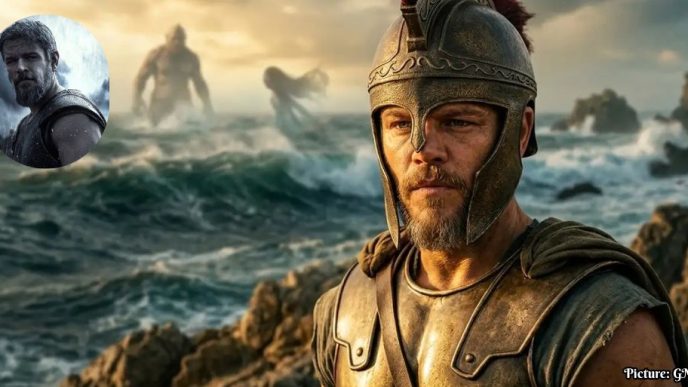
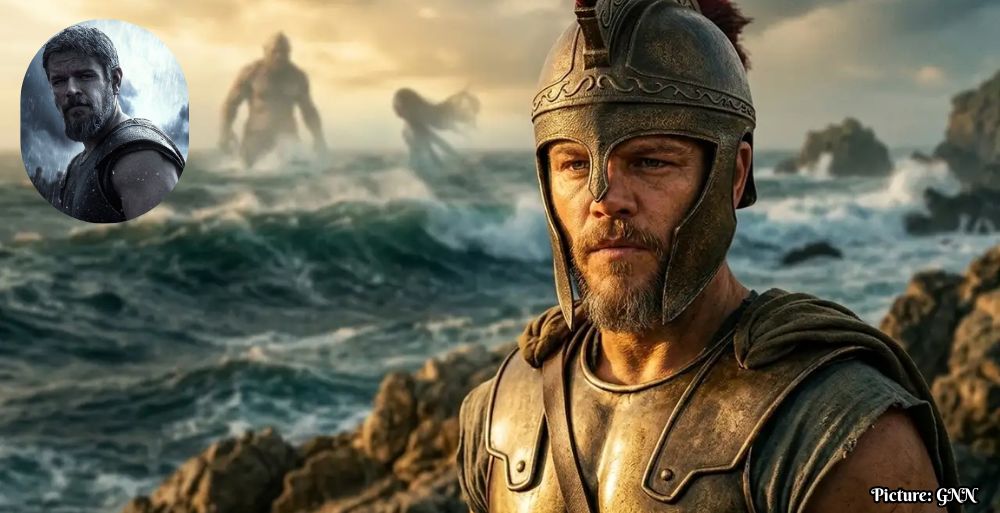
The recent financial success of Christopher Nolan’s adaptation of The Odyssey, which grossed $124.5 million in its domestic opening weekend, underscores the narrative’s enduring relevance, particularly in the context of the challenges posed by artificial intelligence.
Christopher Nolan’s adaptation of the ancient Greek epic, The Odyssey, has experienced a remarkable debut at the box office, raking in $124.5 million during its opening weekend in the United States. This impressive figure not only highlights the film’s commercial success but also reflects the continued resonance of Homer’s epic narrative with modern audiences, transcending cultural and temporal boundaries.
According to Professor Michael Sloan, a classics scholar, the enduring popularity of The Odyssey is not simply due to its visual grandeur or its box office appeal. Instead, he argues that the film encapsulates vital themes of psychological resilience and adaptability, which are particularly pertinent as society grapples with the uncertainties brought about by advancements in artificial intelligence (AI).
A Framework for Resilience
Professor Sloan emphasizes that The Odyssey serves as a profound exploration of human resilience, offering insights into how individuals can navigate their own life challenges. He notes, “The Odyssey provides a timeless framework for processing trauma, overcoming obstacles, and defining true ‘homecoming.’” This perspective invites viewers to reflect on their personal journeys, particularly in the face of contemporary issues such as technological disruption and the emotional toll of rapid change.
The character of Odysseus represents a model for resilience. His journey home, fraught with trials and tribulations, mirrors the modern experience of overcoming adversity. In an era marked by rapid technological change, Professor Sloan suggests that the lessons from Odysseus’s journey can provide a model for training our minds to be flexible and adaptive, essential qualities in an age dominated by AI.
The “Third Age” of Technology
As we enter what some scholars refer to as the “Third Age” of technology—characterized by the rise of AI and digital communication—Sloan draws parallels between the advent of the written word, which coincided with the creation of The Odyssey, and today’s landscape filled with AI-generated content. He posits that Homer’s epic can guide society in safeguarding authentic human voices amid the overwhelming noise produced by artificial intelligence. “We must ensure that genuine narratives and human experiences are not overshadowed by data-driven outputs,” he asserts.
This raises critical questions about the impact of AI on storytelling and personal expression. As algorithms increasingly define the content we consume, the challenge lies in preserving authentic human experience and narrative. The Odyssey, with its rich tapestry of human emotion and experience, serves as a reminder of the importance of storytelling in maintaining a sense of identity and community.
The Power of Narrative
Sloan further emphasizes the intrinsic human desire for storytelling over mere statistics. He states, “Wisdom wrapped in a beautifully told narrative hits harder, lasts longer, and shapes public imagination.” This underscores the importance of narratives in forming a collective understanding of the world, particularly during times of uncertainty when data can often be overwhelming or misleading.
In this context, the film adaptation of The Odyssey not only serves as entertainment but also as a vehicle for exploring deeper themes of identity, resilience, and the human experience in the face of technological change. The narrative’s enduring power lies in its ability to speak to fundamental human truths that remain relevant across ages.
Implications for Society
The success of The Odyssey in theaters reflects not only a nostalgic appreciation for classical literature but also a recognition of its value in addressing current societal challenges. As audiences engage with the film, they are invited to reflect on their own experiences and the broader implications of living in an increasingly digital world. The themes of The Odyssey resonate deeply with those confronting the repercussions of a rapidly changing society, offering a lens through which to view personal and collective resilience.
Furthermore, the film’s reception suggests a growing appetite for narratives that provide meaningful insights into human experience amidst technological advancements. In an age where AI-generated content is prevalent, the enduring relevance of human stories reminds us of the importance of maintaining a connection to our past and the narratives that define us.
As discussions surrounding AI and its implications for communication and identity continue to evolve, Professor Sloan’s insights provide a valuable framework for understanding the intersection of technology and storytelling. For those interested in exploring these themes further, Professor Sloan is available for interviews and discussions regarding the implications of The Odyssey in the context of contemporary AI challenges. He can be reached directly at [email protected] for print, radio, television, and podcast opportunities.
In conclusion, the cultural significance of The Odyssey remains strong, affirming that ancient narratives can still provide guidance and insight in our modern era, particularly as we navigate the complexities of technological evolution and its impact on human experience. The film serves as a compelling reminder of the timeless nature of storytelling and its capacity to inspire and connect across generations.