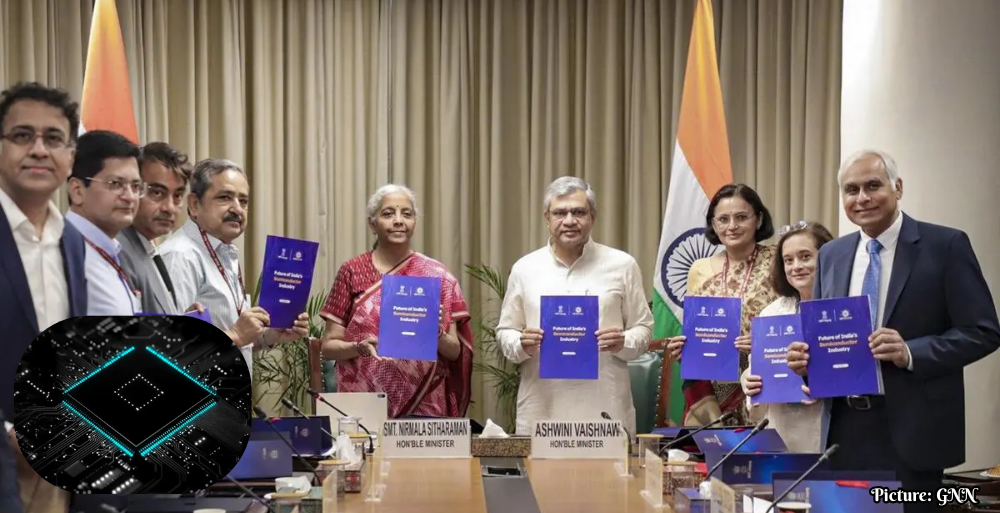
The NITI Aayog report outlines the urgent need for India to invest $135–180 billion in its semiconductor ecosystem over the next decade, emphasizing the importance of strategic partnerships and domestic capacity building to reduce reliance on imports.
NEW DELHI — The Indian government is confronted with an imperative to secure investments estimated between $135 billion and $180 billion over the next decade to cultivate a globally competitive semiconductor ecosystem by 2035, according to a report issued by the NITI Aayog on Friday. The report, titled Future of India’s Semiconductor Industry, delineates a comprehensive strategy that underscores the necessity for substantial financial commitments across various segments, including semiconductor design, fabrication, advanced packaging, materials, and supporting infrastructure.
Investment Requirements and Strategic Importance
The report articulates that to successfully establish this ecosystem, the government should allocate at least one-third of the total required investments to mitigate risks and bolster long-term investor confidence. This recommendation is grounded in the understanding that the semiconductor industry is characterized by high capital intensity and complexity, which necessitates robust financial backing for sustainable growth.
“Partnerships are strategic instruments for India to accelerate capability building, de-risk investments, and access frontier technologies,” the report states. “They can also integrate domestic industry into global semiconductor supply chains.” This highlights a broader strategy that transcends mere transactional relationships, advocating for partnerships that are outcome-focused and aligned with the national roadmap toward 2035.
Market Dynamics and Domestic Challenges
Current projections indicate that India’s semiconductor market is poised to reach approximately $200 billion by 2035. However, a significant challenge persists, as nearly 90% to 95% of the nation’s semiconductor demand is presently fulfilled through imports. This reliance on foreign sources not only leads to substantial foreign exchange outflows but also renders critical sectors vulnerable to supply chain disruptions. The report warns that this expanding gap between rising demand and limited domestic production capacity constitutes a critical strategic vulnerability while simultaneously presenting a historic opportunity for India to enhance its technological sovereignty.
Ashok Kumar Lahiri, Vice-Chairman of NITI Aayog, emphasized the importance of semiconductors in achieving technological independence, stating, “For India to become a developed nation, technological sovereignty is foundational. And that sovereignty must begin at the infrastructure layer. Semiconductors sit at the heart of this foundation, powering everything from artificial intelligence (AI) to defense and manufacturing, as well as mobility, energy systems, communications, and essential citizen services.”
Global Context and Growth Projections
The NITI Aayog report contextualizes India’s ambitions within the framework of the global semiconductor market, which has experienced a compounded annual growth rate (CAGR) of 6.5% from 2014 to 2024. This trend is anticipated to accelerate, with projections indicating a CAGR of 8.5% over the next five to ten years, driven by next-generation technologies and innovations. The burgeoning demand for semiconductors in India is equally noteworthy, with expectations for a CAGR of 19%, potentially reaching around $90 billion by fiscal year 2030. If this growth trajectory continues, the market could expand to over $200 billion by 2035.
Policy Recommendations and Future Outlook
In light of these findings, the report advocates for a concerted effort involving both public and private sectors to create an environment conducive to research, development, and manufacturing within the semiconductor sector in India. This collaborative framework is not only vital for addressing current supply chain vulnerabilities but also essential for positioning India as a pivotal player in the global semiconductor industry.
The report concludes with a clarion call for government policymakers, industry leaders, and academic institutions to collaborate to foster innovation and investment in the semiconductor sector. As global reliance on semiconductor technology continues to grow, India stands at a crossroads, with the potential to harness this opportunity to bolster its economic and technological aspirations.
Strategic Partnerships and Investment Allocation
To effectively allocate investments, the report underscores the importance of developing strategic partnerships that extend beyond traditional transactions. Emphasizing the need for a partnership strategy that focuses on outcome-based collaborations, the report advocates for initiatives that enhance design capabilities, manufacturing scales, and materials resilience in alignment with national goals for 2035. It posits that these partnerships should involve global leaders in semiconductor technology, thereby integrating domestic industry into international supply chains.
Conclusion
As the semiconductor landscape evolves, India has a unique opportunity to solidify its position in this critical sector. The NITI Aayog’s report serves as a roadmap for stakeholders, outlining the required investments, strategic partnerships, and collaborative efforts necessary to foster a robust semiconductor ecosystem. With the right commitments and partnerships, India can not only meet its domestic demand but also emerge as a significant contributor to the global semiconductor industry.