Nita Ambani’s latest appearance in a handwoven Tanchoi saree underscores the significance of India’s textile heritage and the artistry of Banarasi weaving, reflecting a commitment to preserving traditional craftsmanship.
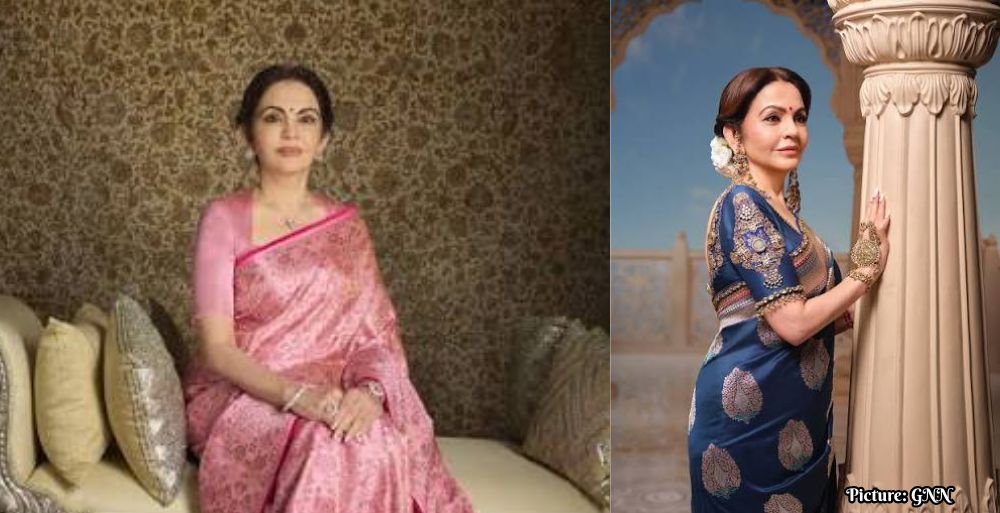
Nita Ambani, a prominent figure in India’s business and cultural landscape, recently captivated attention at a public event with her exquisite choice of attire—a vibrant pink Tanchoi saree. This sartorial decision not only highlighted her personal fashion sensibilities but also reinforced her long-standing dedication to celebrating and promoting India’s rich textile heritage. The saree, crafted by artisans in Varanasi, drew inspiration from the vivid colors of the city’s Gulab Holi festival and took over two months to create, reflecting the intricate craftsmanship characteristic of Banarasi weaving.
Celebrating Handwoven Artistry
The saree, designed by the artisanal brand Swadesh, is emblematic of Ambani’s advocacy for Indian craftsmanship. Known for her preference for handwoven textiles, Ambani often opts for garments that spotlight the skills of master artisans rather than fleeting fashion trends. This latest piece exemplifies her dedication to preserving and promoting traditional Indian crafts, particularly the intricate Banarasi weaving technique, which has been practiced in Varanasi for centuries.
Banarasi weaving is renowned for its elaborate designs and luxurious fabrics. The saree worn by Ambani features delicate floral motifs and intricate borders, all woven directly into the fabric—a process that demands exceptional skill, patience, and technical expertise. This commitment to craftsmanship is increasingly significant in a world dominated by machine production, where the artistry of manual weaving can often be overlooked. By choosing such a piece, Ambani not only showcases her fashion sense but also her commitment to sustainable and ethical fashion practices.
The Significance of Tanchoi Weaving
The Tanchoi weave is distinct from many other Banarasi sarees that often incorporate metallic zari; instead, it relies solely on colored silk threads to create richly woven patterns. This technique allows for intricate designs that resemble brocade without heavy embellishments, highlighting the skill of the weavers. Historically, the Tanchoi weave is believed to have originated from China before being refined and embraced by Banarasi artisans, establishing itself as one of the region’s most unique textile traditions.
Ambani’s saree reflects the dense weave and fine detailing characteristic of Tanchoi, showcasing a luxurious drape that enhances its appeal as an heirloom piece. Traditionally crafted to be worn and cherished for generations, these sarees carry a legacy of craftsmanship that aligns with the growing conversation around sustainable fashion and conscious consumption. The intricate design and quality of the material serve as a reminder of the value of handmade textiles in contrast to mass-produced garments.
Reflecting Cultural Celebrations
The design of Ambani’s saree draws direct inspiration from Varanasi’s Gulab Holi, a festival celebrated with joy and vibrant colors. The saree features a palette of layered pinks and intricate floral motifs, translating the festive spirit into a wearable art form. The woven florals, reminiscent of rose petals scattered across the ground, run elegantly along the saree’s body and border, while a vibrant pink edging adds a complementary contrast.
Ambani styled the saree with an emphasis on understated elegance. She complemented the saree with a matching blouse and minimalistic diamond jewelry, allowing the craftsmanship of the textile to take center stage. Her sleek low bun, adorned with fresh flowers, and a classic bindi further enhanced the overall aesthetic, demonstrating a harmonious balance between fashion and craftsmanship. This choice not only highlights Ambani’s fashion sensibilities but also her respect for the artisans who create such beautiful pieces.
A Testament to Timeless Craftsmanship
In an era where fast fashion often overshadows traditional techniques, Nita Ambani’s choice of a handwoven Tanchoi saree serves as a poignant reminder of the enduring value of handmade textiles. This saree is not merely an article of clothing; it represents a celebration of the patience, precision, and artistry inherent in traditional craftsmanship. Ambani’s appearance reiterates the notion that India’s textile legacy is not confined to museums or archives; rather, it continues to evolve through the artisans who maintain these age-old techniques.
As discussions around fashion increasingly emphasize sustainability and ethical consumption, the significance of handwoven textiles takes on heightened relevance. Nita Ambani’s sartorial choice serves not only as a personal statement but also as an emblematic tribute to the rich tapestry of India’s cultural heritage. The Tanchoi saree stands as a testament to the artistry and dedication of those who keep the tradition of handcrafted textiles alive, proving that the essence of luxury in fashion lies in the stories woven into each piece.
Moreover, Ambani’s choice highlights the importance of supporting local artisans and preserving traditional crafts in a world that often prioritizes speed and convenience over quality and heritage. As more individuals become aware of the environmental and cultural implications of their fashion choices, the demand for authentic, handcrafted textiles is likely to grow, promoting a more sustainable and respectful approach to fashion. The narrative surrounding Ambani’s saree is not just about style; it is a broader commentary on the significance of craftsmanship and the need to preserve and honor the rich traditions that define India’s textile industry.