The Nita Mukesh Ambani Cultural Centre inaugurated the India Pavilion at the Venice Biennale, featuring high-profile attendees and a showcase of contemporary Indian art.
Nita Ambani, founder of the Nita Mukesh Ambani Cultural Centre (NMACC), made a significant statement in the world of contemporary art on April 20, 2023, at the Venice Biennale, one of the most prestigious international art exhibitions. This year marked the first formal representation of India at the Biennale, made possible through a collaboration between NMACC and the Ministry of Culture, Government of India. The initiative aims to enhance India’s visibility in the global art landscape, showcasing the country’s rich heritage and innovative contemporary art practices.
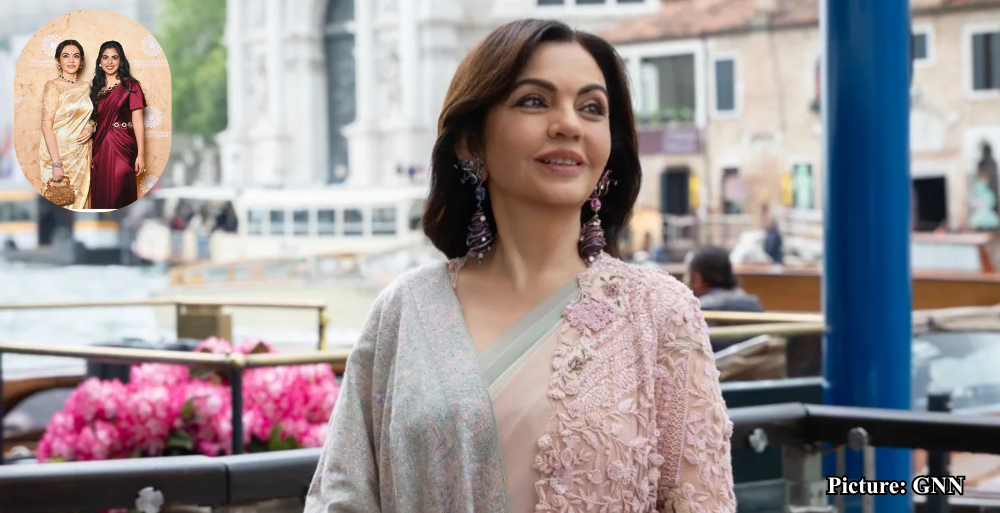
For the occasion, Nita Ambani wore a custom-designed sari by renowned Indian designer Anamika Khanna. Crafted from chiffon-georgette, the sari featured exquisite hand-embroidered Banarasi motifs and was paired with a delicate lace blouse. Complementing her attire was a hand-woven Butidar Sozni shawl by Swadesh, which symbolized Indian craftsmanship and tradition.
Ambani’s accessories further accentuated her look, drawing considerable attention from attendees and media alike. She adorned herself with earrings designed by Wallace Chan, known for their unique sculptural quality and symbolic resonance. Made from rosewood, the earrings embody themes of love, compassion, and spiritual wisdom. They are enhanced by gemstones that represent the calm of a sapphire and the passion of a ruby, reflecting the depth of artistic expression that the Biennale seeks to celebrate.
Joining Nita was her daughter Isha Ambani, a director at Reliance Industries Limited, who also turned heads with her elegant ensemble. Isha opted for a chic ivory blouse paired with an emerald Banarasi skirt, featuring intricate golden brocade embroidery. The full-sleeve, high-collared top combined with a high-waisted skirt created a sophisticated silhouette that resonated with the event’s artistic ambiance.
Significance of the India Pavilion
The official inauguration of the India Pavilion was marked by the presence of Union Minister of Culture and Tourism Gajendra Singh Shekhawat, along with Vivek Aggarwal, Secretary at the Ministry of Culture, and Vani Rao, the Indian Ambassador to Italy. Their attendance, alongside cultural luminaries such as Sunil Kant Munjal, founder patron of the Serendipity Arts Foundation, and Dr. Amin Jaffer, the pavilion’s curator, underscored the importance of this cultural milestone.
The pavilion’s opening coincided with the launch of the exhibition titled ‘Geographies of Distance: Remembering Home,’ which reflects the evolving practices of contemporary Indian art. This exhibition serves as a platform for showcasing the caliber and confidence of Indian artists, aiming to foster a greater understanding of the diverse artistic expressions emerging from the country.
The Venice Biennale, established in 1895, is recognized as one of the foremost cultural events globally, drawing artists, curators, and art enthusiasts from around the world. The inclusion of the India Pavilion signifies a critical advancement for India in terms of cultural diplomacy and international presence in the arts. It is an opportunity for Indian artists to present their work to a global audience, fostering cross-cultural dialogue and appreciation.
Cultural Context and Ambani’s Influence
Nita Ambani’s increasing prominence in the arts and cultural sector is evident through her initiatives with the NMACC, which aims to promote both traditional Indian arts and contemporary creative expressions. The establishment of the cultural center reflects her commitment to nurturing Indian talent and facilitating international dialogue through the medium of art. By partnering with the Venice Biennale, Ambani positions the NMACC as a central player in the global art scene.
The participation of Indian dignitaries and artists at such a renowned event highlights the importance of cultural representation on international platforms. The Biennale serves as a vital venue for artists to display their work while engaging with a diverse audience, fostering a broader acceptance of various artistic narratives that reflect the complexities of modern society.
As the Biennale unfolds, the India Pavilion is expected to emerge as a focal point for discussions surrounding contemporary Indian art, encapsulating both the challenges and achievements faced by artists today. The pavilion’s presence is anticipated to draw significant attention, not only for its artistic contributions but also for its role in enhancing India’s cultural footprint on the global stage. This event is poised to influence future cultural exchanges and may inspire further initiatives that promote Indian art and artists internationally.
In conclusion, the participation of Nita Ambani and the inauguration of the India Pavilion at the Venice Biennale represent a landmark moment for Indian art on an international platform. It underscores the potential for cultural diplomacy through art and highlights the significance of contemporary Indian artists in the global art narrative. As the Biennale continues, the impact of this initiative will likely resonate well beyond the exhibition, fostering a deeper understanding of India’s artistic contributions worldwide.