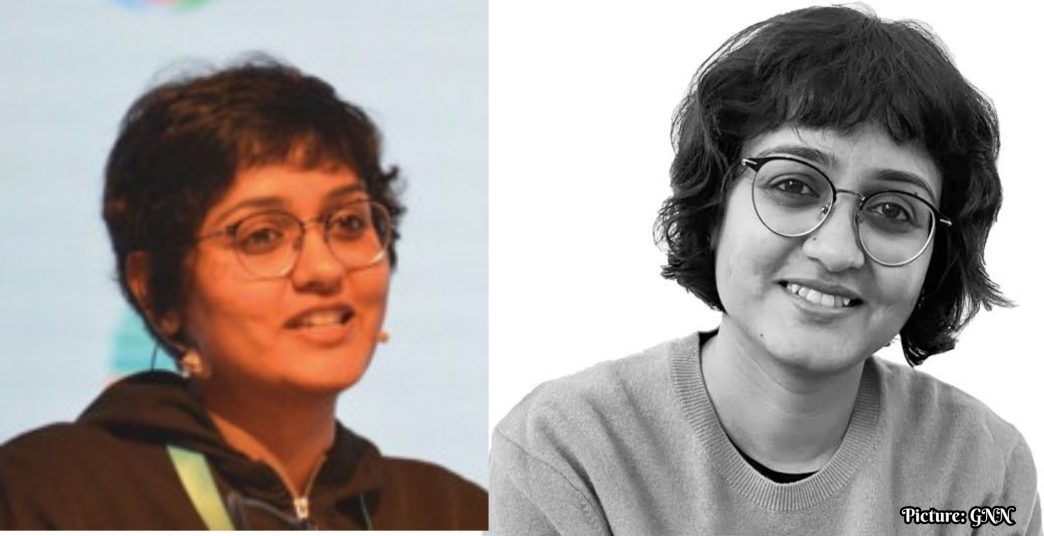
Shruti Dhariwal, an Indian researcher and MIT doctoral alumna, is transforming AI education for children with CoCo, a collaborative platform aimed at fostering creativity and innovation.
Shruti (Mohnot) Dhariwal, a researcher at the Massachusetts Institute of Technology (MIT) Media Lab, is at the forefront of a paradigm shift in how children engage with artificial intelligence (AI). Rather than training young minds exclusively to utilize AI-generated content, Dhariwal advocates for empowering children to create, experiment, and innovate with AI tools themselves. This transformative approach is encapsulated in her latest project, CoCo, a collaborative computing and AI education platform designed specifically for children and teenagers.
Educational Foundation and Professional Trajectory
Dhariwal’s academic journey commenced in India, where she earned a Bachelor of Technology (B.Tech) degree in Computer Science Engineering from the Jaypee Institute of Information Technology in 2008. She then pursued a Master of Business Administration (MBA) from the Management Development Institute in Gurgaon, graduating in 2011. Her early career included a role as a Young Leader at Airtel, followed by a significant position as Head of Product Development at the Bengaluru-based educational game company MadRat Games.
During her tenure at MadRat Games, Dhariwal played a pivotal role in designing and developing educational and social games that positively impacted over 250,000 families across India. The company was recognized as one of the Top 10 Indian Innovators by the Science & Technology Board of the Government of India, a testament to its influence in the educational technology sector. This experience not only honed her technical skills but also deepened her interest in how digital tools can enhance the educational landscape.
Advanced Research at MIT Media Lab
In 2016, Dhariwal brought her expertise to the MIT Media Lab, where she completed her master’s degree between 2016 and 2018 and is currently pursuing a PhD expected to conclude in 2025. Her work at MIT has been marked by several prestigious accolades, including the Learning Innovation Fellowship and the esteemed LEGO Papert Fellowship, recognizing her contributions to the fields of learning, creativity, and play.
One of her significant achievements at MIT includes receiving the Best Short Paper award at the 17th ACM Conference on Interaction Design and Children in Norway in 2018, which focused on developing new data visualization tools for children. This research underscores her commitment to enhancing educational technology and providing innovative learning experiences.
CoCo: A New Frontier in AI Education
Dhariwal’s current focus revolves around CoCo, the co-creative computing and AI education platform aimed at young learners. The platform’s mission transcends traditional educational paradigms by not merely teaching children about AI but by fostering an environment where they can actively engage as creators of AI tools and applications. This initiative aligns with a broader movement in education that emphasizes the importance of creativity and collaboration among learners in an increasingly digital and interconnected world.
CoCo has garnered substantial recognition, winning the 2023–24 Learning Engineering Tools Competition, an initiative backed by major organizations, including the Gates Foundation, OpenAI, and the Ballmer Group. Dhariwal’s innovative work has been featured in prominent publications such as MIT News, MIT Technology Review, and EdSurge, establishing her as a key figure in the international educational technology landscape.
Broader Implications for Educational Trends
Dhariwal’s career trajectory encapsulates a significant evolution in educational practices, where the focus is shifting from merely imparting knowledge about technology to enabling students to engage with it creatively. The contemporary educational landscape increasingly demands that learners not only understand AI but also harness it as a tool for innovation and problem-solving.
The dialogue surrounding how children interact with AI is becoming central to discussions on educational reform. Scholars and educators, like Dhariwal, are investigating the potential of AI to act as a creative partner in the learning process. This shift aims to cultivate a generation of learners who are not just passive consumers of technology but active contributors to its creation and application.
Furthermore, as educational institutions worldwide adapt to the rapid evolution of technology, the need for curricula that integrate AI and creative problem-solving becomes imperative. The ability to navigate and innovate within the technological landscape will be crucial for future generations, making initiatives like CoCo essential in preparing students for the challenges of tomorrow.
In conclusion, Shruti Dhariwal’s journey from a computer science classroom in India to the cutting edge of AI education at MIT illustrates a transformative shift in the educational paradigm. Her commitment to empowering children through innovative technology is setting new standards for educational tools, emphasizing the importance of creativity and collaboration in learning.