
Iran has expressed concerns over the United States’ military activities in the Sea of Oman, emphasizing the need for peace proposals involving Pakistan to mitigate regional tensions.
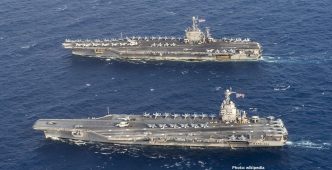
TEHRAN, Iran – In a notable diplomatic statement on Thursday, Iranian officials articulated strong objections to the increasing presence of U.S. naval forces in the Sea of Oman, indicating that such maneuvers pose a threat to regional security. This warning emerges amid ongoing tensions between Iran and the United States, particularly concerning naval operations in strategically vital waterways.
The Iranian Foreign Ministry issued a formal statement asserting that the U.S. military’s activities in the Sea of Oman could exacerbate tensions and disrupt peace efforts in the region. This warning coincides with the United States’ sustained commitment to maintaining a military presence in the Gulf, which it describes as a measure to ensure the safety of maritime navigation and counter threats from perceived adversarial states.
Historical Context of U.S.-Iran Relations
The relationship between Iran and the United States has been fraught with conflict since the 1979 Iranian Revolution, which resulted in the overthrow of the U.S.-backed Shah. Since then, the two nations have been at odds over various issues, including Iran’s nuclear program, its missile capabilities, and its influence in the Middle East. The U.S. has consistently criticized Iran for its support of militant groups, leading to a series of sanctions aimed at curtailing its regional influence.
The Sea of Oman is a critical maritime corridor, linking the Persian Gulf to the Arabian Sea. This waterway is vital not only for global shipping but also for the transportation of energy supplies, making it a focal point for military activities. The presence of U.S. naval forces in the area has been a longstanding point of contention, with Iran perceiving it as a direct threat to its sovereignty.
Recent Developments and Peace Proposals
Iran’s recent warning reflects broader regional dynamics, particularly the pressing need for peace initiatives involving neighboring countries. Iranian officials have suggested that Pakistan could play a crucial role in facilitating dialogue and reducing tensions in the region. This proposal comes amid heightened concerns over military escalations that could destabilize the delicate balance in the Gulf region.
In the statement from the Iranian Foreign Ministry, officials emphasized that military solutions are not viable for resolving disputes in the Sea of Oman or elsewhere in the region. Instead, they called for diplomatic engagement and collaboration among countries in the region, particularly emphasizing Pakistan’s potential as a mediator.
“We believe that dialogue, rather than military confrontation, is key to achieving lasting peace. Pakistan, sharing borders and historical ties with Iran, could serve as a bridge for constructive discussions,” stated an Iranian diplomat. This emphasis on dialogue over military action underscores an ongoing strategic shift within Iran’s foreign policy.
International Reactions and Implications
The international community has responded cautiously to Iran’s assertions. Analysts suggest that while Iran’s call for peace is welcomed, the effectiveness of such proposals largely depends on the willingness of regional powers and the U.S. to engage in meaningful dialogue. The United States has yet to formally respond to Iran’s recent comments, but prior statements from U.S. officials indicate a continued commitment to maintaining its naval presence in the region.
Experts note that any escalation of military activities in the Sea of Oman could have significant implications for global oil markets and international trade. With Iran’s economy heavily reliant on oil exports, the stakes are high for the Iranian government, which seeks to counteract the effects of U.S. sanctions that have severely impacted its economy.
In light of these developments, the situation in the Sea of Oman has become increasingly critical. Should tensions escalate further, there is a potential that not only regional stability would be compromised, but also that global energy prices could be affected, given the strategic importance of the waterways for oil transport.
Looking Ahead: Challenges and Opportunities
As tensions in the Sea of Oman persist, the potential for conflict remains a pressing concern. Both Iran and the United States face internal and external pressures that complicate their respective positions. For Iran, the challenge lies in balancing its regional ambitions with the necessity for economic stability, particularly in light of crippling U.S. sanctions. For the United States, the approach to its military engagements in the Middle East is increasingly scrutinized, with calls for a reassessment of its strategy.
The outcome of this situation may hinge on both nations’ willingness to engage in dialogue and diplomacy. Iran’s advocacy for peace through cooperation with neighboring nations like Pakistan could be seen as an opportunity for a new diplomatic framework in the region. However, the effectiveness of such overtures will largely depend on the geopolitical landscape and the reaction from the United States and its allies.
In conclusion, the situation in the Sea of Oman is emblematic of the broader geopolitical struggles in the region. As Iran pushes for peace through dialogue and collaboration, the international community remains watchful, hoping that these diplomatic efforts may yield a de-escalation of tensions. However, the path forward is fraught with complexities, as military posturing continues to dominate the narrative in a region already marked by conflict and instability.