Vijay Gokhale, former Indian Foreign Secretary, asserts that China’s apprehensions regarding India’s democratic system reflect deeper ideological concerns, particularly following the breakdown of bilateral relations after the Galwan standoff.
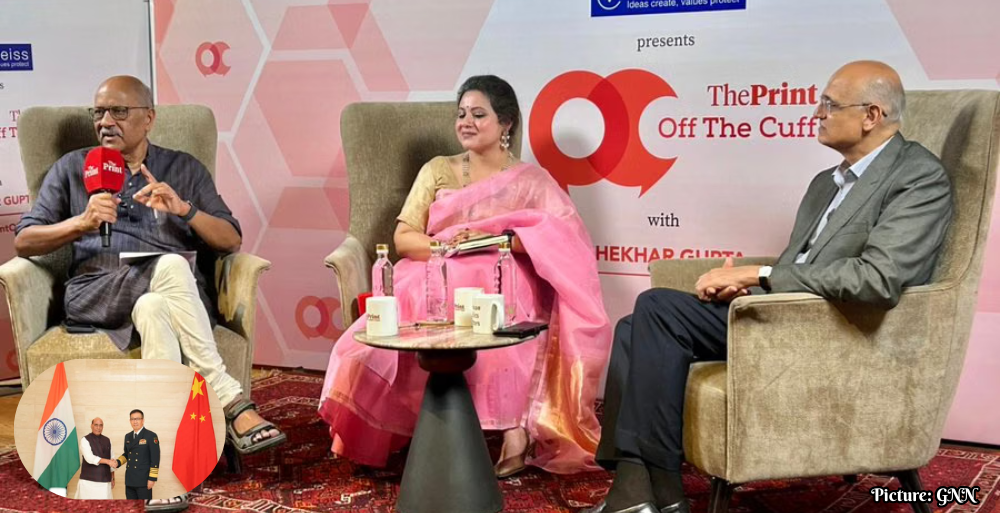
New Delhi – In a recent address in Mumbai, Vijay Gokhale, a former foreign secretary and ambassador to China, articulated that India’s democratic system poses an “ideological threat” to China. Gokhale’s comments, delivered on Tuesday during ThePrint’s ‘Off The Cuff’ event, highlight the complexities of the geopolitical landscape between the two nations, particularly in light of their fraught relationship since the Galwan standoff in 2020.
Gokhale emphasized that China’s anxieties regarding India extend beyond mere geopolitical rivalry. He stated that the success of India’s democratic political system, which has thrived alongside significant economic growth, presents a challenge to the narrative promoted by the Chinese Communist Party (CCP). “For China, which is a single-party state that has told its people that democracy is not necessary for progress, it becomes difficult after a point to explain how another neighbour, equally large, diverse and complex, can elect its leaders and continue to grow,” he said.
He further elaborated that China perceives Indian democracy as a long-term ideological problem. Gokhale noted, “Their idea of diminishing India, embarrassing the government and humiliating the people is, in some way, an attempt to ensure that Indian democracy never poses a challenge.” This reflects a broader concern within Chinese leadership about the implications of a successful democratic model in a neighboring country.
Changing Economic Dynamics
Gokhale also highlighted a shift in economic perceptions, arguing that China’s confidence in its ability to maintain a significant economic gap with India is waning. As India’s growth prospects improve and the Chinese economy faces challenges, Gokhale stated, “That linear growth that we saw between 2000 and 2020 is over.” He pointed out that even with a moderate annual growth rate of approximately 5 to 6 percent, India is poised to become one of the largest consumer markets by 2050, a fact that complicates China’s strategic calculations.
Redefining India-China Relations
The former diplomat further assessed the future of India-China relations, noting that the foundational assumptions that previously guided bilateral ties have collapsed following the Galwan clash. Gokhale argued that India must now navigate the politically sensitive task of constructing a new relationship with China, characterized by what he termed “armed coexistence.” He stated, “A clear, peaceful coexistence, as we previously understood it with a lightly armed and lightly equipped boundary, is no longer possible.” This shift implies a significant escalation in military preparedness along the border, with substantial financial implications for both nations.
Despite the ongoing tensions, Gokhale maintained that Beijing has little incentive to pursue a major military conflict with India. He stated, “1962 is not 2026,” referencing the Sino-Indian War of 1962, and asserted that for China, a decisive victory would be the only acceptable outcome in any military engagement. He warned against the risks of a two-front confrontation, noting that China is primarily focused on its strategic rivalry with the United States.
Strategies of Coercion
Gokhale introduced the concept of “grey-zone coercion,” a strategy employed by China to exert pressure on India without escalating to open conflict. He outlined this approach in detail in his new book, “China’s Wars: The Politics and Diplomacy Behind Its Military Coercion.” This strategy involves a series of confrontations along the Line of Actual Control (LAC), aiming to keep India militarily engaged and economically strained. Gokhale traced the evolution of this coercive strategy through various incidents, including the 2013 Depsang standoff and the 2020 Galwan clash, highlighting a pattern of sustained pressure from China.
He remarked, “What you see is a prolongation of the pressure,” underscoring the incremental nature of China’s tactics. The incidents, he argued, reflect a broader strategy to constrain India’s rise and limit its influence largely to South Asia. Gokhale noted that India’s growing strategic partnership with the United States and its participation in the Quad grouping with Japan and Australia have contributed to Beijing’s discomfort, as alignment with major powers can transform India into a perceived threat.
Future Outlook
In conclusion, Gokhale expressed that the best realistic outcome for India is not one of friendship or partnership with China but rather a stable and predictable relationship that allows New Delhi to focus on its economic growth while managing a militarized frontier. He stated, “I don’t think we are ever going to be friends or partners in the sense that we are with Japan, or even with the United States.” This perspective underscores the ongoing complexities of India-China relations and the need for a nuanced understanding of the geopolitical dynamics at play.