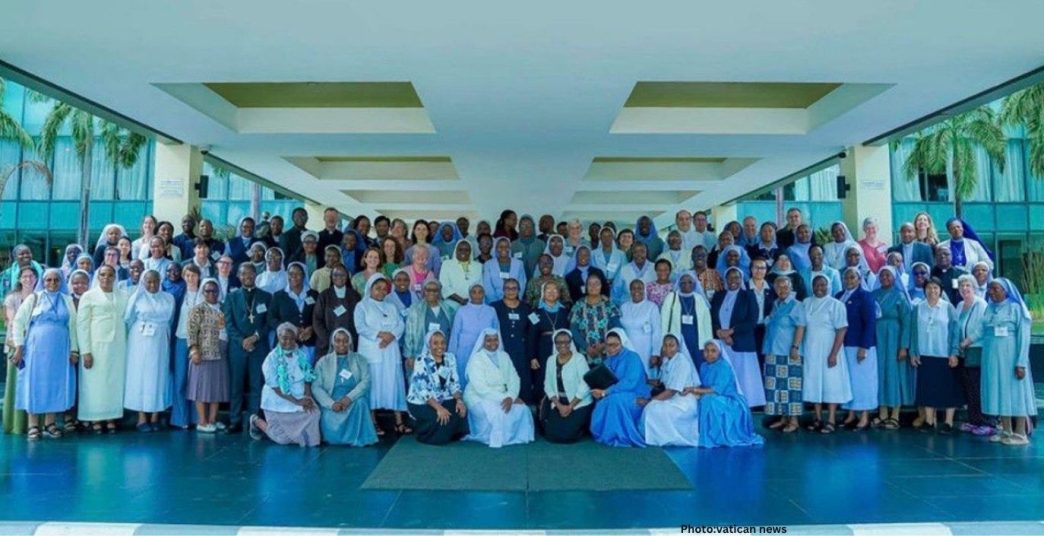
More than 130 Catholic sisters representing 23 countries gathered in Dar es Salaam, Tanzania, for the triennial Catholic Sisters Initiative Convening, hosted by the Conrad N. Hilton Foundation from June 10–12, 2026. Operating under the theme of collective solidarity and community transformation, international delegates and senior Vatican officials engaged in critical strategy sessions regarding institutional safeguarding, human trafficking prevention, and the expansion of regional synodal networks. Organizers revealed that philanthropic interventions managed by the initiative have reached more than 25 million direct and indirect beneficiaries globally, emphasizing a data-driven shift toward inter-congregational partnerships designed to scale health, education, and anti-violence infrastructure across marginalized communities.
Global Delegates Converge in Dar es Salaam
DAR ES SALAAM, Tanzania — A high-level delegation of international religious sisters, Vatican officials, and global development partners concluded a three-day summit in Tanzania on Friday, establishing a unified strategic framework to address systemic social challenges, elevate institutional safeguarding, and expand regional infrastructure for marginalized populations.
The 2026 Catholic Sisters Initiative Convening, which ran from June 10 to June 12 in the coastal capital of Dar es Salaam, brought together more than 130 Catholic sisters from 23 countries. Orchestrated and funded by the California-based Conrad N. Hilton Foundation—a philanthropic institution with over $7.3 billion in global assets—the triennial summit serves as the primary international platform for alignment between the Catholic Church’s consecrated women and secular development networks.
The convention, organized under the central theme, “Journeying Together in Solidarity and Hope: Strengthening Communities and Cultivating Shared Impact for the Common Good,” arrives at a critical juncture for the global network of religious women. Globally, over 700,000 Catholic sisters manage an expansive human development footprint that encompasses 250,000 schools, 50,000 social service agencies, and 20,000 healthcare facilities. The Dar es Salaam assembly sought to translate this immense localized presence into scaled, cross-border institutional power by formalizing partnerships between disparate religious congregations, regional episcopal bodies, and international financial benefactors.
Data-Driven Development and Strategic Imperatives
Opening the operational sessions of the convening, Sr. Jane Wakahiu, LSOSF, PhD, Associate Vice President of Program Operations and Head of the Catholic Sisters Initiative at the Hilton Foundation, presented a comprehensive performance review of the initiative’s targeted funding. Wakahiu reported that the foundation’s strategic allocations have directly or indirectly impacted more than 25 million people globally. This expansive reach is anchored by a sophisticated grant-making pipeline; for context, the Hilton Foundation’s board approved over $30 million in new global grants in the first quarter of 2026 alone, including a $1.7 million allocation directed toward sister-led youth empowerment initiatives in Tanzania and a $1.8 million regional formation grant to the Association of Consecrated Women in Eastern and Central Africa (ACWECA).
Addressing the assembly of delegates in the main convention hall, Sr. Wakahiu emphasized that the long-term sustainability of these human development networks depends on a structural shift away from isolated ministries toward highly integrated, data-driven systems. She stated:
“Fostering a culture of safeguarding involves creating environments and implementing measures that protect individuals from abuse, exploitation, violence, and harm. We must embrace a spirit of deep listening and mutual openness to reshape our ministries for the modern era.”
The initiative’s primary operational metrics are explicitly tied to five core organizational values: compassion, humility, integrity, stewardship, and visionary leadership. According to foundation documents reviewed at the summit, these values guide specific capital deployments toward anti-human trafficking operations, the mitigation of gender-based violence, youth technical literacy, and the long-term clinical care of aging and infirm sisters globally.
Elevating the Gospel Mandate on Institutional Safeguarding
A primary focus of the three-day convention was the reinforcement of institutional safeguarding protocols across all Catholic-operated entities. The keynote address on human dignity was delivered by Fr. Hans Zollner, SJ, Director of the Institute of Anthropology: Interdisciplinary Studies on Human Dignity and Care (IADC) at the Pontifical Gregorian University in Rome. Fr. Zollner, a leading international authority on the prevention of sexual abuse and institutional exploitation within ecclesiastical structures, argued that safeguarding must not be treated as a secondary administrative burden, but rather as a core theological and operational mandate.
“The centre of safeguarding is Jesus Christ, our Redeemer and Saviour,” Fr. Zollner stated to the gathered delegates and clergy. “Following Christ means accompanying and assisting those who have experienced trauma, abuse, and suffering.”
Fr. Zollner strongly commended the Hilton Foundation’s multi-million-dollar investments in the advanced academic formation and clinical empowerment of sisters. He noted that these targeted resources have enabled religious women to successfully intervene in complex global crises—such as rescuing victims of human trafficking rings in Southeast Asia and East Africa, establishing localized vocational programs for disenfranchised women, and funding advanced university degrees for sister-physicians who lead 90 percent of Catholic health institutions in regions like rural India.
He emphasized that formalizing robust peer networks between independent religious orders remains the most effective defense against systemic oversight failures and financial volatility.
Vatican Alignment and Synodal Restructuring
The high-level nature of the Dar es Salaam summit was further underscored by the presence of a substantial delegation from the Holy See, reflecting the Vatican’s current emphasis on structural synodality—a governance model prioritizing collaborative dialogue, decentralized decision-making, and enhanced leadership roles for women and the laity.
Archbishop Fortunatus Nwachukwu, Secretary of the Dicastery for Evangelization, addressed the structural components of accountability during his plenary session. The Archbishop argued that the protection of fundamental human dignity must be integrated into the daily, administrative routines of community life. He emphasized that establishing formal channels to listen to survivors and victims of abuse is a necessary legal and spiritual requirement for true institutional justice.
The Vatican’s delegation included prominent policy architects:
- Sr. Alessandra Smerilli, FMA, PhD, Secretary of the Dicastery for Promoting Integral Human Development;
- Bishop Luis Manuel Ali Herrera, Secretary of the Pontifical Commission for the Protection of Minors;
- Fr. Aitor Jimenez, CMF, Under Secretary of the Dicastery for Institutes of Consecrated Life and Societies of Apostolic Life;
- Dr. Nataša Govekar, Theological-Pastoral Director at the Dicastery for Communication.
The inclusion of these specific officials indicates an intentional effort by the Roman Curia to synchronize global communication, child safety protocols, and human development spending across developing markets.
On a regional level, Fr. Anthony Makunde, Secretary General of the Association of Member Episcopal Conferences in Eastern Africa (AMECEA), detailed ongoing efforts to dismantle historical administrative silos within the African Church. Fr. Makunde explained that through formalized structural compacts with ACWECA, bishops and clergy are actively building joint communication channels with religious sisters. This regional alignment is designed to ensure that national and diocesan resources are deployed efficiently, eliminating redundant infrastructure and expanding the reach of safety-net clinics and educational institutions.
Liturgical Foundations and Global Commitments
The operational sessions of the convening were framed by significant liturgical events led by senior ecclesiastical figures, grounding the strategic discussions in the spiritual traditions of the participating orders.
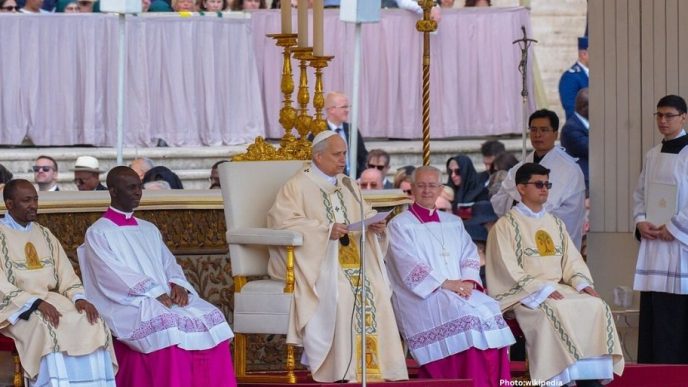
Presiding over the opening Mass, which coincided with the Feast of St. Barnabas, Archbishop Jude Thaddaeus Ruwa’ichi of Dar es Salaam challenged the religious sisters to remain firmly rooted in their unique spiritual identities while simultaneously evolving their practices to meet modern sociological shifts. Archbishop Ruwa’ichi presented the Apostle Barnabas as an archetypal model of dedicated service and humble discipleship, stating:
“Like St. Barnabas, religious women today are called to serve Christ faithfully through their baptismal and religious consecration, transforming that faith into measurable, compassionate action for society’s discarded populations.”
At the conclusion of the summit, Archbishop Angelo Accattino, the Apostolic Nuncio to Tanzania, celebrated a closing Thanksgiving Mass. In his homily, Archbishop Accattino focused on the economics of self-sacrifice and collaborative ministry, telling the international delegates that isolated efforts are no longer sufficient to combat systemic global crises like human trafficking and systemic poverty.
“As we seek to do the will of God, learning must remain at the heart of our mission as we journey together as a Synodal Church,” Archbishop Accattino concluded, reinforcing the mandate for ongoing professional training, administrative transparency, and structural adaptation.
The convening concluded with all 130 delegates signing a renewed institutional commitment to enforce standardized safeguarding protocols across their respective global provinces, expand cross-border communication networks, and scale collaborative anti-poverty programs ahead of the next global convening in 2029.