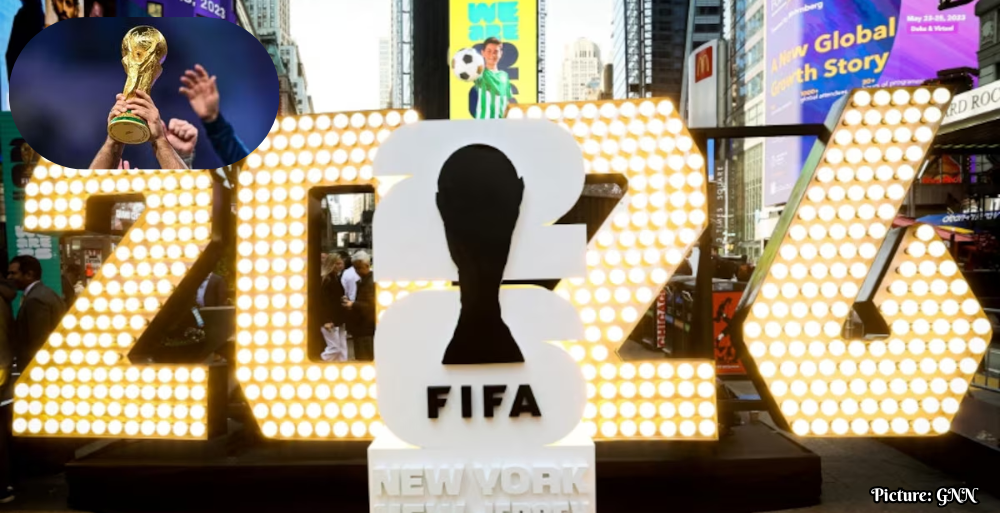
The competition for broadcasting rights for the FIFA World Cup 2026 in India has intensified, with major players like Jio and Zee vying for the opportunity to air the tournament.
New Delhi, India – As the global excitement builds for the FIFA World Cup 2026, the race to secure broadcasting rights in India has begun to take shape. With the tournament set to take place across the United States, Canada, and Mexico from June 8 to July 8, 2026, Indian media companies are positioning themselves to capitalize on the anticipated viewership.
Currently, the leading contenders for these broadcasting rights include major telecommunications and media companies, notably Jio and Zee Entertainment. Jio, backed by Reliance Industries, has already established a strong presence in the sports broadcasting arena, having secured rights for various tournaments in the past. Zee Entertainment, on the other hand, has been a traditional player in the Indian media landscape and aims to enhance its sports programming portfolio.
Historical Context of Broadcasting Rights
The competition for sports broadcasting rights in India has evolved significantly over the past two decades. Historically, cricket has dominated the sports broadcasting landscape, with the Indian Premier League (IPL) and international cricket matches drawing the largest audiences. However, the growing popularity of football, particularly following the establishment of the Indian Super League (ISL) in 2013, has started to shift viewer interest towards the sport.
The FIFA World Cup, one of the most prestigious sporting events globally, is expected to attract a vast audience in India, a nation with a burgeoning interest in football. In 2018, the FIFA World Cup saw record viewership in India, highlighting the potential for media companies to profit significantly from broadcasting the event.
Market Dynamics and Financial Implications
While the specific financial terms of the broadcasting rights for the 2026 World Cup have yet to be disclosed, industry analysts anticipate that the costs will be substantial. Previous broadcasting rights for significant tournaments have often reached hundreds of millions of dollars. For instance, the broadcasting rights for the 2018 World Cup in India were acquired by Sony Pictures Networks India for approximately $50 million.
The financial outlay for the World Cup rights is not just an expense; it represents a strategic investment in capturing the growing football viewership. Industry experts suggest that the potential return on investment could be significant, given the scale of the event and the expanding football fanbase in India.
Implications for Viewers and Advertisers
The competition between Jio and Zee for the FIFA World Cup broadcasting rights is likely to have implications for both viewers and advertisers. With multiple players in the market, viewers may benefit from more competitive pricing and a variety of viewing options, including traditional television broadcasts and digital streaming platforms.
Moreover, increased competition in the broadcasting sector could lead to enhanced production quality and viewer engagement initiatives, as media companies strive to attract and retain audiences. This could include innovative content strategies, interactive features, and localized programming designed to resonate with the Indian audience.
Response from Industry Stakeholders
As the bidding for the World Cup broadcasting rights intensifies, industry stakeholders have begun to express their views on the potential outcomes. A spokesperson from Jio commented, “We are committed to bringing the best sports content to our viewers and are excited about the opportunity presented by the FIFA World Cup. Our focus will remain on delivering an exceptional viewing experience.”
On the other hand, a representative from Zee Entertainment noted, “Football is rapidly gaining traction in India, and we aim to be at the forefront of this growth. Securing the broadcasting rights for the World Cup would be a significant step towards enhancing our sports offerings.”
Looking Ahead
The decision regarding the broadcasting rights for the FIFA World Cup 2026 is expected to be finalized in the coming months. As companies like Jio and Zee navigate the intricacies of negotiations, the outcome will undoubtedly shape the future of sports broadcasting in India. The implications of this competition extend beyond mere viewership, impacting advertising revenues, content strategies, and the overall landscape of sports media in the country.
In conclusion, as anticipation builds for the FIFA World Cup 2026, the race for broadcasting rights in India underscores the shifting dynamics of sports media and the growing interest in football among Indian audiences. With major players vying for a stake in this lucrative market, the outcome will be closely watched by fans, analysts, and industry insiders alike.