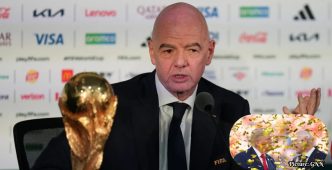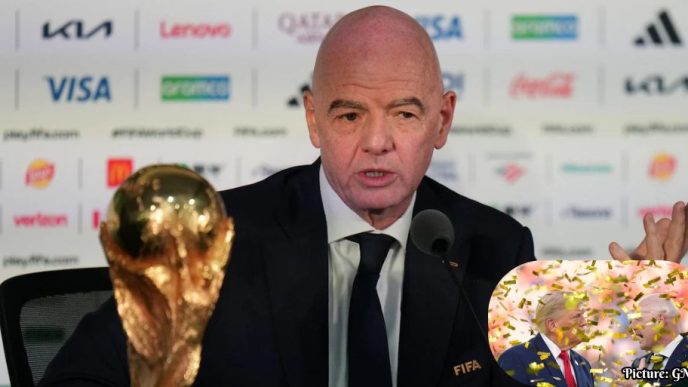
FIFA has imposed a collective suspension totaling 21 games on various members of the Argentina national football team and their staff following a brawl that erupted after their World Cup final loss to Spain. The governing body of global football also levied fines against the Argentine Football Association for related incidents involving fan behavior.
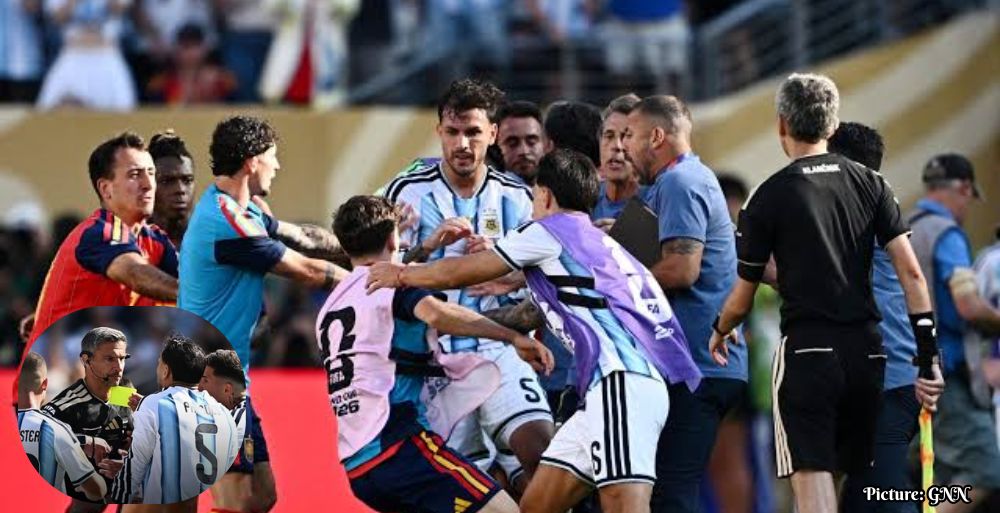
In a significant disciplinary move, FIFA announced on Friday, August 18, 2026, that players and staff of the Argentina national football team have received a total of 21 game bans due to a violent altercation that transpired after their defeat to Spain in the World Cup final. This incident unfolded on July 16, 2026, at MetLife Stadium in East Rutherford, New Jersey, where Spain secured a 1-0 victory through a goal by Ferran Torres in extra time.
Details of the Disciplinary Actions
The sanctions arose from an investigation into the unsportsmanlike behavior exhibited by the Argentina team following the match. Among the most severe penalties, midfielder Leandro Paredes has been handed a 10-match ban for grabbing Spain defender Eric Garcia by the throat and subsequently throwing midfielder Gavi to the ground. Paredes, along with defender Nahuel Molina, who received a seven-match suspension for striking Spain’s Rodri in the stomach during the post-match festivities, is also subject to fines of $90,000 each.
In addition to Paredes and Molina, Thiago Almada, an attacking midfielder for Argentina, has been suspended for one match due to unsporting behavior. Team official Roberto Ayala has been banned for three matches for one count of assault, with both Almada and Ayala also facing $30,000 fines. On the Spanish side, Gavi is the only player to face penalties, receiving a one-match ban and a $30,000 fine for his involvement in the altercation.
FIFA clarified that these suspensions apply exclusively to international matches and will not affect club-level participation, which means that players can continue to compete in their respective leagues and clubs.
Financial Penalties and Stadium Sanctions
FIFA has also imposed a substantial fine of $310,000 on the Argentine Football Association (AFA) for several infractions linked to fan behavior, which included “using a sports event for demonstrations of a non-sporting nature,” “discrimination and racist abuse,” and issues relating to “order and security at matches.” In addition to the financial penalty, the AFA has been ordered to implement a 50 percent stadium closure for their next home match, with the threat of a second one-game partial stadium closure suspended for an unspecified probationary period.
Of the $310,000 fine, FIFA has indicated that $100,000 will be allocated to initiatives aimed at combating discrimination, while another $100,000 penalty is suspended pending compliance with future regulations. These measures highlight FIFA’s ongoing efforts to maintain the integrity of the sport and address misconduct both on and off the field.
Contextual Background of the Incident
The events surrounding the World Cup final were not solely confined to the field of play. Prior to the final, Argentina’s players had displayed a politically charged banner referencing the Falkland Islands during their semi-final victory over England, which read “Las Malvinas son Argentinas,” translating to “The Malvinas are Argentine.” This display ignited discussions around nationalism and sportsmanship, contributing to the heightened emotions that characterized the post-match brawl.
As the dust settles on these sanctions, the implications extend beyond individual players and the AFA. The incident serves as a reflection of the broader tensions inherent in international football, where national pride and the stakes of competition can lead to volatile outcomes. It also underscores FIFA’s commitment to addressing issues of player conduct and fan behavior in the context of their global governance of the sport.
Next Steps and Potential Appeals
Following the announcement of these sanctions, FIFA has notified the involved parties of the terms of the disciplinary actions. Those affected have ten days to request a motivated decision, with the option to appeal the rulings remaining available. The AFA has indicated that it may consider taking the case to the Court of Arbitration for Sport as a last resort if they choose to challenge the sanctions.
The 2026 World Cup final stands as a pivotal moment in sports history, marking Spain’s triumph and raising questions about sportsmanship and national representation on the global stage. The fallout from the post-match brawl illustrates the high stakes involved in international football, where emotions run high and the repercussions of actions can transcend the pitch. As the AFA prepares to respond to FIFA’s decisions, the incident remains a stark reminder of the responsibilities that come with representing one’s country in the world of sports.