
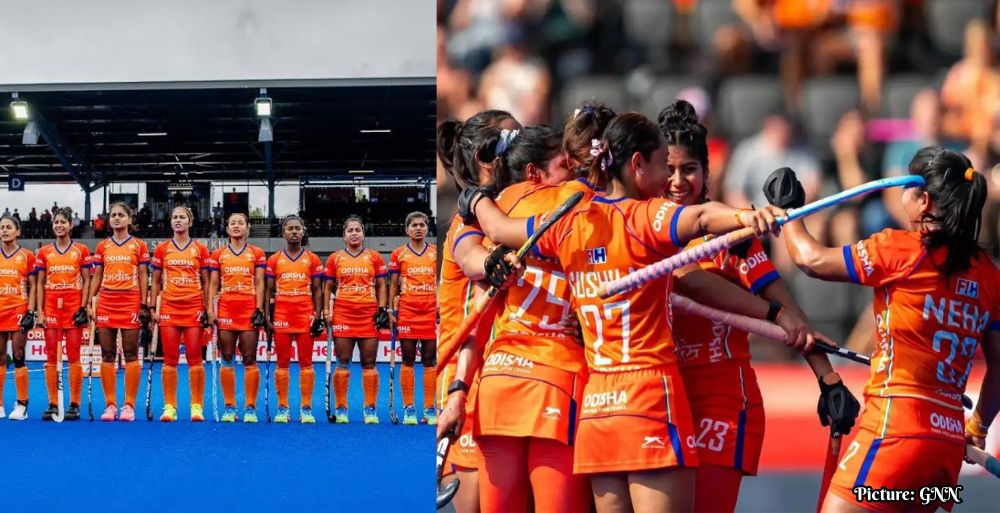
India’s women’s hockey team achieved a historic fifth-place finish at the FIH Women’s Hockey World Cup 2026, defeating Germany 3-1 and marking the team’s best performance in the tournament’s 52-year history.
The Indian women’s hockey team concluded its campaign at the FIH Women’s Hockey World Cup 2026 with a landmark fifth-place finish, overcoming Germany with a decisive 3-1 victory in a classification match held at Wagener Stadion in Amstelveen on Thursday. This achievement represents the best finish for India in the tournament’s history since its inception in 1974, underscoring the team’s progress and growing competitiveness on the global stage.
Entering the tournament ranked ninth, the Indian squad, led by head coach Sjoerd Marijne, significantly exceeded expectations. The team not only managed to secure draws against higher-ranked opponents—including China (ranked fourth), England (seventh), and Australia (eighth)—but also claimed a notable victory against Germany, who were ranked fifth in the world prior to the match.
Match Overview
The match against Germany showcased India’s tactical acumen, particularly in their counter-attacking strategy. India capitalized on a passive start from Germany, creating early opportunities to take control of the match. Within the first five minutes, India executed a counter-attack that nearly yielded a goal, but Salima Tete’s effort from close range went wide after being set up by Sakshi Rana.
As the first half progressed, Germany began to assert themselves, generating multiple circle entries but failing to convert possession into meaningful scoring threats. They were awarded three penalty corners in the opening 20 minutes; however, India’s defense held firm, with the execution of Germany’s set plays proving ineffective.
Despite Germany’s dominance in possession during the first half, India remained dangerous on the offensive front. Navneet Kaur’s powerful back-handed drive forced a critical save from German goalkeeper Finja Starck, demonstrating India’s ability to create chances even when under pressure.
Key Moments and Goals
The turning point of the match came in the second half when India broke the deadlock in the third quarter. Ishika, demonstrating impressive skill and composure, scored India’s first goal by lifting the ball past Starck following a well-timed assist from Neha. This goal not only energized the Indian team but also highlighted their capacity to exploit defensive lapses from their opponents.
Following Ishika’s breakthrough, India quickly added two more goals within a span of four minutes, exhibiting newfound scoring momentum. Navneet Kaur, who had struggled to find the back of the net in previous matches, found space to convert a penalty corner, extending India’s lead to 2-0. Shortly thereafter, she dribbled past multiple German defenders to score India’s third goal, effectively sealing their victory.
Defensive Resilience and Final Stages
Despite Germany’s attempts to mount a comeback in the closing stages, including a late goal from Lynn Krings with just 67 seconds left on the clock, India’s defense, anchored by goalkeeper Savita Punia, remained resolute. Punia’s performance included several vital saves that preserved India’s lead and ensured their historic victory. Her alertness and skill were critical in maintaining India’s advantage during Germany’s late surge.
While no extravagant celebrations erupted from the Indian players at the final whistle, the significance of their achievement was palpable. This fifth-place finish not only reflects the team’s development over the years but also sets a positive tone as they prepare for future competitions, particularly the Asian Games scheduled for next month in Hangzhou, China.
Looking Ahead
The successful campaign in the Netherlands has instilled renewed confidence within the team, with players expressing optimism about their prospects at the Asian Games. The combination of tactical discipline, improved performance under pressure, and a cohesive team spirit will be crucial as they aim for the gold medal in the upcoming tournament.
As the Indian women’s hockey team reflects on its World Cup journey, it is evident that the lessons learned and experience gained will serve them well in future international competitions. The team’s resilience and determination signal a promising future for Indian women’s hockey, as they strive to build on this historic achievement and continue their ascent in the sport.
The fifth-place finish not only marks a significant milestone for the team but also enhances the visibility of women’s hockey in India, a sport that has been gaining traction in recent years. With increased support from the Hockey India federation and growing interest from fans, the prospects for the women’s team appear brighter than ever.
In conclusion, the Indian women’s hockey team’s performance at the FIH Women’s Hockey World Cup 2026 represents a pivotal moment in their sporting history. As they transition to the next phase of their competitive journey, the team will look to leverage this momentum to achieve even greater success on the international stage.