This article examines the implications of the FCRA Amendment Bill 2026, which proposes significant changes to regulations governing foreign funding for NGOs in India, impacting national security and social development.
The Foreign Contribution (Regulation) Amendment Bill 2026, currently under discussion in the Indian Parliament, has ignited a heated debate among lawmakers, reflecting deep concerns over foreign funding for non-governmental organizations (NGOs) and its potential impact on national security. The legislation, overseen by the Ministry of Home Affairs, aims to introduce stricter regulations regarding the receipt and usage of foreign donations, a topic of increasing relevance as globalization fosters cross-border financial flows.
Historically, the Foreign Contribution (Regulation) Act (FCRA) was enacted in 1976 to protect India’s sovereignty by regulating foreign donations to NGOs and similar entities. Over the last five decades, the law has evolved through various amendments, reflecting changing political and social dynamics. Notable amendments include the introduction of mandatory registration with the Ministry of Home Affairs in 1984 and significant changes in 2020 that required Aadhaar verification for office bearers and imposed stricter limits on administrative expenses.
Key Provisions of the FCRA Bill 2026
The current FCRA Amendment Bill proposes several far-reaching changes:
- Establishment of a Designated Authority: The bill seeks to appoint a special officer to manage assets acquired with foreign funds in cases where an NGO’s registration is either cancelled or has expired.
- Temporary Seizure of Assets: The government may temporarily seize assets of NGOs upon cancellation of their registration. These assets will only be permanently forfeited if the NGO does not renew its registration within a stipulated timeframe.
- Protection of Places of Worship: The legislation explicitly states that the religious character of places of worship should remain unchanged, even if their assets are seized.
- Reduction of Penalties: The maximum jail sentence for violations of FCRA provisions has been reduced from five years to one year.
- Minimum Fund Utilization Requirement: NGOs applying for registration renewal must demonstrate the utilization of at least Rs. 10 lakhs in foreign funds over the past two years.
- Central Approval for Investigations: State governments must obtain prior approval from the central government before initiating investigations under the FCRA.
Historical Context and Previous Amendments
The FCRA has undergone numerous amendments since its inception, reflecting the need to balance national security concerns with the operational requirements of NGOs. The 2010 amendment introduced a validity period for registration, while the 2022 amendment increased the limit for receiving funds from relatives abroad. Each of these changes has had significant implications for the functioning of NGOs across India, many of which rely heavily on foreign donations for their social initiatives.
Political Reactions and Concerns
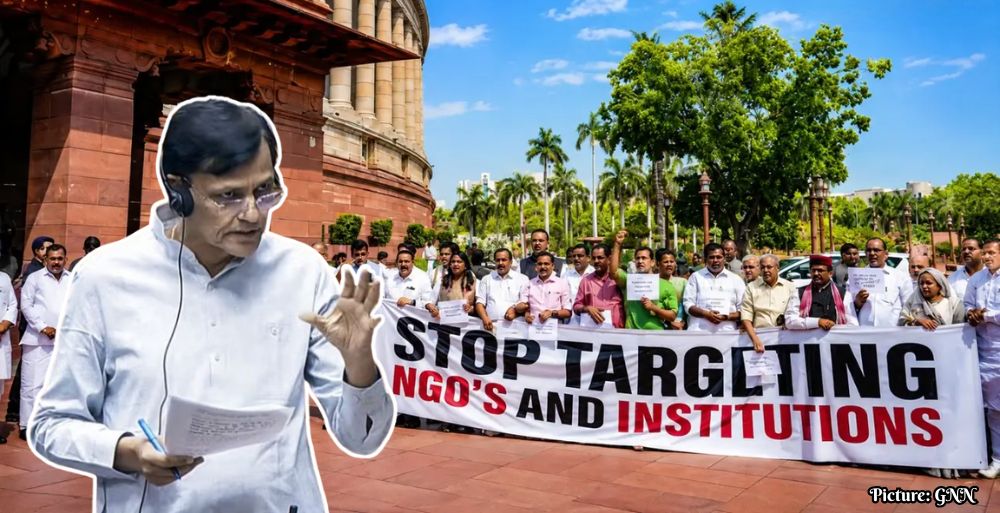
The proposed amendments have sparked significant controversy in Parliament, with opposition parties and various NGOs raising alarms over potential government overreach. Critics argue that allowing the government to seize NGO assets poses a severe threat to civil society and could hinder the work of smaller organizations that may struggle to meet the new financial thresholds.
In response to these criticisms, government representatives have pointed to the fact that nearly 20,000 NGO registrations were cancelled over the past decade, leaving substantial assets unutilized. The government asserts that the new measures are necessary to ensure these assets are effectively managed and monitored, emphasizing that transparency and accountability are key objectives of the bill.
Implications for Civil Society
The FCRA Amendment Bill 2026 has the potential to reshape the landscape for NGOs in India, imposing stricter regulations at a time when many organizations are already facing challenges in securing funding. The requirement for minimum expenditure and the central government’s control over investigatory processes raise questions about the operational viability of smaller NGOs, which often play a crucial role in local communities.
Public and Expert Opinions
Experts in civil society and governance have expressed mixed reactions to the proposed amendments. Some argue that while there is a legitimate need for oversight of foreign funds to prevent misuse, the stringent measures could stifle the important work of NGOs that contribute significantly to social welfare. For instance, Dr. Neha Joshi, an expert in non-profit governance, stated, “While accountability is crucial, the proposed measures may disproportionately burden smaller organizations, hindering their capacity to operate effectively. A more balanced approach is necessary to ensure that NGOs can continue to serve their communities without excessive bureaucratic hurdles.”
Conversely, proponents of the bill argue that enhanced regulation is essential in an era where foreign influence can potentially undermine national security and democratic processes. The government has underscored the importance of safeguarding India’s sovereignty, particularly given the rise of transnational organizations that may not always align with national interests.
Future Implications
As the debate continues, the outcome of the FCRA Amendment Bill could have lasting implications for the relationship between the government and civil society organizations in India. The legislation reflects a broader trend of increasing scrutiny on foreign funding, a response to concerns over national security and sovereignty in an interconnected world.
With the discussions ongoing, stakeholders and observers alike are urged to remain vigilant about the potential ramifications of the FCRA Amendment Bill 2026, as its passage could significantly alter the operational landscape for NGOs across the nation. The bill’s fate will likely be closely monitored by international organizations and foreign governments, which may view these developments as indicative of India’s approach to civil society and external influence.
In conclusion, the FCRA Amendment Bill 2026 poses a pivotal moment for India, encapsulating the complex interplay between governance, civil society, and national security. As the parliamentary discussions unfold, the implications of this legislation will resonate throughout the socio-political fabric of the country, shaping the future of NGO operations and foreign funding in India.