A new law in Maharashtra regulating religious conversions has raised alarms among Christian leaders, who fear its implications for religious freedom and community activities.
A sweeping new law regulating religious conversion took effect in Maharashtra, India, on July 30, 2023, following approval from President Droupadi Murmu. The law has drawn significant concern from Christian leaders, who argue it poses a serious threat to the ordinary religious activities of Christians in the state.
The Archdiocese of Bombay was the first to publicly express its apprehensions, stating that it holds “deep concern” regarding the potential impact of the law on the Catholic Church’s operations in Maharashtra. Other Christian organizations have echoed these sentiments, highlighting fears that the legislation could criminalize traditional practices such as catechism classes, charity work, and prayer meetings.
Context and Legislative Background
The law was passed by the Maharashtra state legislature in March 2023 with the backing of the ruling Bharatiya Janata Party (BJP). This legislation marks Maharashtra as the latest addition among 13 Indian states that have enacted laws regulating religious conversions, particularly targeting minority communities. Notably, Maharashtra’s law follows a trend observed since 2014, when Prime Minister Narendra Modi’s administration began to strengthen Hindu nationalist policies.
Dr. John Dayal, spokesperson for the All India Catholic Union, criticized the law, asserting that it shifts the burden of proof to the accused rather than the accuser, effectively criminalizing religious activities under the guise of preventing coercion. He remarked, “Maharashtra has now joined 12 other states where the government has decided it understands a citizen’s conscience better than the citizen does.”
Provisions of the New Law
The new law broadly prohibits conversions or attempts to convert individuals through allurement, coercion, deceit, or any fraudulent means. It defines “allurement” in extensive terms, including gifts, employment opportunities, promises of marriage, and even divine healing. Under this law, anyone wishing to convert must provide a 60-day written notice to the district magistrate, who will post the notice publicly and invite objections for 30 days. Following this, the magistrate can order a police inquiry into the conversion.
Once a conversion is completed, both the individual and the organizer are required to file a declaration within 21 days, or the conversion will be rendered void. The law also allows blood relatives to initiate police complaints regarding conversions, which critics argue infringes upon an adult’s autonomy in making personal religious decisions.
Concerns Over Implementation and Intimidation
Christian leaders like Rev. Vijayesh Lal, general secretary of the Evangelical Fellowship of India (EFI), express that the true danger lies not in any single new provision but in the cumulative effect of the law’s most intrusive measures. He stated, “Maharashtra turns a personal decision of conscience into a public administrative proceeding, with 60 days’ notice, public objections, possible police inquiry, non-bailable offenses, and the burden of proof placed upon the accused.”
Rev. Asir Ebenezer, general secretary of the National Council of Churches in India, noted early concerns about the provision allowing police investigations without a direct complaint. He emphasized the importance of documentation and proactive compliance among Christian institutions to withstand potential legal challenges.
Opposition and Legal Challenges
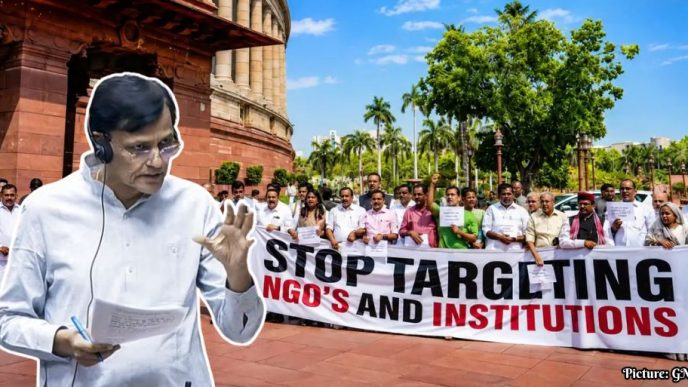
Political opposition to the law has emerged, with segments of the legislature expressing reservations about certain provisions. Notably, Prakash Ambedkar, founder of the Vanchit Bahujan Aghadi, has announced intentions to challenge the law in the Bombay High Court, asserting that it violates constitutional principles and unfairly targets religious minorities.
The law’s implications extend beyond Maharashtra; it fits into a broader national pattern of anti-conversion laws that have raised alarms among human rights organizations. The U.S. Commission on International Religious Freedom has reported deteriorating religious freedom conditions in India, urging the U.S. government to designate India as a Country of Particular Concern for its tolerance of serious religious freedom violations.
Judicial Review and Future Outlook
The constitutionality of anti-conversion laws is currently under scrutiny, as the Supreme Court of India is reviewing a petition challenging such laws across multiple states. This petition builds upon a 1977 ruling regarding the constitutional right to propagate religion, which has been cited to justify these legislative measures.
As the new law takes effect, the Christian community in Maharashtra and religious minorities across India are closely monitoring its enforcement and effects. Legal challenges to the law and its provisions are anticipated, as advocates seek to protect the rights of individuals to freely practice their faith without fear of state intervention or legal repercussions.