The United States has classified India among over 40 countries considered at risk for facilitating the evasion of US tariffs on Chinese goods, according to a report by the White House Office of Trade and Manufacturing Policy. This designation could complicate ongoing trade negotiations between Washington and New Delhi.
The United States government has officially categorized India as part of a group of more than 40 countries identified as potential conduits for Chinese goods attempting to bypass US tariffs. The classification was detailed in a report released by the White House Office of Trade and Manufacturing Policy, which alleges that exporters from these nations may be involved in practices designed to reroute shipments, relabel products, or misdeclare the country of origin to facilitate this evasion.
Classification of Countries
The report, which describes the situation as the “Great Transshipment Scam,” places India in Tier 1 alongside other significant economies including Canada, the European Union, Israel, Japan, Mexico, South Korea, and Taiwan. These nations are collectively referred to as “Diversified Scale Leaders,” indicating they are large industrial economies where the risk of transshipment exists amidst otherwise legitimate trade flows.
In contrast, Tier 2, labeled “Significant Economic Integration with China,” includes countries such as Brazil, Indonesia, Malaysia, Thailand, Turkey, and Vietnam. A third category, Tier 3, comprises nations viewed as “Small, Opportunistic Targets,” which includes Bangladesh, Cambodia, the Philippines, Singapore, Sri Lanka, and the UAE.
It is important to note that the classification does not imply that these countries or their governments are intentionally aiding exporters in evading US tariffs. Instead, it highlights the varying degrees of transshipment risk perceived by Washington.
Comments from US Trade Officials
Peter Navarro, a US trade adviser, specifically pinpointed India and Vietnam while addressing the report, indicating that increasing tariffs on certain countries might incentivize them to route Chinese goods through their borders. “This is about the 40-plus countries that are enabling the transshipping, and as we impose higher tariffs on other countries, India, Vietnam, down the line, they’re going to try this transshipment too,” Navarro stated.
In his remarks, Navarro urged nations to tackle broader trade barriers rather than resorting to transshipment as a means of circumventing US tariffs. He stated, “The way to pay less is not to cheat; it is to stop dumping, respect intellectual property, drop your barriers to American goods and move towards reciprocity.” He further cautioned that “preferential access to the American market is not a license to launder somebody else’s exports.”
Understanding Transshipment
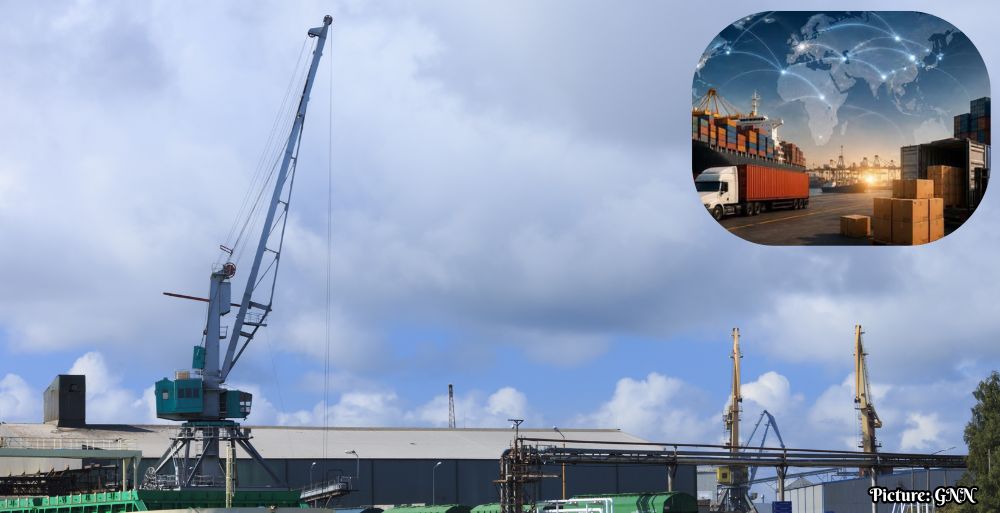
Transshipment is a common aspect of global trade, where goods often pass through multiple countries before arriving at their final destination. However, US officials are concerned about shipments that are allegedly rerouted or minimally processed in third countries to disguise their Chinese origin and evade tariffs. An example cited in the report includes Chinese electric motors that are fitted into recliners in Vietnam. Additionally, it refers to “screwdriver factories,” where imported components undergo minor assembly before being exported as products originating from another country.
US authorities have expressed that such processing may not meet the “substantial transformation” required for products to justifiably acquire a new country of origin.
Proposed Enforcement Measures
In response to the findings, the US government plans to enhance enforcement through various measures, including an executive order designed to bolster the powers of US Customs and Border Protection. Furthermore, a new AI-based monitoring initiative, referred to as a “detective border,” will be implemented to better identify shipments deemed more likely to involve transshipment before they reach US ports.
Officials have indicated that the administration intends to incorporate anti-transshipment provisions into upcoming trade agreements, which could impose penalties on countries allowing disguised Chinese goods to enter the US through their territories. These provisions may be particularly relevant in the context of a potential trade deal between the US and India.
Under the proposed enforcement framework, if a shipment is later determined to have been subject to transshipment, US customs could seek retrospective tariffs on a company’s shipments dating back one year, extending beyond the specific shipment identified.
Broader Trade Implications
This report emerges amid ongoing negotiations between India and the United States regarding a reciprocal tariff agreement, with both sides grappling with existing disagreements over India’s trade and energy relations with Russia. While US officials have emphasized that the report is not specifically targeting China, they have identified Vietnam, Cambodia, Malaysia, Indonesia, and the Philippines as critical transshipment hubs. They also cautioned that other countries facing increased tariffs might be incentivized to pursue similar routes.
Officials refrained from commenting on how these findings might influence the anticipated meeting between US President Donald Trump and Chinese President Xi Jinping, although they noted that the report would guide the approach of the US Trade Representative in upcoming negotiations.