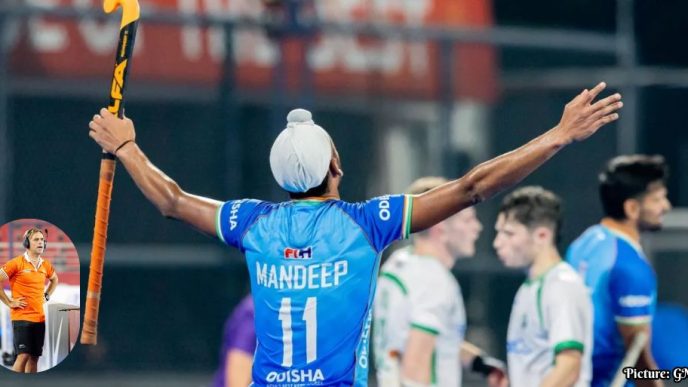
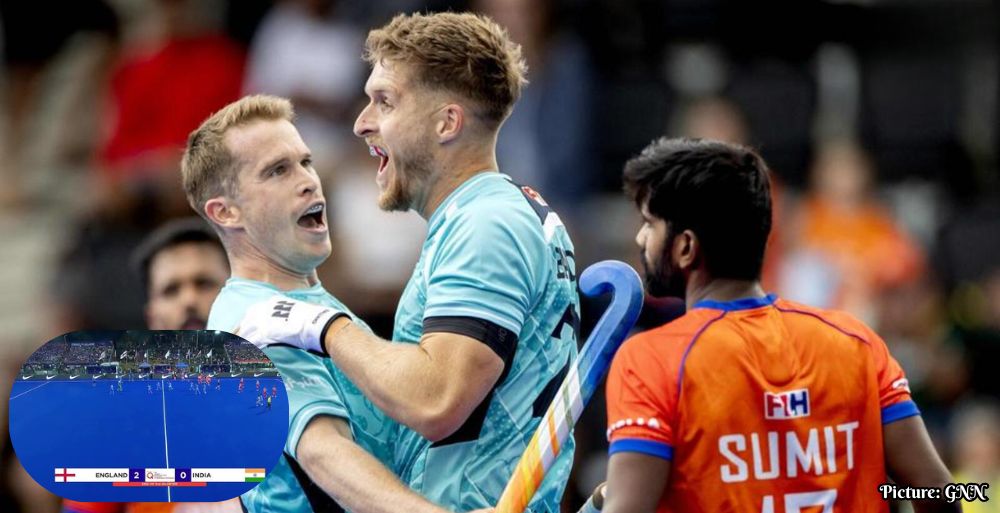
In a critical World Cup Pool-D match, England’s men’s hockey team defeated India 4-2, exposing significant tactical vulnerabilities in the Indian lineup and raising questions about their performance as the tournament progresses.
On August 17, 2026, the England men’s hockey team claimed a decisive 4-2 victory over India at the Wagener Stadion, a result that not only solidified England’s status in the tournament but also highlighted persistent issues within the Indian team’s strategy and execution. England, ranked third in the world and boasting the best defensive record in the tournament leading up to this match, demonstrated their tactical superiority and ability to capitalize on the Indian team’s shortcomings.
Match Overview
The match commenced under overcast skies, setting a tense atmosphere for both teams. England struck first in the 13th minute with a goal from Nicholas Bandurak, who took advantage of a defensive lapse by India. This early goal set the tone for a challenging match for India, forcing them to respond quickly to regain control. India did manage to equalize shortly after, with captain Harmanpreet Singh scoring a powerful drag-flick penalty corner in the 16th minute. Dilpreet Singh then added a second goal for India just eight minutes later, following a well-coordinated play involving teammates Hardik Singh and Abhishek Nain.
Despite this initial resurgence, India’s momentum was short-lived. England’s relentless man-to-man full-court press effectively disrupted India’s offensive plays, leading to turnovers in critical areas. This pressure was particularly evident as the match progressed, with England’s defensive strategies limiting India’s scoring opportunities.
Turning Points of the Match
As the game advanced into the third quarter, England regained the lead in the 38th minute when Henry Croft capitalized on an indecisive moment from Indian defender Jugraj Singh. Croft received the ball with ample space and time to execute a turn and shot, illustrating India’s ongoing defensive vulnerabilities. The situation worsened for India as Jugraj Singh’s lack of urgency in leaving the pitch after a substitution prompted head coach Craig Fulton to express visible frustration.
Shortly thereafter, England’s Stuart Rushmere added to their tally, converting a well-placed pass from Liam Sanford, which sailed past Indian goalkeeper Mohith H.S. Croft’s third goal, scored just minutes later, pushed India into a difficult position as they entered the fourth quarter trailing 3-2.
Final Quarter Dynamics
The fourth quarter saw India exhibiting a heightened sense of urgency, particularly after England received two green cards, temporarily reducing their player count. However, despite being presented with several scoring opportunities, India struggled to maintain composure and lacked the tactical execution necessary to equalize. This inability to capitalize on advantageous situations was a recurring theme throughout the match.
Ultimately, Bandurak sealed India’s fate with a penalty corner goal in the 54th minute, bringing the final score to 4-2 in favor of England. This defeat complicates India’s path to the semifinals, as they will need to reassess their strategies and performance in upcoming matches.
Implications for Tournament Progress
This loss places India in a precarious situation within the tournament. While they still have opportunities to advance, the performance against England has brought to light critical areas that require improvement—specifically, their defensive resilience and the ability to maintain composure under pressure. Coach Fulton faces the challenging task of addressing these issues as the team prepares for their next fixtures.
The broader implications of this match extend beyond the immediate result. It raises questions about India’s preparations and their ability to adapt to high-pressure situations against top-tier teams. Historically, India has had a rich legacy in hockey; however, recent performances indicate a need for revitalization in both strategy and execution to reclaim their status as a dominant force in the sport.
Looking Ahead
As the tournament progresses, attention will also shift to the Indian women’s hockey team, who are scheduled to face South Africa on August 18, 2026. The outcomes of these matches will be crucial for both teams, as they strive to learn from past performances and refine their strategies moving forward.
In summary, India must reflect on the lessons learned from this defeat against England, particularly in the realms of communication, defensive organization, and offensive creativity. As the World Cup unfolds, the focus will be on whether they can rebound from this setback and deliver a stronger performance in their subsequent games. The path to recovery will require not only tactical adjustments but also a mental reset for the players as they aim to overcome the challenges presented by elite competition.