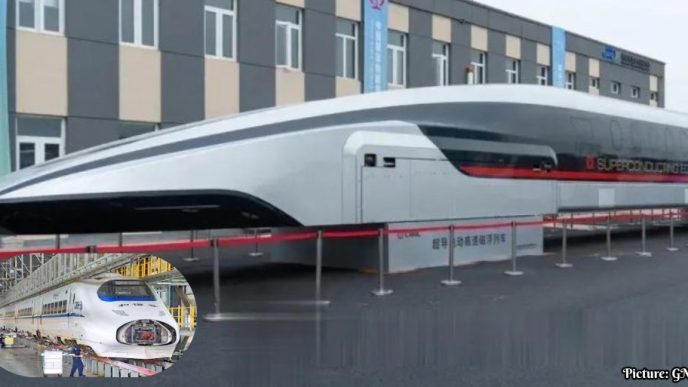
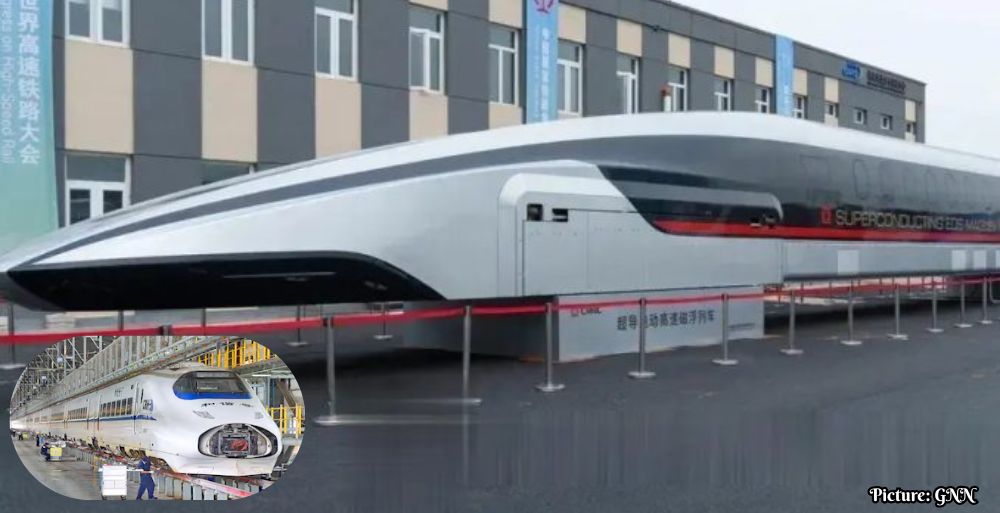
A Chinese experimental bullet train has achieved a new world record for acceleration, reaching speeds of 800 kilometers per hour in just over five seconds, marking a significant advancement in ultra-high-speed transportation technology.
In a remarkable demonstration of engineering prowess, an experimental bullet train in China has recently achieved a groundbreaking acceleration milestone, going from a complete stop to 800 kilometers per hour in approximately 5.3 seconds. This test was conducted on a 1-kilometer track at the Donghu Laboratory in Hubei province, highlighting the potential of magnetic levitation (maglev) technology for future ultra-high-speed transportation systems.
The maglev train operates by utilizing magnetic forces to lift it slightly above the tracks, thereby eliminating friction—a key factor that typically limits the speed of traditional trains. This frictionless operation not only facilitates rapid acceleration but also allows the train to decelerate smoothly, as demonstrated in this latest test where it came to a stop over a distance of about 200 meters. The ability to halt quickly and safely is crucial for the development of commercial high-speed transport systems.
Record-Breaking Tests
This latest achievement marks the third instance in six months that the same train has broken its own record for short-distance maglev acceleration. The train was first tested in June 2025, when it reached a remarkable speed of approximately 650 kilometers per hour in seven seconds. Since then, it has consistently surpassed its own records, achieving speeds of 700 kilometers per hour and 798 kilometers per hour in subsequent trials. This progressive improvement demonstrates not only the reliability of the technology but also the dedication of the research teams involved.
According to reports from China’s national broadcaster CCTV, researchers have been pushing several critical technologies to their limits during these tests. These include high-power energy delivery systems, advanced electromagnetic propulsion mechanisms, high-speed levitation control, and sophisticated emergency braking systems. Each of these elements is crucial for ensuring both the performance and safety of future maglev systems, as they operate under conditions that challenge conventional engineering limits.
Current and Future Maglev Technologies
The advancements showcased by this experimental train come at a time when operational maglev trains in China and Japan typically run at speeds around 320 kilometers per hour. The fastest commercial maglev service currently in operation, the Fuxing rail in China, achieves a maximum speed of 350 kilometers per hour. The recent breakthroughs in acceleration could potentially revolutionize the landscape of high-speed rail travel, offering a glimpse into a future where travel times between major urban centers could be drastically reduced.
Researchers at the National University of Defence Technology in China are also engaged in developing ultra-high-speed maglev systems. One of their tests recently recorded an acceleration of 697 kilometers per hour in just two seconds, showcasing the rapid development in this field. While these advancements are impressive, the technology as it stands is not yet intended for passenger transport. This aspect of development underscores the experimental nature of the current tests and the necessity for further refinement before commercial deployment.
However, the underlying principles being developed could have far-reaching applications beyond rail transport. There is ongoing research into creating ultra-high-speed maglev trains that could operate within low-pressure or vacuum tubes, enabling even greater speeds and efficiency. Such developments could eventually lead to new launch systems for rockets and fighter jets, illustrating the broad implications of these technological advancements. This cross-disciplinary approach to transportation technology highlights the potential for maglev principles to influence various sectors of engineering and transportation.
Challenges Ahead
Despite the promising advancements in maglev technology, several challenges remain before these systems can be implemented on a broader scale. Among the most significant hurdles are the high costs associated with building the necessary infrastructure, ensuring passenger safety, and constructing precision-aligned tracks over long distances. These challenges must be addressed to transition from experimental designs to viable commercial systems.
Infrastructure costs are particularly daunting, as the construction of maglev lines requires significant investment in both technology and materials. Additionally, the safety of passengers, should these trains eventually be used for public transport, is paramount. This includes not only the physical safety during travel but also the reliability of the technology in varying environmental conditions.
As the field of high-speed transportation continues to evolve, the implications of these breakthroughs extend beyond rail systems. The advancements in electromagnetic propulsion and energy delivery could pave the way for innovative transportation solutions across various sectors, potentially transforming the future of travel. The global race for high-speed transport capabilities remains fierce, with nations investing in new technologies to enhance connectivity and reduce travel times. Countries around the world are observing China’s developments closely, as they strategize their own investments in high-speed rail and related technologies.
In conclusion, the recent record-setting acceleration of the Chinese experimental bullet train not only showcases advancements in maglev technology but also emphasizes the potential for future developments in ultra-high-speed transportation. As researchers continue to refine these technologies, the dream of high-speed travel may soon become a reality, with implications that could reshape the landscape of transportation and mobility on a global scale. The ongoing research and development in this field will likely determine the future of how we connect cities and regions around the world.