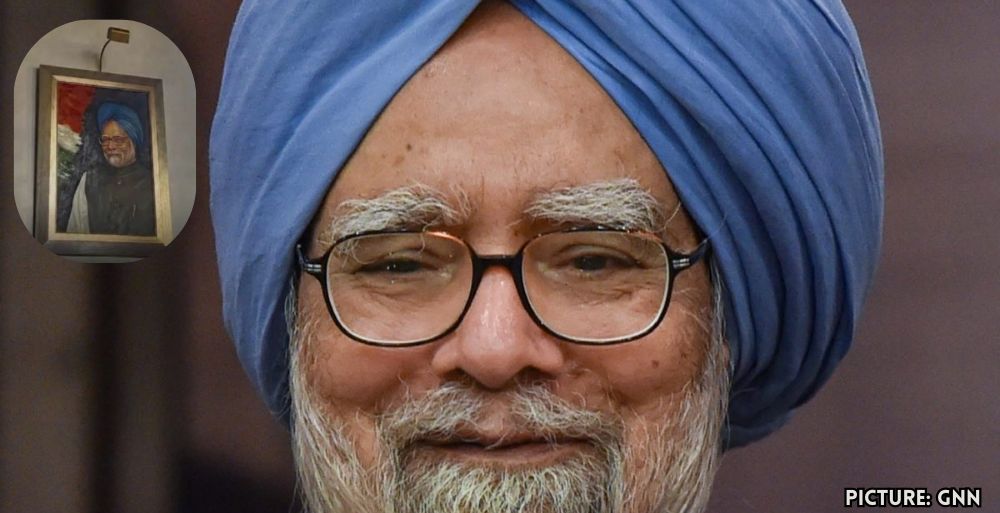
The University of Cambridge has honored the legacy of former Indian Prime Minister Manmohan Singh by unveiling a portrait, prompting accolades from leading academics who recognize his contributions to India and the global community.
The University of Cambridge recently unveiled a portrait of the late Manmohan Singh, who served as India’s Prime Minister from 2004 to 2014. This significant event, which took place in early October 2024, was attended by influential figures in academia and public policy, including Kaushik Basu, a former Chief Economic Adviser to the Government of India. Basu took to social media to express his support for the initiative, stating, “I am glad Cambridge unveiled Manmohan Singh’s portrait. He was one of the world’s most respected leaders.”
Basu emphasized Singh’s remarkable qualities, describing him as a leader distinguished by a unique combination of intellect, modesty, and integrity, which he believes elevated India’s standing on the global stage. The unveiling of Singh’s portrait is noteworthy given Cambridge’s selective approach to honoring its alumni. This move signals a recognition of Singh’s substantial intellectual contributions and his role in shaping economic discourse.
Singh’s Academic Journey
Manmohan Singh, who passed away in 2024, had a profound connection to the University of Cambridge, having studied at its Faculty of Economics. Upon his death, the University released a statement expressing its sorrow over the loss of one of its most distinguished alumni. The statement noted his status as one of India’s longest-serving Prime Ministers and highlighted that he was the country’s first non-Hindu Prime Minister. His academic career began in Punjab, leading him to Cambridge where he earned a First Class Honours degree in Economics in 1957.
In an earlier tribute, Professor Sriya Iyer from the Faculty of Economics remarked on Singh’s legacy, calling him a “great economist, visionary, scholar, and statesman of India.” Iyer noted that Singh’s journey started with winning the prestigious Adam Smith Prize during his studies at Cambridge and evolved through his various roles in financial and economic governance, culminating in his tenure as Prime Minister.
Contributions to Economic Policy
After graduating from Cambridge, Singh furthered his education by completing a DPhil in Economics at Nuffield College, Oxford University, in 1962. His scholarly work included the influential book, “India’s Export Trends and Prospects for Self-Sustained Growth,” which offered a critical analysis of India’s inward-oriented trade policies. This early work set the stage for Singh’s later reforms aimed at liberalizing India’s economy in the 1990s, which are credited with transforming the country into one of the world’s fastest-growing economies.
Singh’s tenure as Prime Minister is marked by significant economic reforms that opened up India’s markets, attracting foreign investment and fostering a new era of growth. His leadership style, characterized by his humility and technocratic approach, garnered respect not only within India but also internationally. His administration oversaw a period of substantial economic growth and increased global engagement.
Legacy and Recognition
The portrait unveiling serves as a testament to Singh’s enduring legacy, as academics and political leaders alike continue to recognize his contributions to both India’s development and its position on the world stage. The acknowledgment by a prestigious institution such as Cambridge underscores the importance of Singh’s work and philosophy in contemporary discussions of economic policy and governance.
In addition to his economic policies, Singh was also known for his advocacy for the right to information, work, education, land, and tolerance, which reflected his commitment to democratic values and social justice. His approach to governance emphasized transparency and accountability, principles that remain relevant in today’s political discourse.
As discussions around Singh’s legacy continue, the portrait at Cambridge will serve as a reminder of his impact on India and the global economic landscape, inspiring future generations of leaders and scholars. The honor reflects not only the high regard in which he is held within academic circles but also the broader implications of his policies on contemporary global economic frameworks.
Singh’s rise to prominence began during a pivotal time for India. After the economic crisis of 1991, he was instrumental in implementing reforms that shifted the country towards a more open and market-oriented economy. His policies contributed to an increase in India’s GDP growth rate and positioned India as a key player in the global economy.
The unveiling ceremony at Cambridge also highlights the changing dynamics of global leadership, where figures like Singh are recognized not only for their political achievements but also for their academic contributions. Singh’s legacy continues to influence discussions on economic policy and governance in India and beyond.