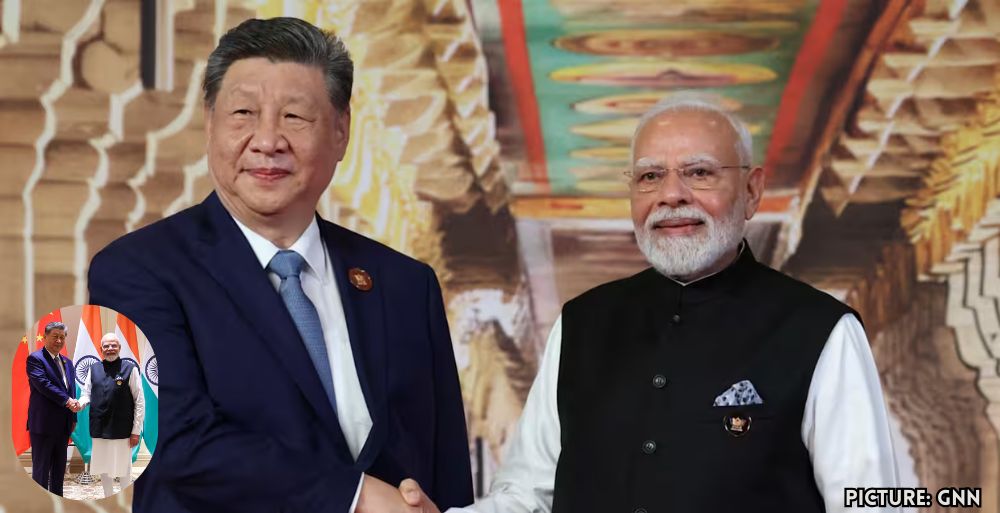
Indian Prime Minister Narendra Modi and Chinese President Xi Jinping met during the BRICS summit in New Delhi to address strained relations stemming from a deadly border conflict, emphasizing cooperation and mutual respect.
NEW DELHI — Indian Prime Minister Narendra Modi and Chinese President Xi Jinping convened on Saturday, September 16, 2023, during the BRICS summit in New Delhi. This diplomatic meeting represents a significant effort to mend ties between the two neighboring countries, which have been strained since a deadly border clash in 2020. The clash, which resulted in the deaths of at least 20 Indian soldiers and four Chinese troops, marked a low point in bilateral relations and has led to ongoing military tensions along the Line of Actual Control (LAC).
During the discussions, President Xi highlighted that China views its relationship with India through a “strategic and long-term perspective.” He underscored the importance of cooperation, stating, “Both countries should draw on each other’s strengths, support one another, and pursue common development.” Xi further suggested that as significant players in the Global South, China and India have a responsibility to promote a multipolar world and contribute to global peace and stability.
Modi expressed gratitude for Xi’s support in hosting the summit, which is scheduled to take place in China next year. He emphasized that peace along the disputed border is crucial for enhancing broader bilateral ties and called for both nations to honor existing agreements regarding their borders. According to a statement from India’s foreign ministry, both leaders reaffirmed their commitment to achieving a fair and mutually acceptable resolution to the ongoing boundary dispute.
Addressing Differences and Economic Challenges
“Differences should not become disputes,” Modi stated, advocating for mutual respect, sensitivity, and interest as guiding principles for their relationship. The leaders discussed the need to expand people-to-people connections and enhance business relationships while tackling critical issues such as trade imbalances and market access.
The backdrop of this summit is steeped in a history of conflict, particularly following the military clash in 2020, which has led to a prolonged standoff at the LAC in the Ladakh region. In the years since, both countries have made efforts to de-escalate tensions; however, deep-seated mistrust remains. Each side has stationed tens of thousands of troops along the contested borders, supported by artillery, tanks, and air assets, indicating that both nations remain prepared for potential conflict.
Despite attempts to ease tensions, India and China face numerous challenges that complicate their relationship. India has a substantial trade deficit with China, which has raised concerns within the Indian government regarding economic dependency. Restrictions on Chinese investments and technology, combined with competing strategic interests in Asia, contribute to the ongoing friction between the two nations. As a response to these concerns, India has significantly bolstered its military infrastructure along its border with China, while Beijing has developed roads and defensive installations on its side of the disputed frontier.
Historical Context and Future Prospects
Xi’s visit is viewed as a pivotal opportunity to test whether recent diplomatic overtures can translate into a more stable and cooperative relationship. Since their border conflict in 1962, the economic trajectories of both countries have diverged significantly. China has experienced rapid economic growth, outpacing India, and currently enjoys a large trade surplus with its neighbor. This economic rivalry is compounded by strategic considerations, as both countries vie for influence in the region.
In light of rising labor costs in China and the deteriorating state of its relationships with the United States and Europe, India has positioned itself as a potential alternative for foreign manufacturers. Furthermore, India’s apprehension regarding China’s ambitious Belt and Road Initiative reflects its concerns over sovereignty and regional influence. New Delhi has consistently opposed initiatives that it perceives as infringing on its territorial integrity or undermining its strategic interests.
Simultaneously, India’s increasing strategic partnership with the United States has raised alarms in Beijing, which views this alignment as a direct challenge to its dominance in the region. The growing military and economic ties between India and the U.S. have led to concerns in China about encirclement and counterbalancing efforts. The geopolitical dynamics in Asia continue to evolve, suggesting that while Modi and Xi’s discussions reflect a willingness to improve relations, underlying tensions and strategic rivalries are likely to persist.
As the BRICS summit concludes, observers will closely monitor whether the diplomatic engagement between India and China can yield tangible improvements in bilateral relations, or whether historical complexities and mutual suspicions will continue to hinder progress. The outcomes of this meeting could set the tone for future interactions and may have lasting implications for regional stability and international relations.