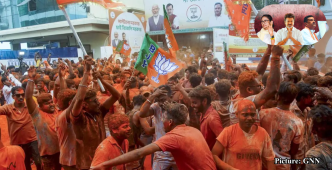
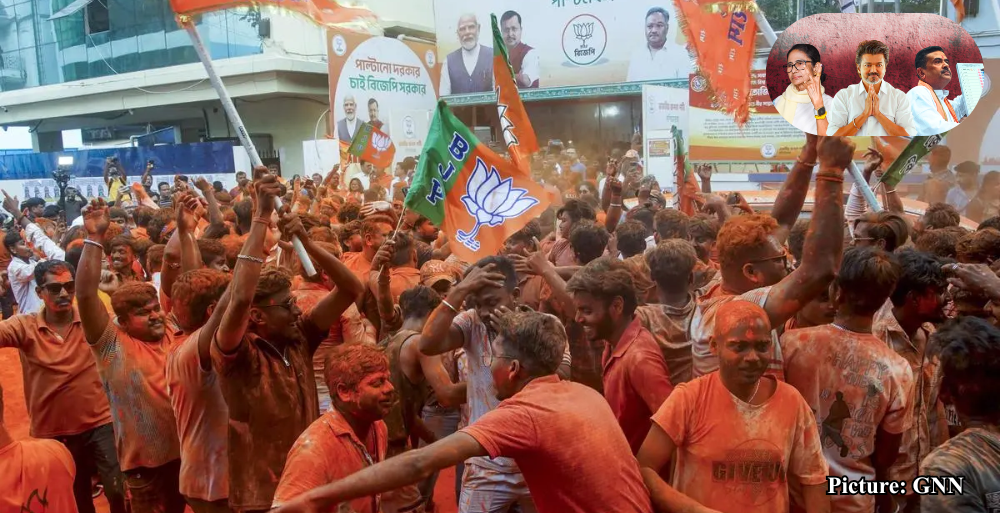
The 2026 state assembly elections have led to significant political shifts in India, with the BJP gaining ground in West Bengal, the DMK solidifying its position in Tamil Nadu, and the Congress making a comeback in Kerala.
The 2026 state assembly elections in India have resulted in a remarkable reshaping of the political landscape across three key states: West Bengal, Tamil Nadu, and Kerala. The Bharatiya Janata Party (BJP) has crossed the majority threshold of 148 seats in West Bengal, marking a significant transformation in a state traditionally dominated by the Trinamool Congress (TMC), led by Chief Minister Mamata Banerjee.
The BJP’s success in West Bengal, according to early trends reported by various news outlets, is attributed to a comprehensive electoral strategy that emphasized grassroots outreach, targeted messaging around governance and development, and the mobilization of diverse demographic groups. Political analysts indicate that the BJP’s campaign resonated particularly well with voters concerned about security, regional development, and the effectiveness of local governance, which have emerged as critical issues in shaping public sentiment in the state.
BJP’s Strategy and Voter Response
Experts assert that the BJP’s electoral victory in West Bengal reflects a growing public perception of the party as a credible alternative to the TMC administration. The BJP’s ability to articulate a vision for development and address local grievances effectively attracted a portion of voters who previously supported the TMC. This shift in voter sentiment is particularly notable considering West Bengal’s political history, where the TMC has maintained substantial support since its rise in the 2011 elections.
In contrast, the TMC’s performance in the recent elections has faced scrutiny, with challenges arising from accusations of governance failures and voter dissatisfaction regarding local issues. Early voting trends indicate that the TMC’s stronghold is being tested, and the BJP’s success could herald a more competitive political environment in future elections.
DMK’s Continued Dominance in Tamil Nadu
In Tamil Nadu, the Dravida Munnetra Kazhagam (DMK) has reaffirmed its political dominance, securing a decisive victory that allows Chief Minister M.K. Stalin to continue his leadership for a second consecutive term. The DMK’s triumph can be attributed to its commitment to social welfare initiatives and infrastructure development, which have resonated with the electorate.
Stalin’s administration has garnered praise for its focus on social justice and economic development, elements that have significantly contributed to voter support. The DMK’s ability to sustain its influence in the face of the BJP’s successes elsewhere underscores the diverse political sentiments present throughout India. The party’s sustained dominance exemplifies a well-crafted political strategy that effectively engages voters concerning local issues.
Congress’s Resurgence in Kerala
Meanwhile, in Kerala, the Indian National Congress has made a notable comeback, reclaiming several seats previously held by the Left Democratic Front (LDF). This electoral shift suggests a reconfiguration of political alliances and voter preferences within the state. Analysts attribute Congress’s resurgence to its renewed focus on local issues and an effective coalition-building strategy that appealed to disillusioned voters.
The political dynamics in Kerala, characterized by a history of alternating governance between the Congress and the LDF, indicate that voters are increasingly prioritizing accountability and effective governance. The Congress’s success in this election could signal a broader resurgence at the national level, as the party strives to re-establish its relevance amid the growing influence of regional parties and the BJP’s expansion into new territories.
Implications for Future National Elections
The outcomes of these state elections are poised to have significant implications for the national political landscape as India approaches the 2024 general elections. The BJP’s success in West Bengal may empower the party to intensify its efforts in regions where it has historically struggled. Conversely, the DMK’s victory in Tamil Nadu emphasizes the critical role of regional parties in shaping electoral results, highlighting the necessity for national parties to tailor their strategies to local contexts.
Similarly, Congress’s resurgence in Kerala could provide a morale boost and strategic advantage ahead of the national elections, signaling a potential re-emergence of the party as a key player in Indian politics. Political commentators emphasize that the varied outcomes of these elections illustrate the complexity of India’s electoral landscape, where regional issues and party dynamics significantly influence voter behavior.
As political parties prepare for the upcoming general elections, the insights gained from these state contests will be crucial in shaping their strategies moving forward. The 2026 assembly elections serve as a potent reminder of the dynamic and multifaceted nature of Indian politics, where the balance of power can shift rapidly, reflecting the electorate’s evolving priorities and concerns.