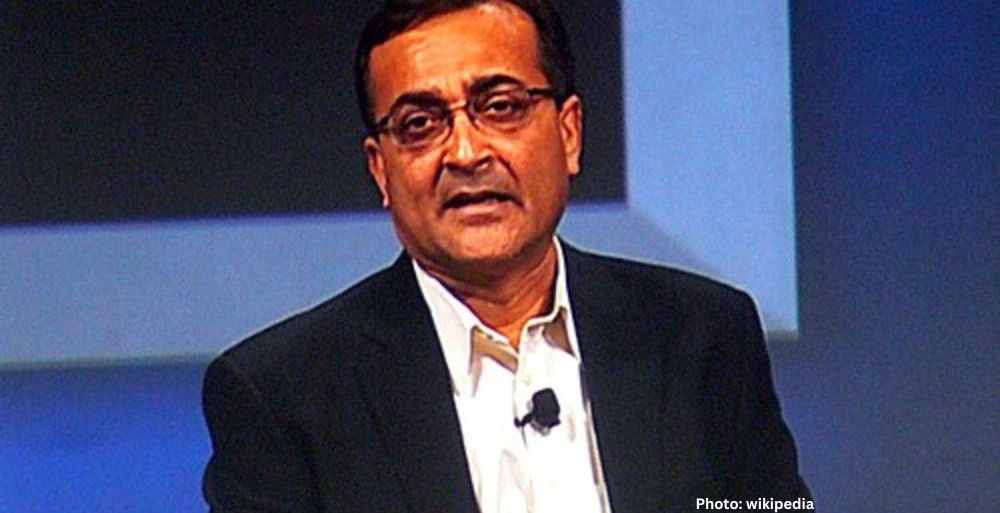
Padma Shri awardee Ajay Bhatt urges India to leverage the expertise of its diaspora as the nation aims for developed status by 2047, emphasizing innovation, education, and indigenous technology.
SEATTLE, Washington — In an exclusive interview on September 17, 2026, at the Consulate General of India, Ajay Bhatt, the Indian-American computer architect renowned for his invention of Universal Serial Bus (USB) technology, expressed a strong desire for India to tap into the expertise of its diaspora. Bhatt believes that utilizing the knowledge of accomplished individuals abroad can significantly contribute to India’s vision of becoming a developed nation by the year 2047.
“I think some of the diaspora members who came here a long time ago have acquired some expertise in our own fields. I think if it can be leveraged by Indian companies or the Indian government, even in developing policies or strategies, then it would be very useful for the 2047 vision,” Bhatt stated during the interview.
Bhatt recounted a meeting with Prime Minister Narendra Modi at Rashtrapati Bhavan last year when he received the Padma Shri award. During their conversation, Bhatt expressed his willingness to contribute his expertise to India’s development. “That’s when I asked him if they needed any of my expertise. I was surprised that the Prime Minister knew all about my background,” he said, noting that Modi involved Home Minister Amit Shah in their discussion, showcasing a personal interest in Bhatt’s career.
Technological Evolution in India
Reflecting on India’s technological advancements, Bhatt described the country as “unique” and emphasized his close observation of its progress over the past two decades. He recalled his time at Intel, where the company operated a small office in Bengaluru with just five or six employees. This small operation expanded significantly, leading to the establishment of major development centers in the region focused on advanced microprocessor development.
Bhatt’s visits to various educational institutions across India have also left a lasting impression on him. He has made it a point to engage with students at institutions like IIT Kharagpur and universities in Delhi, Mumbai, Chennai, Tiruchirappalli, and Varanasi. “I’m so impressed by the students that we have. They have so much knowledge, so much hunger for knowledge, so much initiative, so much drive,” he noted, highlighting the enthusiasm and readiness of young Indians to innovate.
The Role of Artificial Intelligence
As technology continues to evolve, Bhatt emphasized the transformative potential of artificial intelligence (AI) in education. He argued that AI could democratize access to knowledge, thus reshaping the way students learn. “The way we teach our students is going to change in a major way. I think you won’t have to learn everything all at once. You can learn as you go,” he stated. He advocates teaching students social skills and critical thinking to keep them motivated and prepared for future challenges.
Bhatt also pointed to the success of the Unified Payments Interface (UPI) as an example of how India can create solutions tailored to its unique needs. He stressed that for India to achieve global technology leadership, it must consider the end-user experience and develop indigenous technologies that address local challenges.
Indian Americans’ Impact in the U.S.
In discussing the contributions of Indian Americans to the technology sector in the United States, Bhatt highlighted their significant role while also noting the broader impact of immigrants. “I would just say not only Indian Americans, but actually immigrants. Yes, this is a country of immigrants,” he affirmed, recognizing the collective contributions of diverse backgrounds in shaping the U.S. technology landscape.
Bhatt’s own recognition came after his company showcased its engineers as innovators deserving of public acknowledgment, a move he believes is often overlooked. He remarked, “Our engineers are like rock stars,” noting that many Indian American engineers do not seek fame or recognition despite their substantial contributions.
The Legacy of USB Technology
Reflecting on his journey to inventing USB technology, Bhatt discussed the origins of the concept, which began in 1992. He explained that his motivation stemmed from a personal experience when his family faced difficulties printing documents at home. “They were having problems with printing, so I said there has got to be a better way,” he recalled. Despite initial skepticism from supervisors, Bhatt pursued the idea, believing it could simplify computer connections.
His persistence paid off when Microsoft decided to back USB technology over a competing product from Apple after reviewing his specifications. “I was the lead who worked across companies to get consensus on the specifications in 1995. And once the specifications were completed, they were adopted by everybody,” he stated. Apple later introduced USB to the consumer market with the iMac in 1998, marking a milestone in the technology’s widespread adoption.
Looking Forward: India’s Development Goals
As India aims for significant development by 2047, Bhatt emphasized the importance of creating solutions designed specifically for its challenges. He underscored the need for innovation that originates from within the country, encouraging a mindset that embraces risk-taking for potential rewards. “If you don’t take the risk, there is no reward,” he asserted.
Bhatt commended Modi’s ambitious goals for India and reflected on his own experiences during the USB development process, insisting that success requires a determination to overcome obstacles. He noted India’s progress in hosting significant events, such as an artificial intelligence summit, and suggested that current immigration trends in the U.S. could provide opportunities for India as talented professionals consider returning home.
In closing, Bhatt expressed his belief that technology will play a crucial role in achieving India’s 2047 goals. He encouraged the nation to embrace its unique challenges and develop solutions that cater to its specific context, stating, “Let’s find a uniquely Indian solution.”