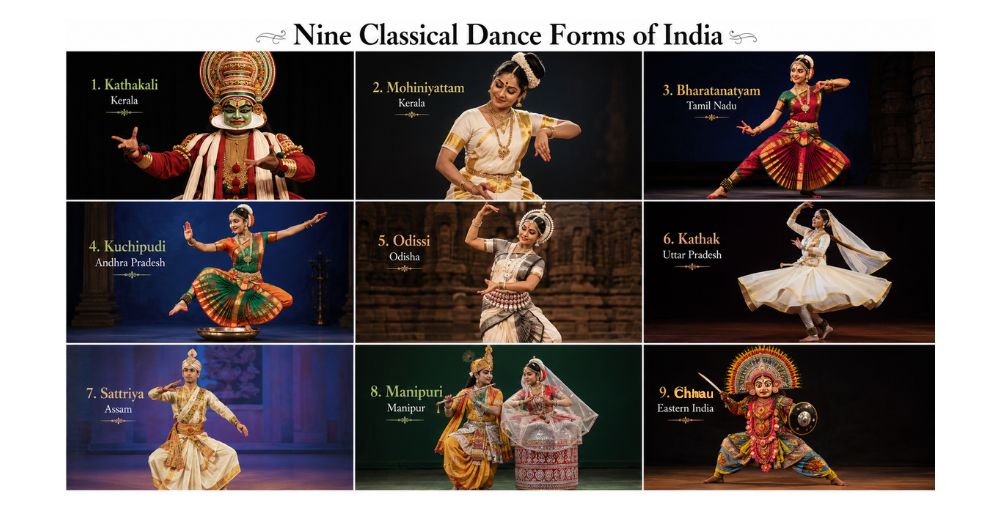
Nine dance forms, each rooted in a distinct region, together showcase the extraordinary diversity and cultural richness of India’s performing arts.
India’s cultural landscape is as diverse as its geography, and nowhere is this richness more vividly expressed than through its classical dance traditions. Spanning the country’s length and breadth, from Kerala in the south to Manipur in the northeast, these dance forms preserve centuries of history, mythology, spirituality, and artistic expression.
Recognized for their distinctive techniques, costumes, music, and storytelling traditions, India’s nine classical dance forms offer a window into the country’s regional identities while sharing a common foundation rooted in ancient texts and devotional practice.
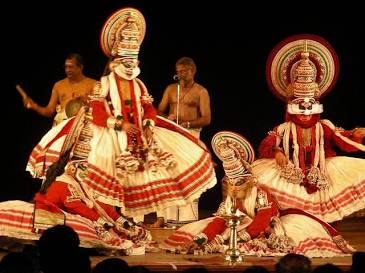
The journey begins in Kerala with Kathakali, one of the world’s most visually striking theatrical traditions. Performers use elaborate facial makeup, towering headgear, ornate costumes, expressive facial movements, and intricate hand gestures, or mudras, to narrate episodes from the Ramayana, Mahabharata, and other epics, without speaking a single word.
Kerala is also home to Mohiniyattam, whose name translates to “the dance of the enchantress.” Traditionally performed as a solo by women, the graceful dance is characterized by gentle swaying movements, delicate expressions, flowing rhythms, and elegant white-and-gold attire complemented by a distinctive side bun.
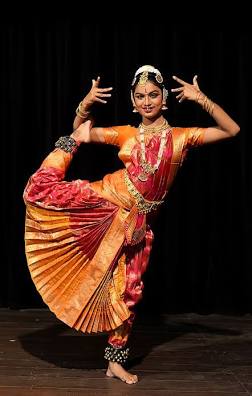
Across the border in Tamil Nadu, Bharatanatyam stands as one of India’s oldest and most celebrated classical dance forms. Known for its powerful footwork, geometric postures, expressive storytelling, and precise rhythmic movements, Bharatanatyam dancers perform in brightly colored pleated silk costumes that fan open during movement, adorned with temple jewelry and ankle bells.
In neighboring Andhra Pradesh, Kuchipudi combines dance, music, and acting into a dynamic theatrical performance. One of its signature features is Tarangam, in which dancers balance on a brass plate while executing intricate rhythmic footwork, demonstrating remarkable balance and technical skill.
Further east, Odissi, the classical dance tradition of Odisha, is distinguished by fluid body movements and the iconic tribhanga posture, where the body bends gracefully at three points. Inspired by temple sculptures and devotional poetry, Odissi blends lyrical elegance with expressive storytelling.
Northern India is represented by Kathak, a dance form renowned for lightning-fast footwork, intricate spins, expressive gestures, and rhythmic improvisation. Originally developed by traveling storytellers, Kathak later flourished in the royal courts of the Mughal era, incorporating both Hindu and Persian artistic influences.
In Assam, Sattriya emerged within Vaishnavite monasteries during the 15th century through the teachings of saint-scholar Srimanta Shankardev. Originally performed by monks as a medium for spiritual instruction, Sattriya continues to preserve devotional narratives through refined movement and expressive performance.
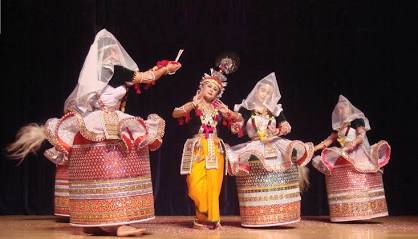
To the east lies Manipuri, a dance tradition deeply rooted in the devotional stories of Radha and Krishna. Unlike many other classical forms, Manipuri emphasizes soft, rounded movements and understated expressions. Its most recognizable costume is the beautifully embroidered barrel-shaped skirt known as the khumil, worn during performances of the celebrated Raas Leela.
Completing India’s classical repertoire is Chhau, practiced across parts of eastern India. Although often described as a semi-classical form because of its strong folk and martial influences, Chhau is renowned for combining athletic acrobatics, tribal martial arts, and dramatic storytelling. In several regional styles, dancers wear expressive handcrafted masks that vividly portray mythological characters, animals, and forces of nature.
Together, these nine dance traditions represent far more than performance. They embody centuries of philosophy, spirituality, literature, music, and regional heritage. Each form tells its own story while contributing to the larger narrative of India’s cultural identity. Despite rapid modernization, these ancient traditions continue to thrive through dedicated artists, cultural institutions, festivals, and new generations of performers committed to preserving one of the world’s richest performing arts legacies.