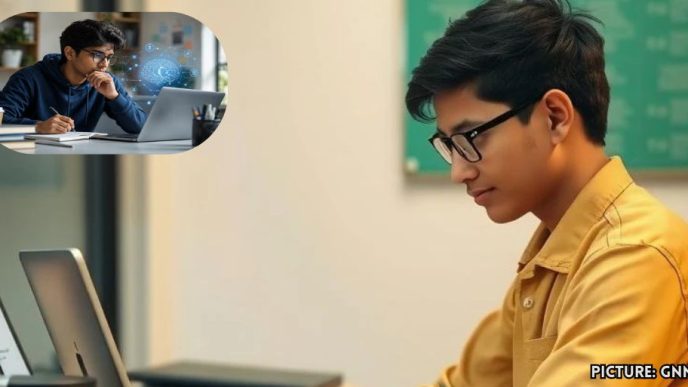
The introduction of the CS50 Duck, an AI tutor developed by Harvard’s David Malan and his team, reflects a significant shift in computer science education, providing students with a unique blend of guidance and challenge.
CAMBRIDGE, MA — Harvard University’s CS50 course, known as one of the largest introductory computer science classes globally, is undergoing a transformative change with the introduction of an AI tutor named the CS50 Duck. This initiative, led by David Malan, the Gordon McKay Professor of the Practice of Computer Science, aims to enhance the learning experience for millions of students across the globe.
Since its inception in 2007, CS50 has evolved from a traditional classroom setting to a comprehensive online platform, enrolling millions of students in various modules, including focused topics such as cybersecurity, Python, SQL, and artificial intelligence (AI). As Malan embarks on his first sabbatical this fall, he has entrusted the teaching responsibilities to Henry H. Leitner, ensuring the continuity of the course’s innovative practices.
Implementation of the CS50 Duck
The CS50 Duck was launched in early 2023, shortly after the release of ChatGPT, a revolutionary AI language model. Malan describes the Duck as an experimental AI tutor designed to assist students without providing direct answers. Instead, the Duck encourages learners to think critically and solve problems independently by asking guiding questions.
Malan explains, “The Duck is much less inclined to just give students answers outright or generate code for them, and it behaves more like a good teacher or tutor: asking more questions than it answers and trying to guide students towards solutions.” This approach is intended to foster a deeper understanding of computer science principles, rather than simply providing shortcuts to solutions.
Developing a Supportive Learning Environment
The development of the Duck required careful programming and fine-tuning to ensure that it adheres to academic integrity policies. Malan and his team utilized prompting techniques, instructing the Duck to refrain from giving direct answers and to maintain a supportive role in the learning process. Despite these measures, the Duck has occasionally deviated from its intended purpose, sometimes providing code responses up to 25% of the time.
Malan acknowledges the challenges in controlling the AI’s behavior, noting that randomness and the training data—often sourced from online forums—can lead to unintended outputs. He emphasizes the importance of maintaining a critical perspective towards AI-generated information, stating, “LLMs aren’t deterministic… they are just simulating understanding, based on their training data.”
Balancing AI and Human Interaction
The integration of AI in education has sparked a debate about its benefits and drawbacks. While some students have reported increased engagement and willingness to ask questions, Malan and his team observed a phenomenon known as “long tails,” where a small number of students would ask an excessive number of questions, potentially hindering their learning experience. To address this, the team implemented a “heart system” that limits the number of questions students can ask within a certain time frame, promoting independent problem-solving skills.
Malan highlights the positive impact of AI on both students and educators, noting that the Duck has alleviated pressure on office hours, which previously experienced long wait times. He asserts, “It allows students to ask far more questions than they might previously have been able to, logistically or socially—and that’s very healthy.”
The Future of AI in Education
Looking ahead, Malan anticipates that as AI technology continues to advance, its role in education will only expand. He reflects on the evolution of programming tools over the years, which have increasingly automated mundane tasks. However, he also expresses concern over the potential for AI to exceed human understanding and control, especially as it becomes capable of self-improvement.
“The anxiety-provoking watchword is ‘recursive self-improvement,’” he notes, suggesting that the rapid pace of AI development could outstrip our ability to manage it effectively. He advocates for proactive regulatory measures to ensure the ethical development of AI technologies.
Malan also addresses the changing landscape of computer science education in light of AI advancements. While the advice to “learn to code” still holds value, he emphasizes that the true goal of CS50 is to cultivate critical thinking and problem-solving skills. “The programming languages that we use in CS50 have always just been a means to that end,” he states.
As the CS50 Duck continues to evolve, it represents a significant step toward integrating AI into education, potentially reshaping the way computer science is taught and learned. With careful consideration and ongoing adjustments, educators like Malan aim to harness the power of AI to enhance student learning while navigating the complexities that accompany technological advancements.