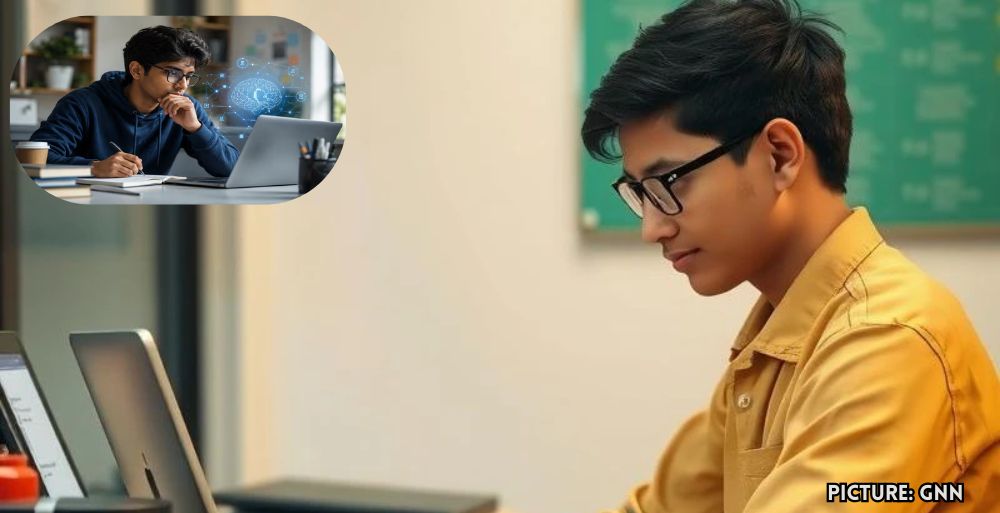
A 17-year-old high school senior, Navya Tuteja, has founded Raaha, an AI-powered platform designed to assist neurodivergent job seekers, as she navigates the complexities of education and technology in today’s digital age.
September 27, 2026 – Navya Tuteja, a 17-year-old senior at Thomas Jefferson High School for Science and Technology in Virginia, has launched Raaha, a platform aimed at helping neurodivergent job seekers find employment that suits their unique needs. The platform has already gained traction, boasting over 1,000 users and 20,000 job listings. Tuteja’s initiative comes at a time when educational performance among teenagers is declining, raising questions about the role of technology in learning and job readiness.
Background and Motivation
Tuteja’s inspiration for Raaha stems from her personal experiences and observations. Her mother, who is hard of hearing, influenced her understanding of the barriers faced by individuals with disabilities in the job market. Noticing that many job postings were devoid of meaningful descriptions, often listing only employer expectations, Tuteja created a quiz that evaluates job listings against various factors to provide candidates with a clearer understanding of potential work environments before they submit applications.
Despite the initial success of Raaha, Tuteja emphasizes that she plans to pursue higher education. However, she is open to the possibility of dedicating herself to the startup full-time should it continue to grow. Her entrepreneurial journey is particularly notable given the broader context of declining academic performance among teenagers. The OECD’s 2025 PISA results indicate that reading and math scores are at record lows, with American 15-year-olds experiencing their lowest reading scores in 25 years.
Impact of Technology on Education
The decline in educational performance has been attributed to various factors, including the proliferation of screens and generative AI technology. Tuteja acknowledges these concerns but believes that her school’s decision to block access to tools like ChatGPT has ultimately benefited her. “It made me use it in school way less,” she explained, suggesting that the restrictions forced her to engage with material more deeply.
In contrast to the increasing reliance on AI among peers—where data indicates that the percentage of students using AI for homework rose from 48% to 62% in less than a year—Tuteja has chosen to minimize its role in her academic work. She reports that while she utilizes AI for certain tasks, such as drafting emails and website design elements for Raaha, she consciously avoids using it for school assignments.
AI in the Workplace and Its Perception
Tuteja’s decision to incorporate “AI” into her startup’s branding reflects a broader trend, yet it also reveals a hesitation regarding the public perception of AI usage. Recent surveys indicate that individuals who disclose their use of AI are often viewed as less competent, which raises concerns about transparency in professional settings. Despite these societal stigmas, Tuteja maintains that being open about AI usage is essential, especially when it does not diminish the intellectual contributions behind a project.
Family Insights and Educational Philosophy
During a follow-up conversation, Tuteja’s parents shared their perspectives on balancing the use of AI in education. Deepti and Rohit Tuteja highlighted the challenges of navigating their daughter’s burgeoning career while instilling values of hard work and integrity. With Deepti’s extensive background in data management and Rohit’s experience in cybersecurity, the couple emphasizes the importance of teaching their daughter the significance of effort over shortcuts.
Tuteja’s parents recognize the dual nature of AI in education—while it has the potential to enhance learning, it also poses significant challenges. They agree that while restrictions on AI may seem beneficial, fostering a culture of responsible use is crucial for long-term success. “I think banning it is not the solution,” Tuteja stated, advocating for regulation and education on the responsible use of AI technologies.
Future Prospects and Community Engagement
In addition to Raaha, Tuteja has developed another project called Legible, which aims to simplify special education paperwork for families. This tool reflects her commitment to accessibility and transparency in education, particularly for families unfamiliar with the complexities of special education processes.
As Tuteja continues to navigate the challenges of being a student and entrepreneur, her experiences underscore the ongoing conversation about the role of technology in education and the workforce. As she prepares for college while balancing her responsibilities at Raaha, her story highlights both the opportunities and challenges that young innovators face in an increasingly digital world.