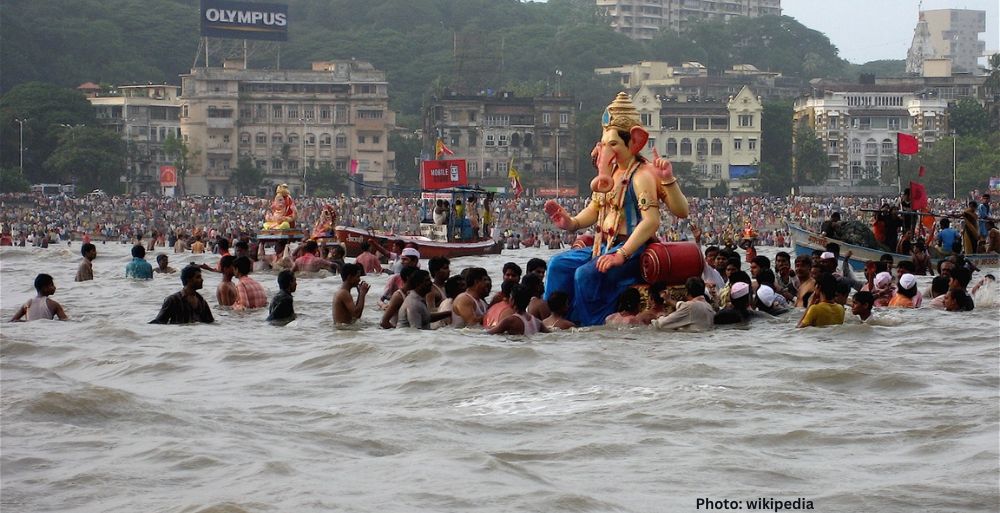
As the Ganesh Chaturthi festival unfolds in Mumbai, traditional depictions of the elephant-headed god Ganesha have evolved into more muscular and martial representations, reflecting changing cultural dynamics and the influence of contemporary media.
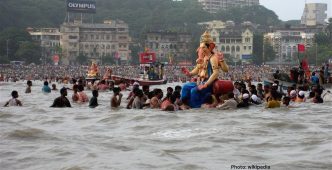
MUMBAI, India — The Ganesh Chaturthi festival, which commenced on September 14, has brought to the streets of Mumbai a striking display of artistic interpretations of Ganesha, the beloved elephant-headed deity revered in Hinduism. This year, a towering 47-foot idol in Khetwadi, characterized by a sculpted torso and an unexpected mane of hair, exemplifies a trend where Ganesha is depicted in increasingly macho and dynamic forms.
Traditionally, Ganesha has been celebrated as a pudgy, playful figure, but in the past decade, there has been a noticeable shift towards portraying him with a more muscular physique, often inspired by contemporary cinema and popular culture. Hemant Dixit, president of the Khetwadi Ganpati committee, shared, “Every year we do a different theme. In Hindu tradition, God has no fixed form. You can see God in anything. Here, we have depicted the essence of Ganesha through the body of a lion.”
Changing Representations of Deity
This year, numerous organizers are opting for depictions that align Ganesha with traditionally masculine deities such as Vishnu’s Narasimha avatar, characterized by its man-lion form. Past years have seen Ganesha depicted in army fatigues, atop military vehicles, and even carrying an AK-47. Such representations reflect the cultural shift where the image of Ganesha resonates with younger, urban audiences accustomed to action-oriented narratives.
Pankaj Jain, chair of the India Centre at Flame University, remarked, “The six-pack abs, the martial bearing, the athletic physicality — these reflect how younger, urban audiences engage with sacred imagery through the visual language of contemporary cinema and lifestyle culture. A martial, dynamic Ganpati speaks to audiences accustomed to action heroes and powerful imagery. It’s a form of cultural translation.”
The influence of cinema, particularly blockbuster films like “Baahubali,” has significantly shaped these modern representations. Artists like Rakesh Pathrabe, who gained notoriety for creating a fierce version of Ganesha called “Rudra Ganesh,” noted that the creativity of organizers often dictates the styles sought after each year.
Community Competitions and Cultural Significance
The Ganpati festival has its roots in the late 19th century when it was initiated as a means to bolster Hindu cultural identity and foster unity against colonial rule. Today, however, the festival is characterized by a competitive spirit among community organizers who strive to showcase the most striking and memorable idols. Faizal Munawar Shaikh, who organizes a local celebration in Valsad, Gujarat, stated, “Every year, communities seek larger and more dramatic representations.”
This year, one idol stands out at nine feet tall, depicting Ganesha with bulging biceps and sinewy forearms. The commercial aspect of the festival has intensified, with artists like Siddhant Mohite recalling requests for increasingly extravagant designs, including Ganpatis inspired by popular culture.
Militarization and Political Context
Since the Bharatiya Janata Party (BJP) came to power in 2014, there has been a noticeable intertwining of political and religious narratives, often projecting a more militant version of Hinduism. Celebrations last year were particularly infused with nationalistic fervor following military operations between India and Pakistan, further fueling the trend of depicting Ganesha in militaristic contexts. In Maharashtra, state officials encouraged festival organizers to celebrate military achievements and honor soldiers.
One particularly striking example from Hyderabad featured an 18-foot idol of a Vishnu-inspired Ganesha, surrounded by an S-400 missile system, symbolizing a blend of patriotism and religious devotion. N. Maniraj, a member of the Hindu Warrior’s Friends Association, articulated the aim to appreciate the prime minister’s leadership alongside the contributions of women soldiers.
Controversies and Artistic Boundaries
Despite the popularity of these new representations, the trend has not been without controversy. Some artists, like Pathrabe, argue that the peak of the macho Ganpati trend may have already passed, citing instances where traditionalists have criticized the departure from more recognizable forms of Ganesha. Reports emerged last year of a police complaint filed against a group in Nagpur for representing Ganesha in a fiercer avatar, which was deemed disrespectful by some right-wing factions.
As the festival continues to grow and evolve, it remains a reflection of both religious devotion and the complexities of contemporary Indian identity. While many community leaders and artists adapt to the shifting tastes and expectations of devotees, the essence of Ganesha as a symbol of wisdom, prosperity, and new beginnings remains a central theme celebrated across the nation.
Ultimately, the portrayal of Ganesha during Ganesh Chaturthi serves not only as a religious observance but also as a cultural commentary, bridging traditional beliefs with modern influences, and adapting to the changing dynamics of Indian society.