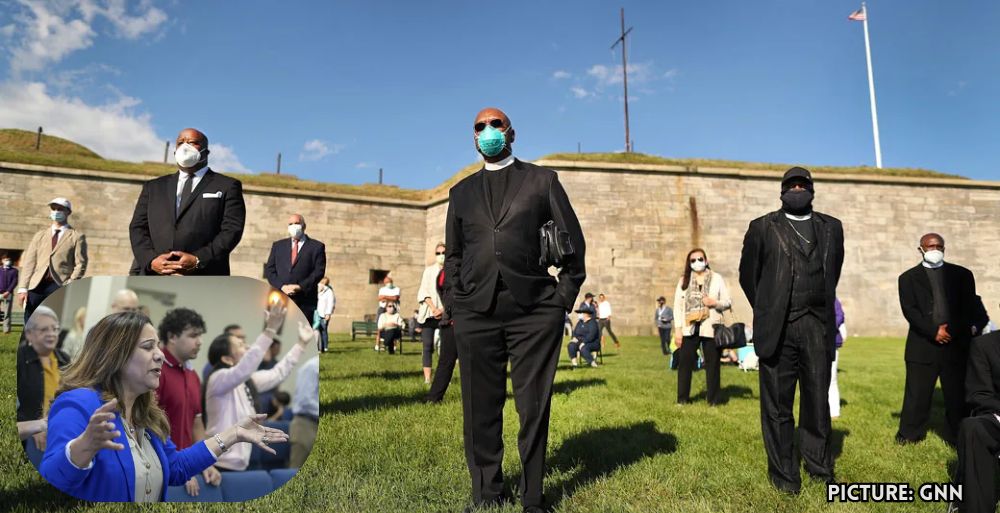
A coalition of 81 religious plaintiffs from diverse faith traditions is challenging the Trump administration’s immigration policies, alleging violations of religious freedom and expressing concerns over the administration’s impact on their ability to minister to marginalized communities.
September 17, 2026 — In a juxtaposition of rhetoric and reality, President Donald Trump’s administration faces legal challenges from numerous religious groups that dispute his claims of championing religious freedom. This tension has been highlighted by an 18-page legal filing from a coalition of Catholic organizations, including Mercy Sr. JoAnn Persch, that accuses the federal government of obstructing faith leaders from ministering to detained immigrants.
At the National Prayer Breakfast in February, Paula White-Cain, an evangelical pastor and head of the White House Faith Office, praised Trump as a protector of religious liberty, stating, “No president in modern history, or perhaps all of history, has done more structurally, substantially and sincerely to elevate and protect religious liberty.” However, just a day later, the administration was defending itself against accusations that it had effectively banned religious expression by limiting access to immigration detainees.
Escalation of Legal Challenges
This ongoing legal battle encapsulates a broader trend throughout Trump’s presidency, particularly during his second term, as he has faced a mounting number of lawsuits from faith groups opposing his immigration policies. Since taking office, Trump has issued a series of executive orders concerning immigration, including a proclamation labeling immigration at the U.S.-Mexico border as an “invasion.” In response, numerous lawsuits have emerged, with faith-based organizations and leaders at the forefront.
According to a litigation tracker developed by Religion News Service in collaboration with the Law, Rights, and Religion Project at Union Theological Seminary, at least 21 out of 22 lawsuits challenging the administration’s immigration policies involve religious plaintiffs. This includes 81 individuals and organizations from eight major religious traditions, such as mainline Protestantism, Catholicism, evangelicalism, Sikhism, Judaism, and Islam.
Profile of the Plaintiffs
The diversity of the plaintiffs reveals significant patterns in the challenges against the administration. Among the 81 religious plaintiffs, approximately half identify as mainline Protestant, with Catholic and Jewish groups making up 20% and nearly 9%, respectively. The plaintiffs include 15 religious denominations, such as the Episcopal Church and the Evangelical Lutheran Church in America, alongside regional bodies like Lutheran synods and Catholic dioceses.
Notably, at least 14 of the 22 cases assert that the federal government has violated the religious rights of the litigants, primarily through infringements on the First Amendment’s free exercise clause and the Religious Freedom Restoration Act (RFRA) of 1993. This statute, which has historically been associated with conservative religious claims, is now being invoked by liberal faith groups in the context of immigration.
Legal Perspectives and Implications
Legal experts note that the surge in lawsuits reflects the intertwined nature of faith communities with the U.S. immigration system, particularly through services such as refugee resettlement and humanitarian assistance. Kimberlie Orr, a legal expert on immigration and religious freedom, emphasized that faith groups often feel the direct impact of immigration policies on their ministries.
For instance, three major organizations—HIAS, Church World Service, and Lutheran Community Services Northwest—have filed suit against the administration’s decision to effectively freeze the refugee program. Their case has evolved to challenge the exceptions made for certain groups, highlighting issues of racial and religious discrimination in the refugee admissions process.
Additionally, the United States Conference of Catholic Bishops has sought legal recourse regarding the suspension of agreements with the federal government that had facilitated refugee resettlement, although a judge dismissed their suit in January after the organization recovered some funds.
Political Context and Future Considerations
The political landscape surrounding these lawsuits is complicated, with a notable divergence in how religious freedom claims are approached by the courts. Caroline Mala Corbin, a law professor, pointed out that while conservative religious groups have historically dominated RFRA claims, the increasing number of liberal faith groups taking legal action represents a significant shift.
Christopher Lund, a Wayne State University Law School professor, argued that the polarized political climate has galvanized liberal faith leaders to respond actively to the Trump administration’s policies. “The fact that we’re very polarized has led liberal churches to think hard about what their religions require of them in terms of being receptive to immigrants,” he said.
Challenges Ahead
As litigation unfolds, the implications for religious freedom in America remain uncertain. While some cases have already resulted in temporary injunctions against federal actions at places of worship, many lawsuits are still active or under appeal. The Supreme Court’s potential involvement adds another layer of unpredictability, particularly considering its conservative leanings.
Experts agree that the current political and legal environment is unique, with faith groups poised to continue challenging the administration’s immigration policies. The pressure exerted by the Department of Homeland Security’s actions on religious communities represents a new dimension of religious interference in the context of immigration that has not been seen before.
As the Trump administration persists in its mass deportation agenda, which saw approximately 50,000 arrests last month, it remains to be seen how these legal battles will evolve and what precedents they might set for the future of religious freedom and immigration policy in the United States.