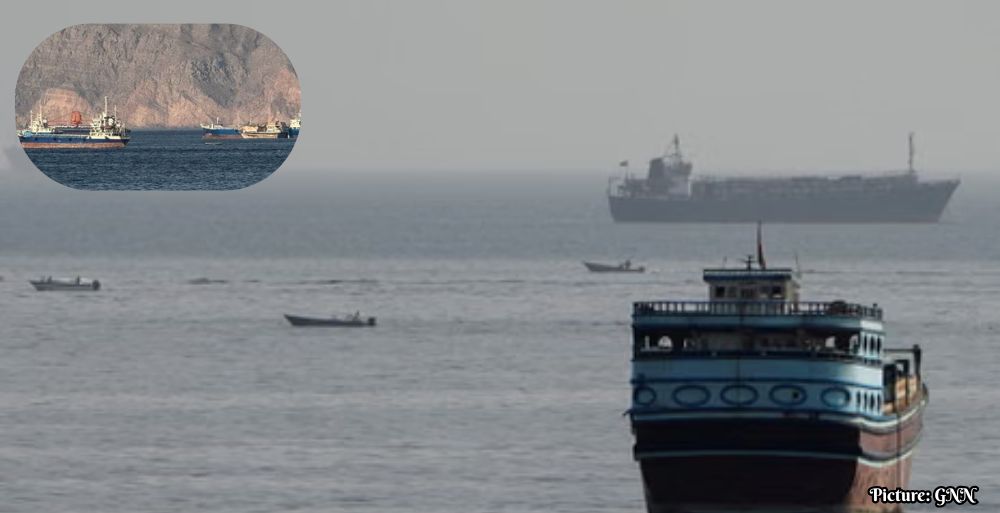
As U.S. sanctions continue to exert pressure on Iran’s economy, the nation’s ability to leverage its strategic position in the Strait of Hormuz appears to be diminishing, according to analysts.
TEHRAN, Iran – The enforcement of stringent U.S. economic sanctions against Iran is significantly undermining the nation’s capacity to exert influence in key geopolitical areas, particularly the strategically vital Strait of Hormuz. Analysts suggest that the ongoing economic pressure is leading to severe financial challenges for Iran, which, in turn, is reducing its operational capabilities and diminishing its regional leverage.
Current Sanctions Landscape
The U.S. government has implemented a series of rigorous sanctions designed to curtail Iran’s oil exports and cripple its economy. Following the U.S. withdrawal from the Joint Comprehensive Plan of Action (JCPOA) in 2018, the sanctions have intensified, leading to a staggering 90 percent decline in Iranian oil exports, as reported by the U.S. Department of State. This dramatic reduction is estimated to have resulted in approximately $50 billion in lost revenue for Iran over the past five years, severely impacting the country’s financial stability.
These sanctions extend beyond the oil sector, affecting various industries, including banking, shipping, and trade. The economic fallout has led to a significant depreciation of the Iranian rial, which has lost more than 80 percent of its value against the U.S. dollar since 2018. This drastic decline in currency value has resulted in soaring inflation rates, further compounding the economic crisis faced by ordinary citizens.
Impact on Regional Influence
Traditionally, Iran has leveraged its strategic location along the Strait of Hormuz, a critical transit point for global oil shipments, to exert pressure and influence over international energy markets. Approximately 20 percent of the world’s oil passes through this narrow waterway, making it a focal point for geopolitical maneuvering. However, recent developments indicate that Iran’s ability to assert influence in this critical maritime corridor is waning.
Analysts highlight that the cumulative effects of economic hardship are forcing Iran to reconsider its historically confrontational approach. “With reduced resources, Iran may find it increasingly difficult to challenge U.S. naval operations in the region,” observed Dr. Sarah Johnson, a Middle East expert at the Brookings Institution. This statement underscores a growing consensus among analysts that Iran’s military posture may be adversely affected by its economic constraints.
Domestic Economic Strain
The internal economic situation in Iran has been exacerbated by the COVID-19 pandemic, which has further destabilized the nation’s already struggling economy. The International Monetary Fund (IMF) projects that Iran’s economy will contract by 6 percent in 2023, following a 7.6 percent contraction in 2022. This economic downturn has resulted in rising unemployment rates, particularly among the youth, where unemployment exceeds 30 percent. Such figures have contributed to increased social unrest and protests across the nation.
In response to the escalating economic crisis, the Iranian government has implemented various measures, including interventions in the currency market and increased subsidies for basic goods. However, these initiatives have yielded limited success in alleviating the economic burden faced by ordinary citizens. “The government is struggling to maintain social stability as the economic situation worsens,” stated Reza Asghari, an Iranian economist. His remarks highlight the critical challenges the Iranian administration faces in managing public discontent amid ongoing economic distress.
International Relations and Future Prospects
The diminishing leverage in the Strait of Hormuz coincides with shifting dynamics in international relations. Iran has been actively seeking to improve its connections with countries such as Russia and China, hoping to counterbalance the adverse effects of U.S. sanctions. In September 2023, Iran and Russia conducted joint naval exercises in the Caspian Sea, signaling a potential deepening of military cooperation between the two nations. This move could be interpreted as Iran’s effort to project strength despite its economic challenges.
Despite these strategic partnerships, analysts caution that Iran’s long-term geopolitical strategy may be severely hampered by its economic woes. “While Iran may be attempting to strengthen ties with global powers, the reality of its economic situation limits its options,” noted Dr. Johnson. This sentiment reflects the broader concern that Iran’s economic fragility may constrain its ability to engage effectively on the international stage.
Conclusion
As Iran grapples with the ramifications of U.S. sanctions and an increasingly strained economy, its capacity to influence strategic maritime routes appears to be diminishing. The combination of economic hardship and shifting geopolitical alliances poses significant challenges for Tehran in maintaining its regional influence. Moving forward, the international community will be closely monitoring developments in Iran and the implications for stability in the Middle East, as Tehran navigates this precarious economic and political landscape.