Iran has received an invitation to join the newly established Mecca Joint Defense Agreement, a military pact involving Saudi Arabia, Turkey, and Pakistan, which aims to enhance regional security and military coordination.
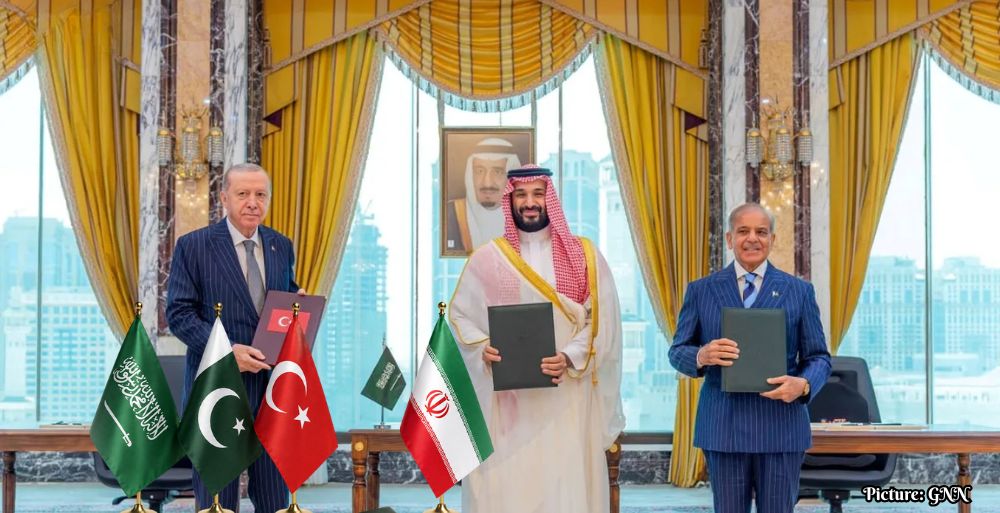
In a notable shift in Middle Eastern geopolitics, Iran has reportedly been invited to join the Mecca Joint Defense Agreement, a military alliance formed by Saudi Arabia, Turkey, and Pakistan. The agreement was officially signed on August 7, 2023, by Saudi Crown Prince Mohammed bin Salman, Turkish President Recep Tayyip Erdogan, and Pakistani Prime Minister Shahbaz Sharif. This development signals a potential realignment of regional security dynamics.
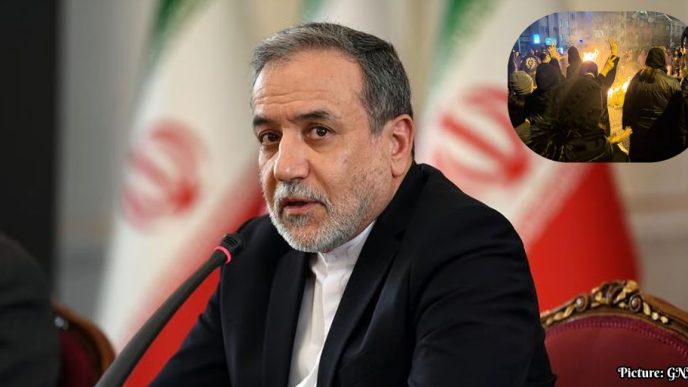
While the invitation has not yet been confirmed by Iran’s Foreign Ministry or the signatory countries, Mehdi Rahimi, head of the Iranian parliament’s Khaneh Mellet, stated, “Iran has received an invitation to join the Mecca Agreement, and the matter is under review.” This statement reflects Iran’s cautious yet open approach to the potential collaboration.
Framework of the Mecca Joint Defense Agreement
The Mecca Joint Defense Agreement is designed as a collective defense pact, stipulating that any act of aggression against one member state will be viewed as an attack on all. This principle is reminiscent of Article 5 of the North Atlantic Treaty Organization (NATO), which asserts a similar mutual defense obligation. However, Turkish Foreign Minister Hakan Fidan has clarified that the pact is not directed against Iran or any specific country, indicating a desire for broader regional stability rather than confrontation.
In the wake of this agreement, the signatory nations are reportedly working to establish frameworks for both diplomatic and military coordination. This includes planned meetings among military leaders and collaboration on defense industries, which could enhance collective military capabilities and foster closer ties among the participants. Such initiatives indicate a significant move towards a more integrated defense strategy, potentially altering the security landscape in the region.
Historical Context and Regional Dynamics
The backdrop of the Mecca Joint Defense Agreement is characterized by a complex web of historical rivalries, particularly between Iran and Saudi Arabia. The two nations have long been embroiled in a power struggle, often exacerbated by sectarian divides and differing regional ambitions. Iran, predominantly Shia Muslim, and Saudi Arabia, a Sunni power, have historically positioned themselves as rivals in the Middle Eastern geopolitical arena.
The addition of Iran to this defense pact could signify a shift in its historical posture, suggesting a possible thaw in relations with its neighbors. However, skepticism remains regarding the feasibility of this cooperation given the entrenched mistrust and previous conflicts. The potential for Iranian membership could mark a significant transformation of the alliance, which has been primarily oriented towards Western partnerships.
Implications of Iranian Inclusion
The prospect of Iran joining the Mecca Joint Defense Agreement raises critical questions about the future of regional security dynamics. Should Iran formally accept the invitation, it could lead to a reconfiguration of alliances and power balances in the Middle East. An integrated defense pact that includes Iran might enhance stability, provided that the member nations can navigate their historical grievances and build trust.
Experts suggest that Iranian membership could foster dialogue and cooperation on shared security challenges, such as counterterrorism and regional conflicts. However, the integration process may be fraught with challenges, given the longstanding rivalries and divergent national interests among the member states.
Reactions from Regional and Global Stakeholders
The invitation to Iran has generated mixed reactions among regional and global stakeholders. While some analysts view the potential for Iranian inclusion as a step toward greater regional stability, others express concern that deep-seated mistrust could undermine the effectiveness of the defense pact. Critics argue that without a substantial framework for trust-building and conflict resolution, the agreement may struggle to yield meaningful collaboration.
The geopolitical ramifications of this development are significant. If the Mecca Joint Defense Agreement successfully fosters collaboration among its members, it could lead to a reconfiguration of alliances in the Middle East, impacting everything from conflict resolution mechanisms to economic partnerships. Additionally, the agreement may set a precedent for future cooperative security arrangements among other regional powers, potentially reshaping the security landscape across the broader region.
Looking Ahead: Future Prospects
As the situation progresses, the responses from the member countries, particularly regarding how they engage with Iran, will be crucial in determining the success of the Mecca Joint Defense Agreement. The next steps will be closely monitored by analysts and policymakers alike, as they will provide insights into the evolving dynamics of Middle Eastern geopolitics.
In conclusion, the invitation extended to Iran represents a significant potential shift in regional alliances and security strategies. The ability of the signatory nations to address historical tensions and work collaboratively will be paramount in shaping the future of the Mecca Joint Defense Agreement and its implications for the geopolitical landscape in the Middle East.