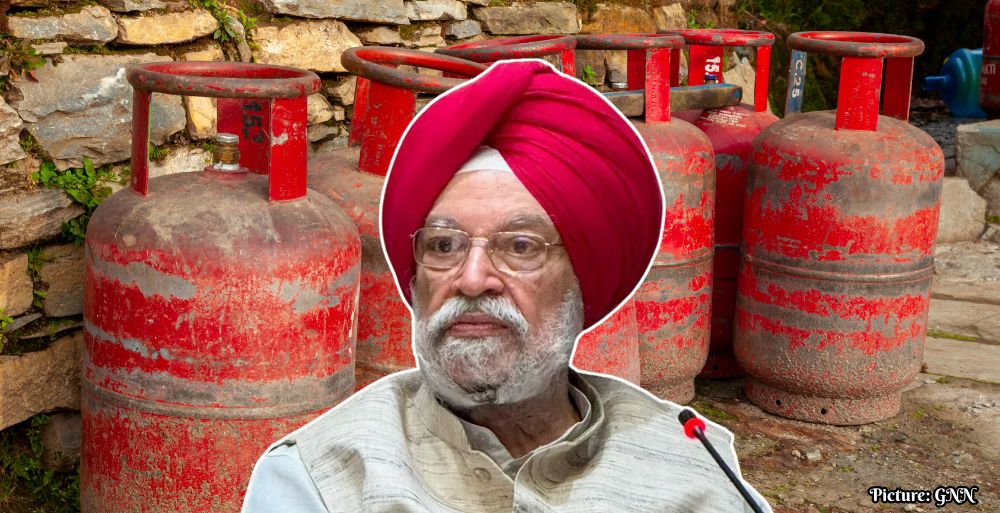
The United States has emerged as India’s largest supplier of liquefied petroleum gas (LPG), providing 67 percent of the country’s imports, according to Union Minister for Petroleum and Natural Gas Hardeep Singh Puri.
New Delhi, Aug 7 — In a significant shift in its energy sourcing strategy, the United States has become India’s largest supplier of liquefied petroleum gas (LPG), accounting for 67 percent of India’s total LPG imports. This announcement was made by Union Minister for Petroleum and Natural Gas Hardeep Singh Puri during a press briefing on Friday, marking a notable transformation in India’s energy landscape.
Puri elaborated that the Indian government had originally intended to import approximately 10 percent of its LPG needs from the U.S. This decision was taken independently, with no direct relation to concerns regarding potential disruptions in the Strait of Hormuz, a critical corridor for global energy transportation. The minister’s remarks reflect a strategic shift as India seeks to enhance its energy security by diversifying its sources of supply.
“Today I’m happy to inform you that the United States accounts for something like 67 percent of our LPG imports,” Puri stated, underscoring the dramatic increase in U.S. contributions to India’s energy supply. This development has raised questions regarding the previous reliance on geographically closer suppliers and highlights a broader reevaluation of India’s energy import strategies.
Historical Context and Energy Security
India’s decision to diversify its energy sources comes amid evolving global energy dynamics and the country’s growing demand for LPG, which is vital for cooking and other domestic uses. In recent years, India has faced challenges related to energy security, prompting a push for self-reliance and a more resilient energy infrastructure. The significance of the U.S. emerging as a dominant supplier also reflects a shift in international relations, particularly in the context of energy diplomacy.
The energy sector has long been influenced by geopolitical considerations, with countries often aligning their energy sourcing strategies with broader political alliances. By increasing imports from the U.S., India appears to be reinforcing its strategic partnership with one of the world’s leading energy producers.
‘Samudra Manthan’ Initiative
Accompanying this shift in LPG sourcing, Union Minister Puri highlighted the ambitious Rs 84,000 crore ‘Samudra Manthan’ initiative aimed at enhancing hydrocarbon exploration in India’s deep-sea regions. He described this initiative as a historic and bold step towards achieving energy self-reliance and transforming India’s energy sector.
Puri emphasized that the ‘Samudra Manthan’ mission is not just an investment in infrastructure but a testament to the faith in India’s energy future. “This nectar emerging from Samudra Manthan will infuse new strength into India’s energy self-reliance,” he stated, indicating that the initiative is expected to create substantial opportunities in hydrocarbon exploration and development.
Historically, India’s energy security has been viewed predominantly through the lens of fossil fuels. Puri’s comments signal a shift towards a more diversified energy portfolio, which includes the exploration of alternative fuels and the establishment of strategic reserves to mitigate the impacts of external disruptions.
Diversification of Energy Sources
India’s transition towards sourcing a significant portion of its LPG from the United States is indicative of a broader strategy to diversify its energy sources. Puri remarked that the country has moved beyond its historical dependence on hydrocarbons by building resilient energy infrastructure and creating trusted partnerships with international suppliers.
In addition to increasing its LPG imports from the U.S., India is also focused on developing renewable energy capabilities and enhancing its infrastructure to accommodate a wider array of energy sources. This multi-faceted approach is designed to bolster India’s energy security and reduce vulnerability to external shocks, such as geopolitical tensions or fluctuations in global energy prices.
The shift in India’s LPG import strategy could also have implications for its domestic market, potentially influencing prices and availability. Moreover, as India continues to enhance its energy independence, it may emerge as a more significant player in global energy markets, affecting international trade dynamics and energy diplomacy.
Conclusion
The emergence of the United States as India’s largest LPG supplier marks a pivotal moment in the country’s energy policy and strategy. As India navigates the complexities of global energy markets, the ongoing developments under the ‘Samudra Manthan’ initiative will likely play a crucial role in defining its future energy landscape. With a commitment to energy self-reliance and diversification, India is positioning itself to address both current and future energy challenges, thereby reinforcing its status in the global energy arena.