The potential return of commercial supersonic flights over land in the United States hinges on advancements in noise reduction technologies, as the FAA seeks to update its regulations on sonic booms, which have historically hindered supersonic travel.
The Federal Aviation Administration (FAA) is exploring the reintroduction of commercial supersonic flights over land in the United States, a move that could reshape air travel significantly. This initiative is taking place more than 50 years after a series of controversial sonic boom tests in Oklahoma City, which fundamentally shaped public perception and regulatory measures surrounding supersonic travel.
In 1964, the FAA conducted tests involving 1,253 sonic booms over Oklahoma City to gauge public response to supersonic flight. The results revealed a deeply divided public, with many residents reporting discomfort and even property damage from the intense noise. This backlash ultimately led Congress to terminate funding for the Boeing 2707, the proposed supersonic aircraft, in 1971, and the FAA subsequently imposed a ban on civilian supersonic flight over land in 1973.
Only two supersonic passenger aircraft emerged from this era: the British Concorde and the Soviet Tupolev Tu-144, with the Concorde serving as the sole commercial supersonic airliner from 1976 until its retirement in 2003. The Concorde faced numerous challenges, including high operational costs and public resistance due to noise complaints, which restricted its routes primarily to transatlantic flights.
New FAA Proposals and Technological Innovations
In June 2023, the FAA proposed new regulations that may allow supersonic flights to return over land. These regulations shift from speed-based to noise-based standards, aiming to finalize new guidelines by mid-2027. Juan Alonso, a professor at Stanford University, remarked on the significance of this change, stating, “It’s a long time in coming… NASA and the U.S. industry have been pushing in this direction for a very long time.”
The critical challenge remains the sonic boom itself, a phenomenon created when an aircraft exceeds the speed of sound, producing a shock wave that manifests as a loud noise on the ground. Historical data, including a survey conducted during the Oklahoma tests, indicated that while 73% of residents felt they could tolerate sonic booms, the FAA received thousands of complaints about noise, leading to legal actions and compensation claims.
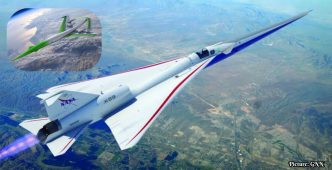
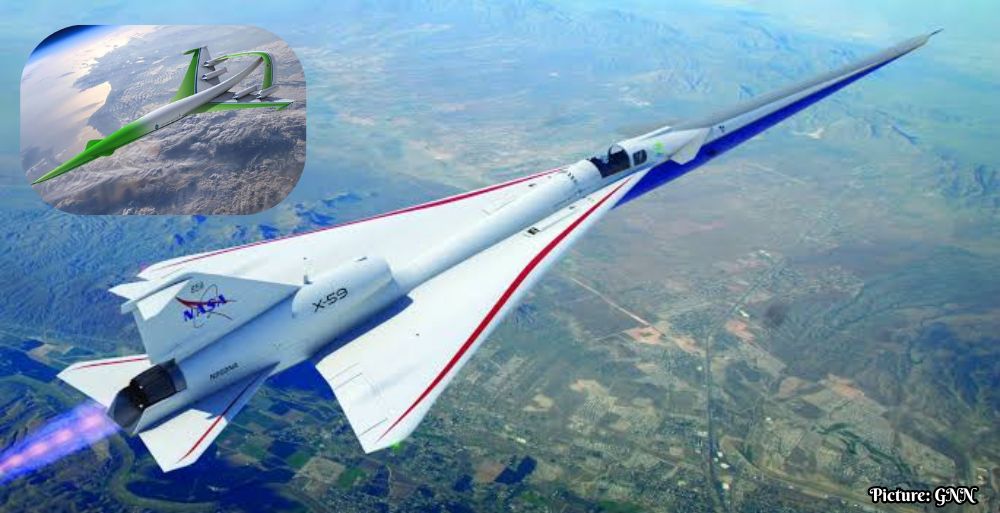
To address these concerns, two innovative approaches are being developed. Colorado-based company Boom Supersonic aims to eliminate the sonic boom at ground level through innovative design and technology. In contrast, NASA is testing the X-59 aircraft, engineered to produce significantly reduced noise levels. The success of these technologies will play a pivotal role in determining the future of supersonic travel.
Technological Solutions: Boom Supersonic and NASA’s X-59
Boom Supersonic’s approach involves techniques such as Mach cutoff, which utilizes atmospheric conditions to minimize sonic boom impact. The company claims that by flying at specific altitudes and speeds, the shock wave can be refracted upward, preventing it from reaching the surface. CEO Blake Scholl described a future airliner model, Overture, which will incorporate a “quiet” button to automatically adjust speed and altitude to maintain a noise-free profile during flight.
NASA’s X-59 aims to achieve a different solution through its low-boom design, characterized by a streamlined shape that minimizes shock wave intensity. The aircraft is designed to produce a noise level comparable to a car door closing rather than the explosive sound typically associated with sonic booms. Peter Coen, mission integration manager for NASA’s Quesst mission, emphasized the importance of distributing shock waves evenly to reduce their cumulative effect.
Regulatory Landscape and Future Implications
The FAA’s proposed standards, which allow a sound pressure level of 0.11 pounds per square foot at the surface, stand in stark contrast to the 1.6 pounds per square foot recorded during the Oklahoma tests. These new regulations could pave the way for a resurgence in supersonic travel if technological advancements can satisfactorily address noise concerns.
Coen noted that the ultimate goal is to provide sufficient data to the International Civil Aviation Organization (ICAO) by 2031 to facilitate new global regulations on sonic booms. However, both Boom and NASA face skepticism regarding the scalability of their designs for commercial air travel. Scholl criticized NASA’s approach as potentially impractical for large-scale application, suggesting it might serve more as a scientific experiment than a viable commercial solution.
Despite the challenges, both companies are making strides in their respective technologies. Boom recently achieved Mach cutoff during test flights, and although the technique has limitations regarding speed and weather conditions, it represents a promising avenue for reintroducing supersonic flight. Conversely, NASA’s X-59 has begun its flight testing, with plans to gather community feedback on noise levels to ensure public acceptance.
Looking Ahead: The Future of Supersonic Flight
As the aviation industry embarks on this new chapter, the interplay between noise regulation and technological innovation will be crucial. While the prospect of returning to supersonic travel offers significant potential benefits in terms of reduced travel times, it remains contingent upon the resolution of public health and comfort concerns associated with sonic booms.
In conclusion, the future of supersonic flight in the United States is on the brink of a potential revival, driven by innovative technologies and a regulatory environment that is beginning to adapt to the realities of modern aviation. However, the path forward will require careful navigation of both technological capabilities and public sentiment.