Recent accusations against the Trump administration raise critical questions about potential violations of international law, particularly concerning military actions and immigration policies.
As the Trump administration continues to navigate complex geopolitical waters, scrutiny regarding its adherence to international law has intensified. Recent remarks by Secretary of State Marco Rubio, who accused the International Criminal Court (ICC) of “waging a war against our country,” reflect a growing concern within the administration about potential legal consequences for U.S. military and law enforcement personnel engaged in various operations abroad. This sentiment highlights the administration’s apprehension regarding accountability for actions taken during President Donald Trump’s tenure.
Context of Military Operations and Human Rights Accusations
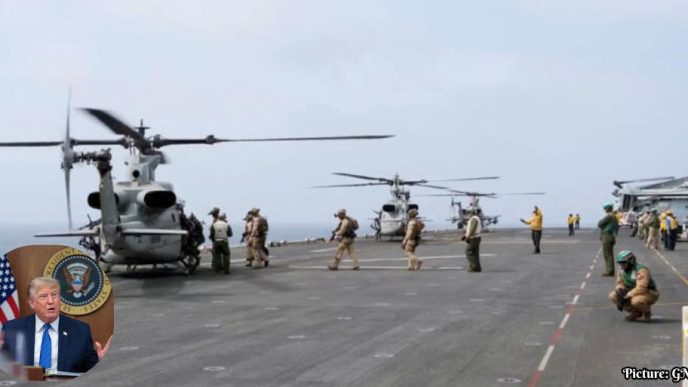
Under Trump, U.S. military engagements, particularly in the Western Hemisphere, have faced allegations of human rights violations. Notably, the administration’s military strikes targeting individuals on boats, justified as operations against drug trafficking, have resulted in significant casualties. Reports indicate that over 200 individuals have been killed in these operations, yet the administration has provided minimal evidence regarding the identities and backgrounds of those targeted. Critics argue that this lack of transparency raises serious ethical and legal questions about the legitimacy of such military actions.
Legal analysts have drawn parallels between these U.S. military operations and the alleged extrajudicial killings carried out by former Philippine President Rodrigo Duterte during his controversial anti-drug campaign from 2016 to 2022. Duterte now faces charges of crimes against humanity at the ICC, which has prompted renewed scrutiny of U.S. actions abroad. The striking similarities in the operational tactics employed in both cases underscore the critical need for accountability and oversight in military operations.
Mass Deportation Policies and International Law Violations
In addition to military actions, the Trump administration’s immigration policies have sparked allegations of international law violations. One of the most contentious aspects is the administration’s mass deportation policies, which critics argue may contravene international norms regarding the treatment of asylum seekers. The forced return of individuals to countries from which they fled, along with the controversial repatriation of Venezuelan men to El Salvador—where they reportedly face danger—has raised significant concerns about the U.S.’s adherence to international refugee protections.
These actions have not gone unnoticed on the international stage. Experts have pointed out that the U.S. must adhere to its obligations under international law, particularly concerning the treatment of asylum seekers and refugees. The ongoing debates highlight the precarious balance between national security interests and the imperatives of human rights and humanitarian law.
U.S. Military Engagements and War Crimes Allegations
The Trump administration’s military engagements have also drawn criticism on the grounds of potential war crimes. Allegations surrounding U.S. actions in conflicts such as the Iran War—including a reported strike on a school that resulted in numerous civilian casualties—have fueled accusations of crimes against humanity. Furthermore, the U.S. support for Israel amid its ongoing conflict with Hamas has intensified scrutiny, particularly following the ICC’s issuance of an arrest warrant for Israeli Prime Minister Benjamin Netanyahu. These developments suggest that U.S. actions in various international conflicts are increasingly being viewed through the lens of international accountability.
The Role of the ICC and the Prospect of Accountability
The ICC was established to address the gravest crimes committed, including genocide and war crimes, and is intended to function as a court of last resort. Typically, the ICC intervenes when national judicial systems are incapable or unwilling to provide justice. While the likelihood of an American facing prosecution at the ICC remains low, particularly due to the U.S. government’s non-recognition of the court’s authority, the potential for international scrutiny may increase if domestic accountability mechanisms are weakened.
Concerns about transparency and oversight within the U.S. military are rising as Defense Secretary Pete Hegseth reportedly dismantles Pentagon units responsible for investigating civilian deaths. Additionally, the Department of Justice, now led by former personal attorney to Trump, has been perceived as increasingly reluctant to challenge executive actions. This shift raises alarms about the robustness of domestic legal frameworks designed to hold government officials accountable for their actions.
Implications for Future Accountability and Legal Repercussions
The possibility that President Trump may issue pardons to individuals within his administration before leaving office could further complicate efforts to hold them accountable for actions taken during his presidency. Such pardons could shield members of his administration from both domestic and international legal scrutiny, prompting significant concerns among legal experts regarding the long-term implications for U.S. adherence to international law.
The intersection of U.S. foreign policy and international legal norms remains a contentious issue, especially as the Trump administration seeks to redefine the boundaries of accountability. The unfolding legal landscape will be critical in determining how U.S. actions are perceived both domestically and internationally. As the administration continues to navigate these complex challenges, the implications for American governance and international relations will undoubtedly be profound.