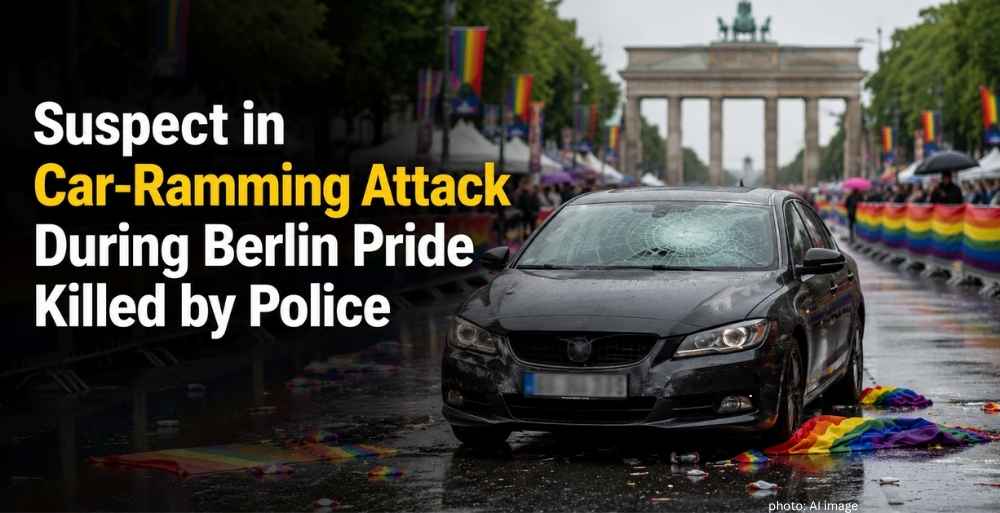
A 21-year-old suspect involved in a deadly car-ramming attack during Berlin’s Pride celebration was fatally shot by police after allegedly attacking officers with a knife.
BERLIN, Germany – The primary suspect in a car-ramming incident that resulted in the death of at least one individual during the Berlin Pride festivities was killed by police special forces on the evening of July 25, 2026. The attack raised alarm over public safety during large gatherings, particularly those centered around LGBTQ+ rights.
Abdul Ballout, a 21-year-old German citizen, was located in the Spandau district of Western Berlin, where police had tracked him following the incident. Berlin police spokesman Florian Nath confirmed that Ballout confronted officers with a knife when they attempted to detain him, leading to a lethal response from law enforcement.
Details of the Car-Ramming Incident
The attack occurred amidst the vibrant celebrations of the Berlin Pride parade, an annual event that draws thousands of participants and spectators to advocate for LGBTQ+ rights. Eyewitnesses described chaos as a vehicle accelerated through the crowd, resulting in multiple injuries and one fatality. Emergency responders arrived promptly, but the incident left a significant emotional impact on the community, raising questions about the safety of public events.
As investigations continue, authorities have not yet revealed specific motivations behind Ballout’s actions. However, many community leaders are advocating for enhanced security measures at public gatherings, particularly those emphasizing diversity and inclusion. The incident has ignited a nationwide dialogue regarding hate crimes and the safety of marginalized communities in Germany.
Community and Official Responses
The attack has provoked widespread fear and indignation among members of the LGBTQ+ community and their supporters. Local leaders and activists are increasingly calling for upgraded security protocols to prevent similar incidents in the future. The event has also reignited discussions concerning the rising tide of hate crimes against LGBTQ+ individuals in Germany.
Berlin’s Mayor, Franziska Giffey, publicly condemned the attack, stating, “We must stand united against any form of violence and hatred, particularly during events that celebrate love and acceptance. Our city will not be intimidated by acts of terror, and we will ensure that our Pride celebrations continue safely in the future.” Her remarks reflect a broader political commitment to uphold and protect LGBTQ+ rights even amidst adversity.
Historical Context of Berlin Pride
The Berlin Pride parade, known as Christopher Street Day, has served as a significant platform for advocating LGBTQ+ rights since its inception in the 1970s, commemorating the Stonewall riots in New York City. Over the decades, it has grown into one of Europe’s largest Pride events, attracting millions of participants from around the world. The violent act on July 25 underscores a troubling escalation in violence targeting the LGBTQ+ community, highlighting the urgent need for vigilance and proactive measures to ensure safety during such gatherings.
Germany has made noteworthy strides in LGBTQ+ rights over the past few decades, including the legalization of same-sex marriage in 2017 and the implementation of anti-discrimination laws. Nonetheless, incidents like the one in Berlin serve as sobering reminders of the ongoing challenges in addressing hate and violence directed at marginalized groups.
Investigation and Future Safety Measures
The investigation into the car-ramming incident is being led by the Berlin police, with support from federal law enforcement agencies. Investigators are currently examining Ballout’s background, including any potential connections to extremist organizations and his prior criminal history, to better understand the motivations behind the attack.
As the community processes the ramifications of this tragedy, local organizations are mobilizing to offer support and resources for those affected. The necessity for solidarity and resilience in the face of such violence is critical as Berlin continues to foster its vibrant LGBTQ+ culture amid these harrowing events.
This incident highlights the persistent struggle against hate crimes and emphasizes the importance of cultivating a safe and inclusive environment for all citizens. As investigations progress and conversations about public safety evolve, it remains crucial for communities to unite, ensuring that events like Pride continue to be celebrations of love, acceptance, and unity.
In light of the attack, city officials are reassessing existing security protocols for future events, with the potential for increased police presence and surveillance during large public gatherings. Activists are advocating for a collaborative approach between law enforcement and community organizations to enhance safety while preserving the spirit of inclusivity that characterizes events like Berlin Pride.
The coming months will likely see renewed efforts from advocacy groups and city officials alike to address the threats posed to LGBTQ+ individuals and to reinforce a message of solidarity against hate. As Berlin prepares for future celebrations, the need for a united front against violence and discrimination remains more important than ever.