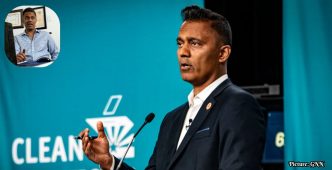
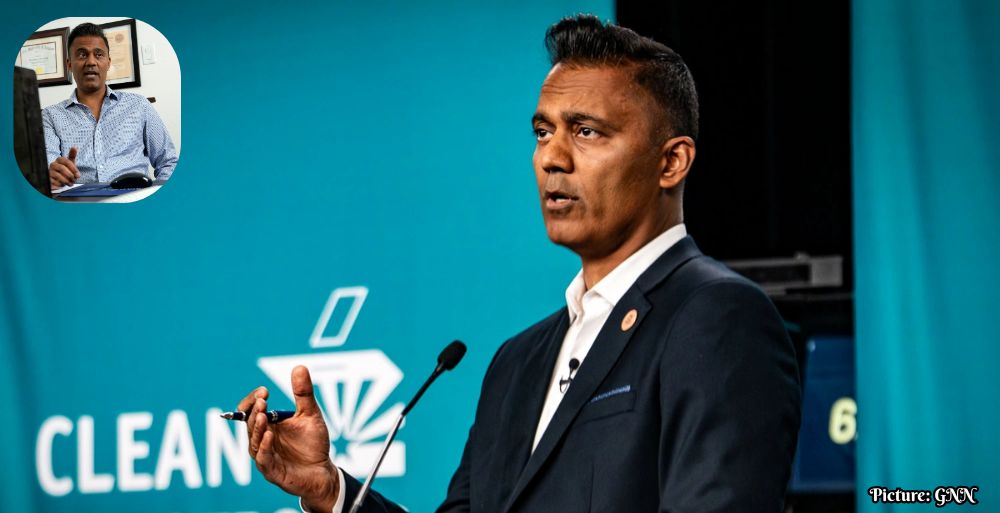
Amish Shah, an emergency physician, won the Democratic primary in Arizona’s 1st congressional district, overcoming an establishment-backed candidate, and will face Republican Jay Feely in the upcoming general election.
Amish Shah, a prominent emergency physician, emerged victorious in the Democratic primary for Arizona’s 1st congressional district on Wednesday, delivering a significant setback to the Democratic Congressional Campaign Committee (DCCC), which had endorsed his rival, Marlene Galán-Woods. This primary result reflects a growing trend among voters who are increasingly rejecting the preferences of party leadership in Washington, D.C.
Shah, who previously served as a physician for the New York Jets, will now compete against Republican Jay Feely, a former NFL kicker who garnered support from Donald Trump during his own primary campaign. The dynamic between Shah and Feely is notable; both had previously shared the same team, with Shah providing medical assistance on the sidelines while Feely handled kicking duties.
The contest for Arizona’s 1st congressional district, which encompasses affluent areas including northeast Phoenix, Scottsdale, Fountain Hills, and Paradise Valley, is anticipated to play a crucial role in determining control of the U.S. House of Representatives. Although Republicans currently hold a voter registration advantage within the district, demographic shifts over the past decade have led to a more centrist electorate.
This congressional seat became open following Republican incumbent David Schweikert’s decision to run for governor, where he lost to Representative Andy Biggs in the GOP primary held earlier this week.
DCCC’s Controversial Endorsement
The DCCC’s choice to endorse Galán-Woods, a former Republican who switched parties at the onset of Donald Trump’s presidency, puzzled many local Democrats. Observers noted that there was minimal ideological distinction between her and Shah, both of whom are considered moderates. This primary contest did not represent a proxy battle in the ongoing conflict between progressive and centrist factions within the Democratic Party.
Following his victory, Shah expressed gratitude for the grassroots support he received, stating, “Our victory in this primary was a grassroots victory where Arizona voters made their voices heard.” Notably, his statement did not address the DCCC’s endorsement of Galán-Woods. Shah emphasized his commitment to earning the support of all voters in the district as he prepares for the general election.
In response to Shah’s victory, Suzan DelBene, the DCCC chair and a U.S. representative, labeled Feely as an “extremist” while asserting that Shah “will always put his community first.” However, she did not engage with the controversy surrounding the DCCC’s decision to support Galán-Woods over Shah.
Implications for the General Election
The National Republican Congressional Committee (NRCC) quickly capitalized on Shah’s primary win, releasing a digital advertisement that branded him a socialist and attempted to link him to the progressive wing of Congress. In a statement, Feely described himself as a “political outsider committed to delivering results,” setting the stage for a competitive general election.
This primary election serves as a reminder of the dynamics from 2024, when Shah narrowly won a crowded field that included Galán-Woods but ultimately lost in the general election. Notably, the DCCC did not endorse any candidate in that primary but later supported Shah during the general election.
The DCCC’s endorsement of Galán-Woods occurred in May, when she was included in a list of candidates receiving support in Republican-dominated districts. At that time, DelBene highlighted Galán-Woods’ background in broadcast journalism but omitted any mention of Shah.
Reflecting on the DCCC’s decision, Shah remarked, “I wasn’t exactly my party’s pick. And I was willing to stand up to that establishment. And that’s what the voters of this district want.” Despite his criticisms, Shah has indicated a willingness to collaborate with the DCCC if he secures the nomination.
Winning the support of the Democratic Party and its associated donors will be crucial for Shah as he faces a challenging race in a district that Trump narrowly won in 2024. However, Joe Biden had previously carried the district in the 2020 presidential election, even as Schweikert was re-elected.
Trends in the Democratic Party
The growing anti-establishment sentiment within the Democratic Party has raised concerns among congressional leaders, who fear that certain insurgent candidates may be perceived as too extreme by swing voters, potentially jeopardizing the party’s chances to capitalize on Trump’s declining popularity. Recent primary elections have illustrated this trend; for instance, a progressive candidate, Randy Villegas, defeated a DCCC-backed contender for a significant battleground district in California’s Central Valley. Similarly, in Maine, Matt Dunlap prevailed over a more moderate opponent supported by the party.
Establishment endorsements from the DCCC typically result in a substantial influx of campaign resources, including financial contributions and staffing support from the party and its allied donors. However, such endorsements have also become a disincentive for some voters. Maria Liong, a 24-year-old medical student who volunteered for Shah’s campaign, stated, “The Democratic party needs to grow up and wake up. They need to realize that they want candidates who listen to their people.”
In the Republican primary, Feely successfully defeated Joseph Chaplik, a former state lawmaker who was well-regarded among grassroots activists, to secure the party’s nomination. Feely’s NFL career spanned 14 seasons with seven teams, including the Arizona Cardinals from 2010 to 2013. Since retiring from football in 2014, he has transitioned into a role as an NFL broadcaster.
Feely and Shah’s shared history with the New York Jets, where they both overlapped during the 2008 and 2009 seasons, adds a unique personal element to the upcoming electoral battle. Feely remarked on their previous relationship, stating, “It’s an old relationship. But whoever it is, I want to do this the right way. I want to run this the right way.”