In his new encyclical, Pope Leo XIV declares just war theory as ‘outdated’ while advocating for peace and reflecting on the implications of artificial intelligence in warfare.
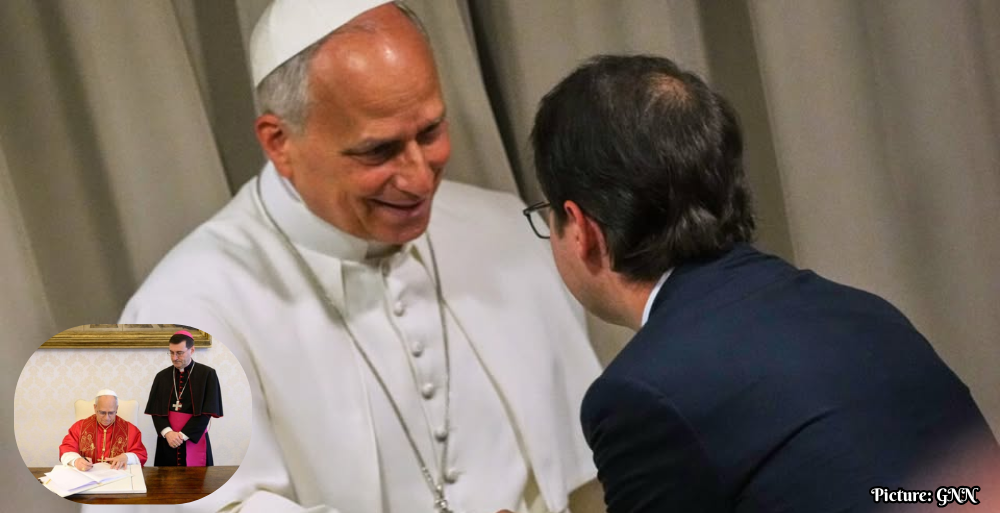
VATICAN CITY — In a significant theological shift, Pope Leo XIV has issued a new encyclical, titled Magnifica Humanitas, that critiques the longstanding concept of just war theory within Catholic teaching. Released on May 25, 2026, the encyclical not only addresses the implications of artificial intelligence in warfare but also calls for a reevaluation of the moral justifications traditionally associated with armed conflict.
The Catholic Church has historically drawn upon the teachings of saints such as Augustine and Thomas Aquinas to articulate the conditions under which war may be deemed permissible. According to just war theory, war is justified only as a last resort, when faced with “lasting, grave and certain” damage, and must also be likely to succeed while producing less harm than it prevents. However, Pope Leo XIV argues that these criteria have been misapplied over time.
Since his election in 2025, Pope Leo has consistently advocated for peace. His inaugural address featured the phrase, “Peace be with you all!” and emphasized a vision of a disarmed and peaceful world. His criticisms of ongoing conflicts, including the war in Iran, have drawn responses from political leaders, further highlighting the intersection of faith and politics. In a recent statement, he reaffirmed, “This is our God: Jesus, King of Peace, who rejects war, whom no one can use to justify war.”
In Magnifica Humanitas, the Pope asserts, “Today, more than ever, without prejudice to the right to self-defense in the strictest sense, it is important to reaffirm that the ‘just war’ theory, which has all too often been used to justify any kind of war, is now outdated.” This assertion is expected to ignite debate among theologians, policymakers, and the Catholic community at large.
Critique of Warfare and Technology
Pope Leo’s encyclical also critiques the role of artificial intelligence in warfare, stating, “Moral judgment cannot be reduced to calculation, and it is not permissible to entrust lethal or otherwise irreversible decisions to artificial systems.” He argues that the use of algorithms in military decision-making undermines moral considerations, asserting, “No algorithm can make war morally acceptable.”
Moreover, the Pope condemns the use of religion as a justification for violence, stating, “Whereas those who use the name of God to legitimize terrorism, violence, or war betray his true nature, for to fight in the name of religion means attacking religion itself.” This condemnation aligns with the Pope’s broader message that seeks to promote peace and discourage the conflation of faith with acts of aggression.
Paradigm Shift in Public Discourse
In his encyclical, Pope Leo identifies what he describes as a “paradigm shift” in the public discourse surrounding warfare. He points to the rise of fragmented information environments and the prevalence of disinformation as contributing factors to a culture that increasingly normalizes violence. “It is in this context that humanity is slipping into a violent culture of power,” he writes, where peace is viewed as a mere pause between conflicts rather than a collective responsibility.
The Pope’s remarks come alongside a growing recognition within theological circles that traditional frameworks for justifying war are becoming less applicable. A recent report from a group of theologians advising the Vatican noted the inadequacy of past justifications for war in light of modern conflicts that blend military and civilian targets. They argued that new forms of warfare, such as hybrid and asymmetrical warfare, require a reevaluation of just war principles.
Political Reactions and Ongoing Debate
The encyclical has sparked discussions in political circles, particularly in the United States, where some government officials have invoked just war theory in response to the Pope’s critiques. Following his condemnation of the Iran war, Vice President JD Vance stated that the Pope’s stance contradicted a “1,000-year tradition of just-war theory.”
House Speaker Mike Johnson also referenced the just war doctrine in criticizing the Pope’s comments, asserting that it is a “well-settled matter of Christian theology.” This reflects the ongoing tension between traditional religious teachings and contemporary political realities, as leaders navigate their own interpretations of just war principles.
In response to the political discourse surrounding the encyclical, Brooklyn Auxiliary Bishop James Massa emphasized the authority of the Pope’s teachings, stating that the Pope, as the supreme pastor of the Church, is not merely offering opinions but preaching the Gospel. He affirmed the Church’s consistent teaching that all individuals must strive for lasting peace while avoiding the injustices that accompany war.
As Pope Leo XIV’s encyclical continues to resonate across theological and political landscapes, it raises critical questions about the future of warfare, the role of technology, and the moral responsibilities of nations. The dialogue initiated by Magnifica Humanitas will likely influence discussions on peace and conflict resolution in the years to come.