Following his historic election to the papacy last year, Pope Leo XIV—born Robert Francis Prevost—has drawn widespread international attention for incorporating a rigorous athletic routine, specifically tennis, into his weekly governance schedule. Rooted in the ancient Rule of Saint Augustine, which bridges physical self-discipline with deep spiritual interiority, the 70-year-old pontiff utilizes regular athletic workouts at the papal retreat of Castel Gandolfo to maintain the mental focus and cardiovascular stamina necessary to oversee the global Catholic Church. Church officials and veteran athletic trainers view Leo’s physical regimen as a critical structural framework for managing a high-intensity, global itinerary, highlighting an overlooked Augustinian theology that views the cultivation of the body as an essential component of spiritual and organizational leadership.
VATICAN CITY — When Pope Leo XIV was elected to the Chair of Saint Peter last year, emerging from the Sistine Chapel conclave as the first United States-born pontiff in the history of the Roman Catholic Church, a flurry of biographical details quickly captured the public imagination. Yet, among his multi-ethnic heritage and extensive missionary background in Peru, it was his enduring love for the sport of tennis that most vividly signaled a distinct cultural shift within the Vatican. This athletic passion was formally and publicly celebrated shortly after his installation during a highly publicized papal audience with the world’s top-ranked tennis professional, Jannik Sinner.
In the ensuing months, the 70-year-old pontiff has systematically reorganized his demanding weekly schedule to preserve dedicated blocks of time for physical activity. This unusual operational routine is not merely a matter of personal recreation; rather, it is a deliberate manifestation of his lifelong Augustinian devotion, linking physical exertion with deep spiritual discipline. Far from treating the sport as a distraction from the monumental burdens of governing a global flock of 1.4 billion Catholics, Pope Leo XIV treats the tennis court as an extension of his chapel, viewing the cultivation of physical habits as an essential foundation for sustaining a rigorous modern papacy.
The Theological Framework of the Augustinian Routine
To understand the structural significance of the pontiff’s weekly tennis matches, Vatican observers point directly to his monastic roots. Pope Leo XIV is the first member of the Order of Saint Augustine (O.S.A.) to ascend to the papacy in centuries. The Rule of Saint Augustine, an ancient document written in the early fifth century that serves as a foundational guide for religious community life, places immense structural emphasis on the development of good habits, temperance, and the harmonious integration of the mind and body.
“He’s trying to keep some regularity to his routine that comes from the Rule,” said the Rev. Rob Hagan, Prior of the Augustinian Province of Saint Thomas of Villanova. Father Hagan, who has spent more than two decades preaching Augustinian values to collegiate athletes as the team chaplain for the men’s basketball and football teams at Villanova University—the pope’s alma mater in Pennsylvania—notes that the pontiff’s habits reflect a profound theological worldview.
The Pope’s public and private devotion to the legacy of Saint Augustine was made remarkably clear during his official apostolic journey to Africa in April. During the high-profile tour, Leo made a solemn pilgrimage to the archaeological ruins of Hippo Regius, located in modern-day Algeria, where the influential theologian lived, governed as bishop, and ultimately died in 430 CE while writing some of the most foundational texts in Western philosophy.
According to Father Hagan, the pope’s deliberate prioritization of physical discipline serves a much broader spiritual purpose in the contemporary era. “The pope highlights a very underappreciated Augustinian value—especially in this noisy world—and that is to develop your interior life,” Hagan added in an extended interview.
To maintain this interior baseline amidst the non-stop administrative demands of the Holy See, Leo has structured his week to spend Mondays and Tuesdays at the pontifical villa of Castel Gandolfo, situated in the Alban Hills outside Rome. At this historic retreat, away from the bureaucratic friction of the Roman Curia, the pope regularly plays competitive tennis matches against his personal secretary, Monsignor Edgard Iván Rimaycuna Inga. To further diversify his physical conditioning, the pontiff also incorporates intensive swimming sessions and horseback riding into these brief administrative retreats.
From Missionary Fields to the Vatican Courts
Before his surprise election as the successor to Pope Francis, then-Cardinal Robert Prevost had openly discussed his lifelong affinity for the sport, though he acknowledged that the climbing demands of high-level church governance had frequently limited his time on the court.
“I consider myself quite the amateur tennis player,” Prevost remarked during a comprehensive 2023 interview with the Augustinian Order’s media archives. At the time of that interview, he had just been appointed by Pope Francis to lead the Vatican’s exceptionally powerful Dicastery for Bishops, following nearly two decades of grueling missionary work and episcopal leadership in the remote dioceses of Peru. “Since leaving Peru, I have had few occasions to practice, so I am looking forward to getting back on the court,” he noted at the time, unknowingly foreshadowing the unique court access he would inherit upon gaining the papal keys.
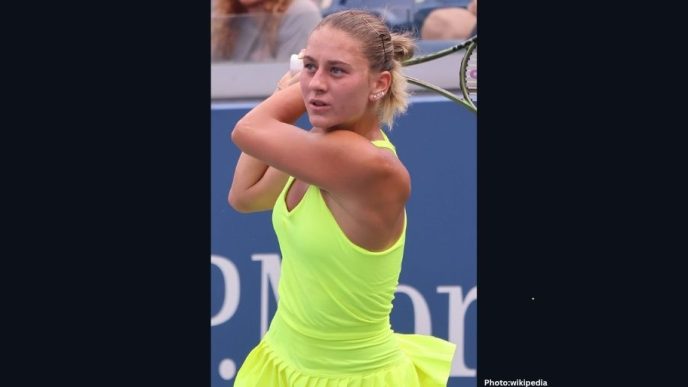
The disclosure of a tennis-playing pope has resonated deeply within the professional sporting community. Marin Cilic, the veteran Croatian professional tennis star and 2014 U.S. Open champion, expressed genuine admiration for the pontiff’s athletic devotion.
“It’s amazing to hear that Pope Leo loves tennis,” Cilic remarked during an interview conducted ahead of the French Open. Cilic, who was raised in the famous Bosnian pilgrimage town of Medjugorje and maintains a deep personal faith, noted that the sport offers a unique psychological sanctuary. “It’s a beautiful game. You enjoy it especially when you are playing without the pressure of time, without the pressure of tournaments,” he added, emphasizing how the sport can provide profound mental relief for an individual carrying global administrative responsibilities.
The Heavy Physicality and Stamina Requirements of the Papacy
While tennis is frequently viewed by casual observers as a leisure activity, professional sports psychologists and athletic trainers emphasize that it is an intensely demanding, full-body sport. It requires an elite degree of hand-eye coordination, rapid multi-directional cardiovascular exertion, and sustained physical stamina. For a 70-year-old leader, maintaining such an active physical regimen serves as critical preparation for a daily itinerary that would easily exhaust individuals half his age.
On a standard week, Pope Leo XIV must preside over lengthy, physically grueling liturgical prayer services before thousands of international pilgrims, maintain constant focus during back-to-back public and private audiences with global heads of state, and endure highly draining international apostolic journeys. The physical realities of these demands were vividly illustrated during his grueling 11-day tour of Africa in April. During that single trip, the pontiff traveled more than 17,700 kilometers (approximately 11,000 miles), enduring 18 separate flights and navigating radically shifting climate zones.
“Just look at his schedule. Look at the pace that he is keeping,” Father Hagan observed, pointing to the logistical realities of modern papal operations. “He can sing the mass parts because he has a lung capacity. You can hear him clearly because he has a certain strength in his voice. It’s something that they don’t teach you in the seminary: To be a priest, to be a spiritual or really any leader for that matter, it is a physically demanding job.”
This commitment to physical preparedness has been a consistent pattern throughout the pope’s adult life. Prior to ascending the papal throne, then-Cardinal Prevost routinely worked out at the Omega gym, a fitness facility located in the immediate vicinity of the Vatican. According to his personal trainer from that period, Valerio Masella, the future pope would engage in intense, hour-long training sessions two to three times per week.
In interviews conducted last year following the papal election, Masella recalled that the customized workouts—tailored carefully to remain safe yet highly effective for a man entering his late 60s—focused heavily on core stability, posture correction, and cardiovascular endurance via dedicated intervals on the treadmill and stationary exercise bicycle.
Projecting Ancient Monastic Values to a Modern Digital Audience
Beyond the personal health benefits accruing to the pontiff, church communication experts note that Leo’s athletic lifestyle has had an unexpected public relations benefit, making the ancient, often misunderstood structures of Catholic religious orders accessible to a younger, secular global audience.
Father Hagan, who has successfully integrated these exact philosophical tenets into his work with two national championship-winning basketball teams at Villanova, believes the pope is providing a visible, modern template for holistic human development. “Because of Leo, people are discovering who Saint Augustine is. People are discovering who the Augustinians are,” Hagan stated, reflecting on the cultural footprint of the current papacy.
“And people are discovering and hopefully applying these Augustinian values,” Hagan continued, leaning forward with an expressive, passionate demeanor. “We don’t have a monopoly on these values, but certainly Augustine and now Leo are putting them up on a platform that people can see.”
The core of this philosophy, as practiced on both the hardwood basketball courts of the NCAA and the clay tennis courts of Castel Gandolfo, centers on a continuous, relentless pursuit of personal improvement rather than an obsession with flawless victory. It acknowledges that human vulnerability and errors are inevitable, but asserts that the true measure of leadership lies in the discipline required to adapt and recover.
“It doesn’t mean you’re going to win every game,” Father Hagan emphasized, drawing a direct parallel between spiritual resilience and athletic competition. “It doesn’t mean you’re going to win every tennis match. But what we’re trying to be is the best version of ourselves—mind, body, soul, and spirit.”
To encapsulate the driving force behind the pontiff’s unique approach to his office, Hagan pointed to a classic, often-quoted warning from Saint Augustine himself against spiritual and physical complacency: “St. Augustine says, ‘Do not be content with what you are if you want to become what you are not yet. For where you’ve grown pleased with yourself, there you shall remain.’” For Pope Leo XIV, avoiding that complacency means continuing to step out onto the court, racket in hand, pursuing spiritual growth through every serve and volley.