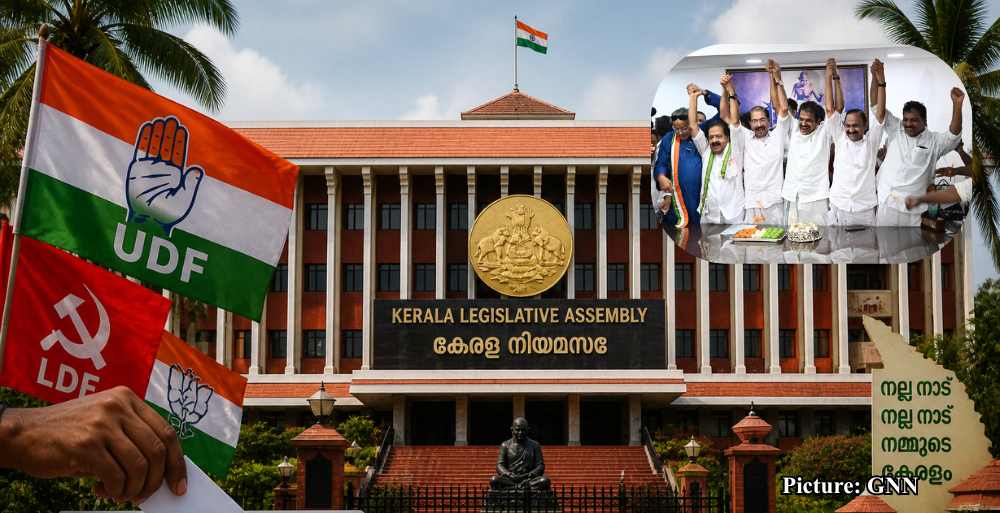
A decisive win for the United Democratic Front (UDF) in Kerala’s recent elections signals a call for transformative economic direction, moving beyond traditional political frameworks.
Thiruvananthapuram, Kerala – The United Democratic Front (UDF) has emerged with a significant victory in the recent state elections, firmly establishing its power in Kerala’s political landscape. This decisive mandate, however, raises critical questions about the state’s economic direction, which has remained stagnant despite decades of alternating governments.
Historically, Kerala has witnessed a pattern of political power shifts between the UDF and the Left Democratic Front (LDF), yet the underlying economic policies have largely gone unchanged. This continuity has resulted in notable social achievements, including high literacy rates and improved healthcare outcomes. However, the state’s economic challenges, including consistent unemployment among educated youth and a lack of industrial growth, have persisted.
Challenges of an Established Economic Framework
The current economic model governing Kerala has been characterized by extensive regulation and a government-centric approach to economic activity. As a result, the state has struggled to create sufficient job opportunities for its residents. Many young individuals are compelled to seek employment abroad, contributing to a concerning talent drain that highlights the disconnect between education and local opportunities.
VD Satheeshan, leader of the UDF, who has been recognized as a capable and intelligent figure in Kerala politics, now faces the challenge of translating the electoral mandate into effective governance. The scale of the UDF’s victory offers an opportunity to pivot from entrenched patterns and introduce a new economic vision.
Learning from Successful Economic Models
To reshape Kerala’s economic landscape, it is essential to look at regions that have successfully fostered sustained growth. Successful economies often prioritize reducing bureaucratic friction, empowering enterprises, and creating an environment conducive to business. Kerala, with its well-educated populace and global diaspora, possesses the potential to innovate and attract investment but has historically fallen short in translating this potential into local economic opportunities.
Key areas for reform include the real estate sector, where high registration costs and rigid pricing structures hinder investment. Aligning property transactions with market realities and streamlining approval processes are crucial steps toward improving transparency and attracting businesses. Additionally, simplifying business regulations and reducing compliance burdens can facilitate the growth of small and medium enterprises, which are vital for job creation.
The Need for a Smaller, Enabling Government
For Kerala to foster a more vibrant economic environment, a shift towards a smaller, enabling government is necessary. Current registration costs for property transactions should be adjusted to reflect actual market values, eliminating artificial pricing that forces individuals to navigate around the system. The approval process for new businesses should be expedited, with a clear timeline for governmental responses to promote investment confidence.
Furthermore, the rationalization of state and local levies is essential in making Kerala a competitive player among other states in India. Taxes and fees should incentivize rather than penalize economic activity. A broader tax base with lower rates could stimulate growth more effectively than a narrow base with high charges.
Labor laws must also strike a balance between protecting workers and allowing businesses the flexibility to thrive. A regulatory environment that encourages expansion is critical for job creation and economic resilience.
Leadership and the Call for Change
As the UDF takes the reins of power, the leadership’s willingness to embrace innovative economic strategies will be vital. Satheeshan’s generation has the potential to rethink how Kerala approaches its economy, moving beyond historical practices that have not yielded significant progress. This requires a commitment to learn from successful economic models elsewhere and an openness to change direction.
The political landscape in Kerala has been traditionally shaped by two dominant fronts, which has provided stability but limited diversity in policy discussions. However, the recent election results indicate a shifting dynamic, with growing receptiveness to fresh economic ideas. Figures like Rajeev Chandrasekhar have begun to influence the conversation around economic development and enterprise-driven growth in Kerala.
Balancing Political Ideas
Despite limited representation, even a small opposition can significantly impact the political discourse by focusing on constructive economic ideas. The current political composition, with the LDF led by the Marxist Communist Party and a nascent BJP presence, presents an opportunity for a more balanced discussion around economic policies. The lack of diverse economic thought has contributed to slow change in Kerala’s economic landscape.
As voters begin to prioritize economic opportunities over traditional political loyalties, a shift in political alignment may emerge. This evolution could foster a clearer distinction in policy-making, ultimately benefiting the state’s economic prospects.
The Future of Kerala’s Economy
Kerala’s potential for growth is evident, yet the challenge remains in fostering an economic environment that allows residents to build their futures locally. The UDF’s mandate presents an opportunity for transformative change, but it will require innovative thinking and a departure from past practices.
As Kerala stands at a crossroads, the path forward hinges on the willingness of its leadership to embrace new ideas and act decisively. The upcoming administration must prioritize creating an enabling environment for economic growth, ensuring that the state does not merely maintain the status quo, but instead paves the way for a prosperous future.