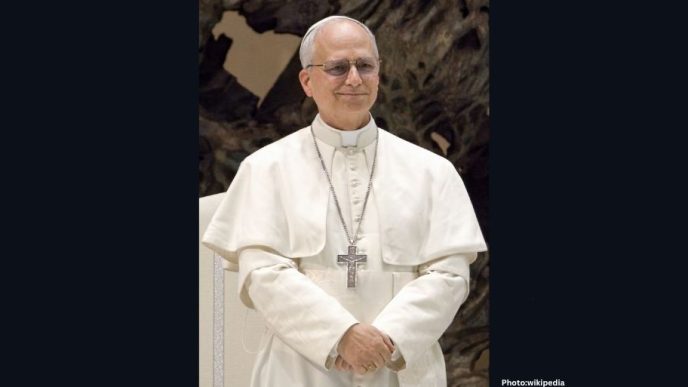
The Holy See has issued a final admonition to the Society of St. Pius X (SSPX), a traditionalist Catholic organization, following its announcement of plans to ordain new bishops this July without papal authorization. Vatican officials characterized the move as a “schismatic act” that would trigger the automatic excommunication of all participants. The escalating tension represents the most significant ecclesiastical crisis for Pope Leo XIV since his pontificate began last year, potentially reversing decades of cautious dialogue between Rome and the breakaway group.
VATICAN CITY — The Vatican on Wednesday issued a stern ultimatum to the Society of St. Pius X (SSPX), warning that the group’s scheduled July 1 ordinations would result in a formal rupture with the Roman Catholic Church. In a communiqué released through the Holy See Press Office, Cardinal Víctor Manuel Fernández, Prefect of the Dicastery for the Doctrine of the Faith, informed the Swiss-based society that proceeding with the consecrations would constitute a “grave offense against God” and incur the penalty of excommunication under canon law.
The warning marks the first major disciplinary action under the papacy of Leo XIV, who was elected in 2025 following the death of Pope Francis. The move signals a shift in the Vatican’s approach to the 1.4-billion-member Church’s traditionalist wing, which has grown increasingly vocal about its rejection of modernizing reforms.
The Conflict Over Apostolic Authority
At the heart of the dispute is the “papal mandate”—the explicit permission from the Pope required to consecrate a new bishop. Under the Code of Canon Law (Can. 1382), both the bishop who conducts the ceremony and the individual being ordained incur a latae sententiae (automatic) excommunication if the act is performed without a mandate.
The Vatican’s statement emphasized that only the Pope holds the “supreme ordinary power” to authorize such elevations.
“The episcopal ordinations announced by the Priestly Fraternity of St. Pius X do not have the corresponding papal mandate,” Cardinal Fernández wrote, noting that Pope Leo XIV is praying for the Holy Spirit to enlighten the group’s leaders so they might “reconsider the extremely grave decision they have taken.”
The SSPX, which currently counts 733 priests and over 500,000 lay faithful across 60 countries, maintains that its actions are born of necessity. Father Davide Pagliarani, the Superior General of the Society, argued in a recent interview that the group requires new prelates to tend to its expanding global mission. The Society currently has only two active bishops, both of whom were among those illicitly ordained in 1988 and are now reaching advanced ages.
Historical Context: The 1988 Schism
The current crisis mirrors the events of June 30, 1988, when the Society’s founder, Archbishop Marcel Lefebvre, defied Pope John Paul II to consecrate four bishops at the International Seminary of St. Pius X in Écône, Switzerland. Lefebvre, a French prelate who had been a vocal critic of the Second Vatican Council (1962–1965), argued that a “state of necessity” existed because the post-Council Church had been infiltrated by modernism and liberalism.
The 1988 ordinations led to the immediate excommunication of Lefebvre and the four new bishops: Bernard Fellay, Bernard Tissier de Mallerais, Richard Williamson, and Alfonso de Galarreta. While Pope Benedict XVI later lifted these excommunications in 2009 as a gesture of reconciliation, the SSPX has remained without official canonical status.
During the pontificate of Pope Francis, relations remained complex. While Francis granted SSPX priests the faculty to hear confessions and perform marriages—moves intended to provide for the spiritual welfare of the faithful—he also significantly restricted the use of the 1962 Latin Mass (the Tridentine Mass) within the broader Church through the 2021 document Traditionis custodes. This crackdown on the traditional rite deepened the resolve of groups like the SSPX, who view the Latin Mass as the only true expression of Catholic worship.
Theological and Political Impasse
The SSPX’s rejection of the Second Vatican Council remains the primary obstacle to a formal reunion. The Society explicitly denies several key council teachings, including those regarding religious liberty, ecumenism, and the reform of the liturgy.
“What is at stake today is not an opinion, nor a sensibility,” Father Pagliarani stated in response to the Vatican’s pressure. “But the faith and morals that a Catholic must know, profess, and practice in order to save his soul.”
Observers note that the timing of the July 1 consecrations is particularly challenging for Pope Leo XIV. The American-born pontiff has largely focused his first year on themes of unity and social justice, steering away from the “culture wars” that often dominate Church politics. However, the SSPX’s plan to create a parallel hierarchy forces his hand.
The Vatican’s doctrinal office held a meeting with Father Pagliarani in February 2026, offering a “specifically theological dialogue” to resolve the impasse. However, those talks appear to have failed, with the SSPX leadership reaffirming their intent to move forward just one week later.
Implications of Excommunication
If the July ceremonies proceed, the consequences for the SSPX will be severe and legally definitive. Excommunicated individuals are barred from receiving the sacraments and from holding any office or function within the Church. Furthermore, should they die while in a state of excommunication, they are formally denied a Catholic burial.
For the wider Catholic world, the move threatens to solidify a permanent schism. While the SSPX represents a small fraction of the global Catholic population, it exerts significant influence over the “traditionalist” movement—a segment of the Church that has seen a surge in interest among younger Catholics in Europe and North America.
As the July 1 deadline approaches, the eyes of the Catholic world are on the village of Écône. Whether the Society will yield to the Vatican’s warning or proceed into a formal state of schism will define the legacy of Pope Leo XIV’s early papacy and determine the future of the traditionalist movement for decades to come.