
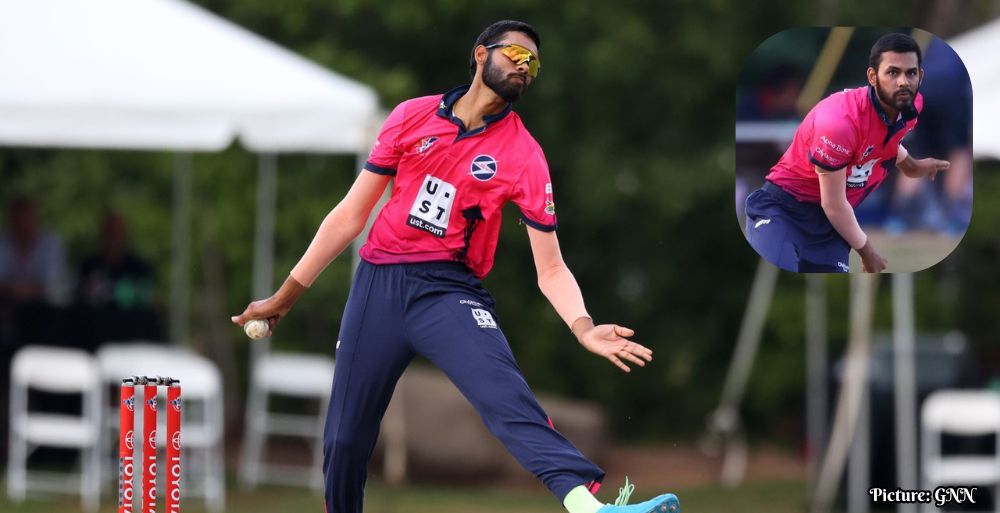
Akhilesh Reddy, a 26-year-old cricketer representing the United States, has been banned from cricket for eight years due to multiple breaches of the International Cricket Council’s Anti-Corruption Code, linked to activities in the 2025 Abu Dhabi T10 tournament.
New Delhi, Aug 3 — Bodugum Akhilesh Reddy, a cricketer for the United States, has been handed an eight-year ban from all forms of cricket following a ruling by an International Cricket Council (ICC) Anti-Corruption Tribunal. The tribunal found Reddy guilty of breaching three significant provisions of the ICC’s Anti-Corruption Code, stemming from incidents connected to the 2025 Abu Dhabi T10 tournament held in the United Arab Emirates (UAE).
The ICC was appointed by the Emirates Cricket Board (ECB) to serve as the Designated Anti-Corruption Official (DACO) for the tournament. Reddy’s suspension has been backdated to November 21, 2025, the date he was provisionally suspended while the tribunal conducted its investigation.
Details of the Violations
According to the ICC’s statement released on August 3, Reddy was found to have violated the following articles of the Anti-Corruption Code:
- Article 2.1.1: Attempting to fix or improperly influence the outcome of matches.
- Article 2.1.4: Soliciting or attempting to induce another participant to breach Article 2.1.1.
- Article 2.4.7: Obstructing the DACO’s investigation by deleting relevant data from a mobile device.
The tribunal’s findings indicate that on the morning of November 19, 2025, shortly before the tournament’s opening match, Reddy approached a teammate, referred to as ‘Player A’, in a hotel room. He requested that ‘Player A’ deliberately allow extra runs while bowling, essentially asking him to manipulate the game at the behest of team management. When ‘Player A’ rejected this corrupt proposition and reported the incident to the ICC’s Anti-Corruption Unit (ACU), he was subsequently omitted from the starting eleven shortly before the match commenced, raising questions about the team’s internal dynamics and management practices.
In relation to the third charge, Reddy acknowledged that he deleted WhatsApp messages and call logs exchanged with ‘Player A’ on the day of the incident. While he defended his actions as a standard practice of “data hygiene” on his iPhone, the tribunal found this explanation unconvincing and ruled that he had intentionally destroyed potentially incriminating evidence to impede the ACU’s investigation.
Tribunal Proceedings and Reddy’s Background
The sanctions were imposed following a thorough hearing by a three-member tribunal, consisting of Chair Michael J Beloff KC, Justice Kate O’Regan, and Lloyd Mhishi. The tribunal’s decision reflects the ICC’s commitment to maintaining the integrity of cricket and addressing corruption within the sport. The ICC’s Anti-Corruption Code was put in place to uphold fair play and protect the sport’s reputation, which has faced challenges in recent years due to various corruption scandals.
Akhilesh Reddy made his international debut against the Cayman Islands during the North America T20 Cup and has participated in four T20 Internationals for the USA, where he has taken one wicket. His ban has significant implications not only for his career but also for the broader landscape of cricket in the United States, a nation that is still developing its cricketing infrastructure and status on the world stage.
Implications for Cricket Integrity
The case underscores the ICC’s ongoing efforts to combat corruption in cricket, particularly in leagues that may face governance and oversight challenges. The Abu Dhabi T10 tournament, like many other high-profile leagues, is susceptible to such risks, given its rapid expansion and the diverse backgrounds of its players. The ICC’s stringent measures are intended to deter similar misconduct in the future and reinforce the importance of fair play and sportsmanship within the sport.
As cricket continues to expand globally, ensuring the integrity of the game remains paramount. Reddy’s case serves as a cautionary tale for players at all levels about the severe consequences that can arise from engaging in corrupt activities. The tribunal’s ruling highlights the need for players to maintain high ethical standards, especially in an era where public scrutiny of sports integrity is at an all-time high.
The enforcement of the Anti-Corruption Code is not just about punishing wrongdoers; it is also about educating players and officials on the importance of upholding the game’s integrity. The ICC has implemented various educational programs aimed at raising awareness about corruption, encouraging players to report suspicious activities, and fostering a culture of transparency within the sport.
In conclusion, the eight-year ban imposed on Akhilesh Reddy is not only a significant disciplinary action against one individual but also a clear message to the cricketing community that corrupt practices will not be tolerated. The incident serves as a reminder of the constant vigilance required to protect the integrity of cricket, especially as the sport continues to grow in new markets.